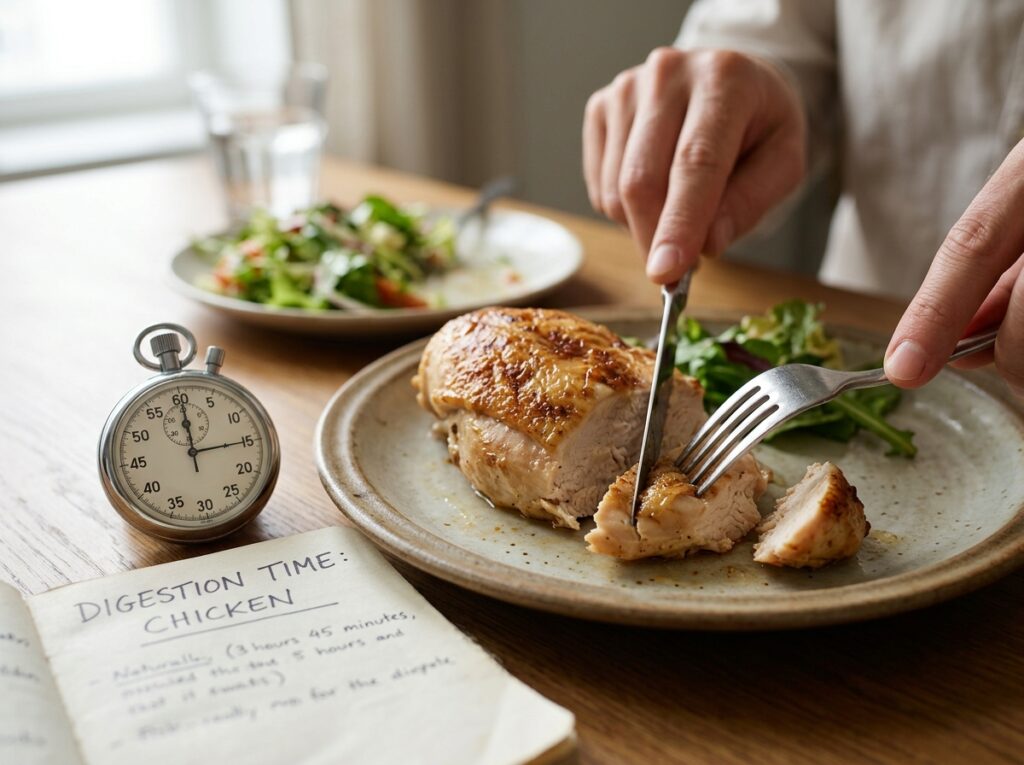
How Fast Does Your Body Digest Chicken?
Your body takes roughly 1.5 to 6+ hours to digest chicken, depending on the cut, how you cooked it, and what else you ate alongside it. That’s a pretty wide range, right? And that’s exactly why this question pops up so often — people feel heavy after eating fried chicken but perfectly fine after a grilled chicken salad, and they can’t figure out why.
Maybe you’re someone who works out and wants to time your protein intake. Or perhaps you deal with bloating after chicken meals and want answers. Either way, understanding how your body actually breaks down chicken can help you eat smarter, feel lighter, and avoid that annoying post-meal sluggishness.
Let’s break this down properly — no medical jargon overload, just real, practical stuff you can actually use.
What Happens When You Eat Chicken? The Digestion Process
Before we talk about timelines, it helps to understand what your body does with that piece of chicken once you swallow it. Chicken is a protein-dense food, and protein is one of the harder macronutrients for your body to break down compared to simple carbs.
Here’s the journey, simplified:
Mouth: Chewing breaks the chicken into smaller pieces. Your saliva starts working, but honestly, protein digestion doesn’t really kick off here. The main job of your mouth is mechanical — crushing and mixing the food so it’s easier to swallow.
Stomach: This is where the heavy lifting begins. Your stomach releases hydrochloric acid (HCl) and an enzyme called pepsin. Together, they start unraveling the protein chains in chicken. The chicken sits in your stomach for about 2 to 4 hours, getting churned into a thick, semi-liquid paste called chyme. The exact time depends on factors we’ll cover shortly.
Small Intestine: Once the chyme leaves your stomach, it enters the small intestine, where pancreatic enzymes (like trypsin and chymotrypsin) break the proteins down further into individual amino acids. These amino acids then get absorbed through the intestinal walls into your bloodstream. This stage can take another 2 to 4 hours.
Large Intestine: Whatever your body couldn’t absorb — mostly fiber from side dishes, since chicken itself has zero fiber — moves into the large intestine. Water gets absorbed, and the remaining waste prepares for, well, its exit.
The total transit time from eating chicken to complete elimination can actually take 24 to 72 hours. But the “digestion” part — where your body extracts nutrients and energy — wraps up mostly within that 4 to 6 hour window in the stomach and small intestine.
Quick Fact: Your body absorbs roughly 8 to 10 grams of protein per hour from animal sources like chicken, according to research published in the Journal of the International Society of Sports Nutrition. So a 30-gram protein chicken breast keeps your digestive system busy for about 3 hours just on the absorption side.
How Long Does Chicken Take to Digest? Cut-by-Cut Breakdown
Not all chicken is created equal when it comes to digestion speed. A lean chicken breast behaves very differently in your gut compared to a fatty, skin-on thigh. Here’s what you can generally expect:
Chicken Breast (Skinless, Grilled or Baked)
Digestion time: 1.5 to 2.5 hours in the stomach. This is the leanest cut with very little fat, so your stomach processes it relatively quickly. It’s why fitness enthusiasts and athletes prefer chicken breast for pre-workout or post-workout meals — you get the protein without feeling weighed down for hours.
If you’re wondering about the best way to cook chicken breast, baking chicken breast at 350°F keeps it lean and easy to digest, without adding extra fat from frying.
Chicken Thigh (Skin-On)
Digestion time: 2.5 to 3.5 hours in the stomach. Thighs have more fat than breasts — about 10 to 13 grams of fat per thigh versus 3 grams in a breast. Fat slows down gastric emptying (the rate at which food leaves your stomach), so thighs sit in your stomach noticeably longer.
Chicken Drumsticks
Digestion time: 2.5 to 3.5 hours. Similar to thighs in fat content, drumsticks also tend to be eaten with the skin on, which adds more fat. If you love drumsticks, baking them at 400°F renders out some of the fat and makes them a bit easier on your stomach compared to deep-frying.
Fried Chicken
Digestion time: 3.5 to 5+ hours in the stomach. Here’s where things slow down significantly. The breading absorbs oil, the skin adds fat, and the frying process itself creates a food that’s much harder for your stomach to break down. If you’ve ever felt sluggish or uncomfortably full after a bucket of fried chicken, this is exactly why.
Storing fried chicken properly matters too for both safety and taste. If you’re dealing with leftovers, check out how long fried chicken lasts in the fridge so you don’t end up eating something that’s gone bad — because spoiled chicken creates a whole different set of digestive problems.
Chicken Soup or Broth-Based Chicken
Digestion time: 1 to 2 hours. When chicken is cooked in broth and shredded finely, your stomach has much less mechanical work to do. The liquid base also helps move things along faster. There’s a reason chicken soup is the go-to food when you’re sick — it’s genuinely easier on your digestive system.
7 Factors That Affect Chicken Digestion Time
The timelines above are averages. Your personal digestion speed depends on several real-world factors that can either speed things up or slow them down considerably.
1. Cooking Method Makes a Bigger Difference Than You Think
Grilled, baked, or steamed chicken digests faster than fried or sautéed chicken. Why? Fat. Every tablespoon of oil you add during cooking adds about 14 grams of fat, and fat is the slowest macronutrient to digest. Your body needs bile (produced by the liver, stored in the gallbladder) to break down fat, and this process takes time.
A boiled chicken breast can clear your stomach in under 2 hours. That same breast, breaded and deep-fried, might hang around for 4+ hours.
Curious about boiling chicken from frozen? It’s actually safe if done right — here’s a guide on whether you can boil frozen chicken that covers the details.
2. What You Eat With the Chicken
Chicken doesn’t usually land in your stomach alone. That side of mashed potatoes, the rice, the salad, the bread — everything you eat together affects the overall digestion timeline.
Pairing chicken with high-fiber vegetables can actually help digestion by keeping things moving through your intestines. But pairing it with heavy carbs and fats (think chicken alfredo with garlic bread) creates a much denser meal that takes significantly longer to process.
If you regularly eat chicken with rice, knowing how long cooked rice stays good in the fridge can help with safe meal prepping.
3. How Well You Chew
This sounds almost too simple, but it’s genuinely important. Chewing is the first stage of mechanical digestion. When you wolf down chunks of chicken without chewing properly, your stomach has to work overtime to break down those larger pieces. That means more acid production, more churning time, and often more bloating.
Try this: chew each bite of chicken about 20 to 30 times before swallowing. You’ll notice a difference in how you feel after the meal within just a few days of building this habit.
4. Your Individual Metabolism and Gut Health
Two people can eat the exact same grilled chicken breast and digest it at different speeds. Your metabolic rate, the composition of your gut microbiome, your age, and even your stress levels all play a role.
Younger people with active lifestyles tend to have faster gastric emptying times. People dealing with conditions like gastroparesis (delayed stomach emptying), IBS, or low stomach acid (common after age 50) may find that chicken sits in their stomach much longer than average.
5. Portion Size
This one’s straightforward. A 3-ounce serving of chicken clears your stomach faster than an 8-ounce serving. Your stomach can only produce so much acid and enzymes at once, so larger portions simply take more time to process.
If you’re unsure about portion sizing for chicken, knowing how many chicken breasts are in a pound can help you gauge serving sizes more accurately.
6. Bone-In vs. Boneless
The chicken itself digests the same way regardless of the bone, but here’s the indirect effect: bone-in chicken tends to be fattier (thighs, drumsticks, wings), while boneless cuts are often leaner (breast, tenderloin). So the real difference comes from the fat content, not the bone itself.
Speaking of lean cuts, if you’ve ever debated between chicken tenderloin and chicken breast, tenderloins are slightly easier to digest due to their smaller size and tender texture. They break down a bit faster in the stomach.
7. Your Hydration Level
Water plays a supporting role in digestion that most people overlook. Staying well-hydrated helps your stomach produce adequate digestive juices and keeps food moving smoothly through your intestines. Dehydration can slow down the entire process, leading to longer digestion times and constipation.
A good rule of thumb: drink water before your meal and 30 minutes after rather than gulping large amounts during the meal, which can dilute stomach acid and actually slow protein breakdown.
Chicken vs. Other Proteins: A Digestion Speed Comparison
You might be wondering how chicken stacks up against other protein sources. Here’s a practical comparison that puts things in perspective:
Chicken breast takes about 1.5 to 2.5 hours in the stomach. Fish (like salmon or tilapia) moves faster — roughly 1 to 1.5 hours — because fish protein has a softer structure and less connective tissue. If you enjoy cooking salmon, baking salmon at 350°F keeps it light and digestible.
Beef and pork are on the slower end. A steak can take 3 to 4+ hours in the stomach, especially a fatty cut like a tomahawk steak or a Delmonico steak. The denser muscle fibers and higher fat content of red meat require more time and more enzymatic activity to break down.
Ground turkey, another popular lean protein, digests at roughly the same speed as chicken breast — about 1.5 to 2.5 hours. If you’re curious about cooking it, here’s a useful guide on how long to cook ground turkey.
Eggs are actually one of the fastest proteins to digest — a boiled egg can clear your stomach in about 1 to 1.5 hours. Scrambled eggs with butter take a bit longer due to the added fat.
Pork tenderloin falls somewhere between chicken breast and beef. It’s a lean cut, so it digests in roughly 2 to 3 hours. You can learn more about cooking it perfectly at pork tenderloin in oven at 400°F and also check the internal temp for pork tenderloin to make sure it’s safe to eat.
The takeaway? Chicken is a middle-of-the-road protein when it comes to digestion speed — faster than red meat, slightly slower than fish, and roughly on par with turkey.
Why Does Chicken Sometimes Feel Hard to Digest?
If chicken makes you feel bloated, heavy, or uncomfortable, you’re not imagining things. There are some real reasons this happens, and most of them are fixable.
Overcooked or Chewy Chicken
Overcooked chicken becomes tough and rubbery. Those tightened protein fibers are genuinely harder for your stomach to break apart. It’s like asking your digestive system to process a rubber band versus a piece of soft bread — one takes way more effort.
This is a common problem, and there are specific causes and fixes for chewy chicken that can help you avoid this issue. Properly cooked chicken is not just tastier — it’s legitimately easier to digest.
Low Stomach Acid
Your stomach needs a strongly acidic environment (pH 1.5 to 3.5) to properly break down protein. If your stomach acid is low — something that happens naturally with age, chronic stress, or certain medications like proton pump inhibitors — chicken protein doesn’t get broken down efficiently in the stomach. This means larger, partially digested protein fragments enter your small intestine, which can cause gas, bloating, and discomfort.
Signs of low stomach acid include feeling full quickly, bloating within 30 minutes of eating protein, and undigested food in your stool.
Eating Too Fast
When you eat quickly, you swallow air along with your food. That trapped air causes bloating. Plus, as we discussed, poorly chewed chicken means your stomach has to compensate with extra mechanical digestion, which takes longer and can feel uncomfortable.
Eating Chicken That’s Been Left Out Too Long
This is a food safety issue more than a digestion issue, but it’s worth mentioning. Chicken that’s been left out overnight can harbor bacteria like Salmonella or Campylobacter. Eating contaminated chicken doesn’t just cause digestive discomfort — it can lead to full-blown food poisoning with symptoms like nausea, vomiting, diarrhea, and cramps.
Similarly, if you’ve thawed chicken, make sure you know how long thawed chicken is safe in the fridge before cooking it.
Tips to Help Your Body Digest Chicken Faster
You can’t hack your biology completely, but you can definitely make the process smoother. Here are some practical things that genuinely help:
Choose lean cuts and lighter cooking methods. Grilled or baked skinless chicken breast is the fastest-digesting option. Save the fried chicken for occasions rather than daily eating.
Pair chicken with digestion-friendly sides. Steamed vegetables, leafy greens, or a small portion of rice work better than heavy cream sauces or large amounts of cheese. The fiber from vegetables actually helps move everything through your system more efficiently.
Don’t eat massive portions in one sitting. If you need 40 grams of protein, you don’t have to get it all from one meal. Splitting it across two meals means your stomach handles a manageable amount each time.
Chew your food thoroughly. Yes, we mentioned this already, but it bears repeating because it’s the single easiest change you can make with the biggest impact.
Walk after eating. A gentle 10 to 15 minute walk after a chicken meal can stimulate peristalsis — the wave-like muscle contractions that move food through your digestive tract. You don’t need to power walk. Just a casual stroll works.
Give your body time between meals. Eating another full meal while your stomach is still working on the chicken from 2 hours ago creates a traffic jam. Aim for at least 3 to 4 hours between protein-heavy meals.
Pro Tip: If you regularly experience discomfort after eating chicken, try incorporating a digestive enzyme supplement that contains protease (the enzyme that breaks down protein). This can be especially helpful for people over 40 or those with known digestive sensitivities. Always check with your doctor before starting any supplement.
Does the Temperature of Chicken Matter for Digestion?
This is a question that doesn’t get discussed enough. Eating cold chicken (like leftover grilled chicken straight from the fridge) versus warm chicken can actually affect your digestion, though the difference isn’t dramatic.
Warm food is generally easier to digest because your stomach doesn’t need to spend energy bringing the food up to body temperature first. Cold chicken also tends to have firmer, tighter protein fibers compared to freshly cooked warm chicken, which means slightly more work for your stomach.
That said, the difference is maybe 15 to 30 minutes in stomach processing time — not a dealbreaker for most people. If you’re someone with a sensitive stomach or slow digestion, though, warming up your leftover chicken before eating it is a small step that can make a noticeable difference.
How Chicken Digestion Affects Your Workout Timing
For athletes and gym-goers, chicken digestion timing is more than just a curiosity — it directly impacts performance.
Before a workout: You want your stomach mostly empty so blood can flow to your muscles rather than being diverted to digestion. Eat a lean chicken breast about 2 to 3 hours before exercising. If you’re eating fried or fatty chicken, push that to 3 to 4 hours minimum.
After a workout: Your muscles are primed to absorb amino acids within the first 30 to 60 minutes post-exercise (often called the “anabolic window,” though recent research suggests this window is wider than originally thought). Chicken breast or tenderloin is an excellent choice here because it provides high-quality complete protein with all essential amino acids.
Before bed: Eating a large chicken meal right before sleep isn’t ideal. Your digestion naturally slows down when you’re lying down, and your metabolic rate drops during sleep. If you need a nighttime protein fix, keep it to a small 3 to 4 ounce portion of lean chicken, eaten at least 2 hours before you hit the pillow.
When to See a Doctor About Chicken Digestion Issues
Occasional heaviness after a big chicken meal is normal. But if you’re consistently experiencing problems, it might signal something more than just eating too fast or choosing the wrong cut.
See a doctor if you notice: persistent bloating or pain every time you eat chicken, feeling full after just a few bites (early satiety), frequent nausea after protein-heavy meals, undigested food appearing in your stool regularly, or significant and unexplained changes in your bowel habits.
These could point to conditions like gastroparesis, enzyme insufficiency, gallbladder issues (your gallbladder produces bile needed for fat digestion), or even a chicken allergy or intolerance — which is rare but does exist.
⚠️ Disclaimer: This article provides general information about food digestion and isn’t a substitute for professional medical advice. If you have ongoing digestive concerns, please consult a qualified healthcare provider.
FAQ
How long does it take to digest chicken breast?
A lean, skinless chicken breast typically takes about 1.5 to 2.5 hours to digest in the stomach, with total nutrient absorption completing in the small intestine over the next 2 to 4 hours. Grilling or baking keeps it on the faster end. Frying it pushes it toward 3+ hours because of the added fat.
Is chicken easier to digest than red meat?
Yes. Chicken, especially the breast, is significantly easier to digest than beef or pork. Chicken has less fat, less connective tissue, and softer muscle fibers. A chicken breast can leave your stomach in about 2 hours, while a steak might take 3 to 4+ hours. If you have digestive sensitivities, chicken and fish are usually your best protein options.
Can eating chicken at night cause digestive problems?
It can, if you eat a large or fatty portion close to bedtime. Your digestive system slows down during sleep, so a big serving of chicken thigh or fried chicken at 10 PM can lead to acid reflux, bloating, and disrupted sleep. A small portion of lean chicken eaten 2+ hours before bed is usually fine for most people.
Does chicken cause bloating?
Chicken itself is unlikely to cause bloating since it’s a simple, single-ingredient protein with no fiber, no FODMAPs, and no common allergens. If you feel bloated after eating chicken, the cause is usually how you ate it (too fast, too much, poorly chewed) or what you ate with it (creamy sauces, carbonated drinks, high-fiber sides in excess). Overcooked, tough chicken can also be harder to break down, which sometimes leads to gas and discomfort.
How long does fried chicken take to fully digest?
Fried chicken can take 3.5 to 5+ hours just to clear the stomach. The combination of breading, oil absorption, and skin fat creates a very dense food package. Full digestion and nutrient absorption, including passage through the small intestine, can take 6 to 8 hours. Complete transit through the entire digestive tract (including the large intestine) may take 24 to 48 hours.
Final Thoughts
Chicken is one of the most popular and versatile proteins on the planet, and your body is well-equipped to handle it. The digestion timeline — anywhere from 1.5 hours for a lean grilled breast to 5+ hours for deep-fried chicken — depends mostly on the cut, the cooking method, your portion size, and your own body’s digestive efficiency.
The simplest thing you can do to help your body digest chicken better? Choose lean cuts, cook them without excessive oil, chew thoroughly, and don’t overload your plate. Small, consistent changes like these make a bigger difference than any supplement or “digestion hack” you’ll find on the internet.
Next time you sit down for a chicken meal, you’ll know exactly what’s happening inside — and you can make smarter choices because of it. Your gut will thank you.