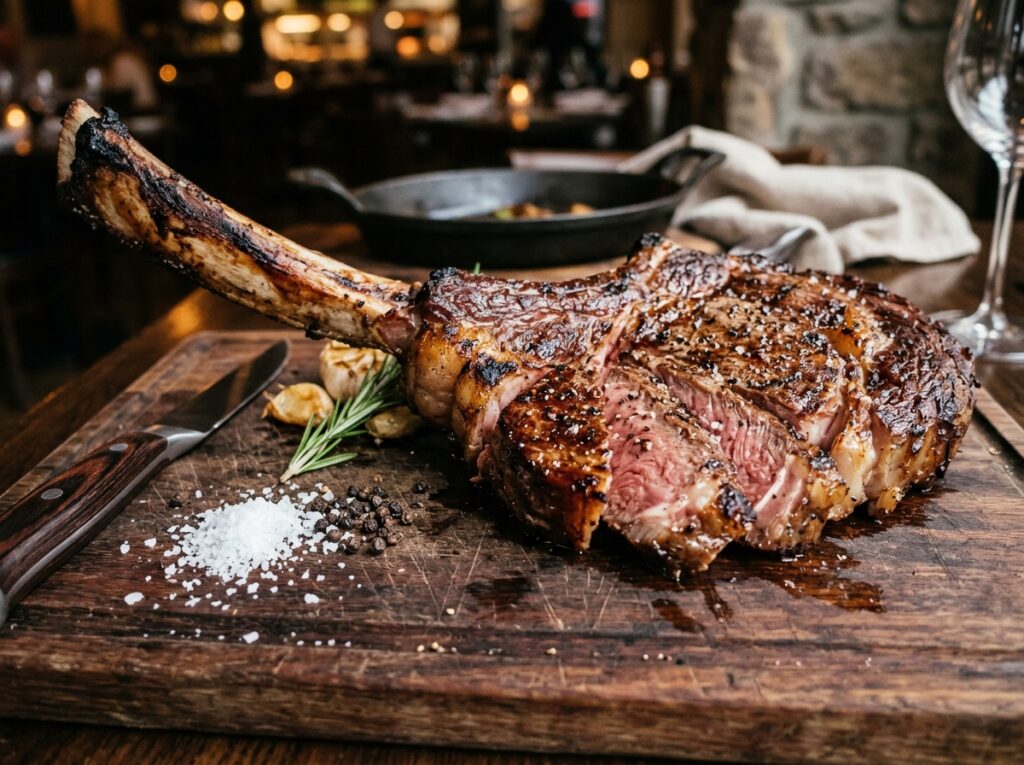
Tomahawk Steak Explained — Why This Cut Stands Out
A single tomahawk steak can weigh over two pounds and cost you anywhere from $50 to $150 — sometimes more at a high-end steakhouse. That’s a serious chunk of money for a single piece of beef. So what exactly makes this cut so special, and is it actually worth all the hype?
If you’ve ever scrolled through Instagram and stopped at a photo of someone grilling an enormous steak with a long, dramatic bone sticking out of it, you’ve already met the tomahawk. It’s a showstopper. It looks like something a Viking would eat. But beyond the visual drama, there’s a real story here about the cut itself, where it comes from on the cow, why it costs what it does, and — most importantly — how to cook it so you don’t waste your money.
Let’s break it all down.
The Basics — Where Does a Tomahawk Steak Come From?
A tomahawk steak is, at its core, a bone-in ribeye. That’s it. But calling it “just a ribeye” is like calling a Porsche “just a car.” The details matter.
This cut comes from the rib primal section of the cow, specifically ribs 6 through 12. The meat itself is the longissimus dorsi muscle — the same beautiful, well-marbled muscle that gives a regular ribeye its rich, buttery flavor. What makes the tomahawk different is how the butcher handles the bone.
Instead of trimming the rib bone short (like you’d see on a standard bone-in ribeye), the butcher leaves the entire rib bone intact. We’re talking about 5 to 8 inches of exposed bone that gets “frenched” — meaning all the meat and fat are scraped clean off the bone. That long, clean handle is what gives the steak its signature look, resembling a single-headed tomahawk axe. And yeah, that’s exactly where the name comes from.
Quick Fact: The French culinary term for this cut is “côte de bœuf,” and it’s been a staple in European fine dining long before it became an Instagram sensation.
The steak portion itself is typically 2 inches thick and weighs between 30 to 45 ounces (roughly 2 to 2.8 pounds). Some of that weight is bone, of course, but there’s still a massive amount of meat here — easily enough to feed two people, sometimes three.
Tomahawk Steak vs. Ribeye — What’s Actually Different?
This is probably the most common question people have, and honestly, it’s a fair one. If the tomahawk is basically a ribeye, why does it get its own name, its own price tag, and its own fan club?
The meat is identical. Same muscle, same marbling pattern, same flavor profile. A boneless ribeye, a bone-in ribeye, and a tomahawk all come from the same part of the cow. If you blindfolded someone and gave them a bite of each, they’d struggle to tell the difference.
So the real differences come down to three things: bone length, thickness, and presentation.
A regular bone-in ribeye (sometimes called a cowboy steak) has a short bone — maybe 2 to 4 inches — and it’s typically cut about 1 to 1.5 inches thick. A tomahawk keeps that full-length rib bone and is usually cut much thicker, around 2 inches or more. The extra thickness isn’t just for looks. It actually changes how you cook the steak, because a thicker cut gives you more control over getting a perfect sear on the outside while keeping the interior at your desired doneness.
And then there’s the presentation factor. A tomahawk on a plate or a cutting board just hits different. Restaurants know this. That’s partly why they can charge a premium for it. You’re paying for the experience, the theater, and the “wow” factor — on top of a genuinely excellent cut of beef.
Does the bone add flavor? This is debated endlessly in the food world. Some chefs swear the bone conducts heat differently and adds a subtle richness. Others, like food scientist J. Kenji López-Alt, have tested this and found the difference is minimal at best. What the bone definitely does is slow down cooking near itself, which can give you a slightly more even cook across the steak. So there’s a functional benefit, even if the flavor impact is subtle.
If you’re curious about how different steak cuts compare, you might also want to read about what a Delmonico steak is — another cut with an interesting backstory.
Why Does a Tomahawk Steak Cost So Much?
Let’s talk money, because the price tag on these things can make your wallet flinch.
At a grocery store or butcher shop, expect to pay $40 to $100+ for a single tomahawk steak, depending on the grade of beef and where you shop. At a restaurant, that number can easily double or triple. Some high-end steakhouses in cities like New York or Las Vegas charge $150 to $200 for a single tomahawk.
So why the premium? A few reasons are at play here.
The cut itself requires more from the cow. That long rib bone takes up space. A butcher can get more individual steaks from the same section if they trim the bones short or remove them entirely. Leaving the full bone intact means fewer steaks per rib section, which drives the price up.
You’re paying for bone weight. This is the part that frustrates some people. That 45-ounce tomahawk might have 10 to 12 ounces of bone in it. You’re paying per pound, and bone isn’t edible (though it’s great for making stock later). So the actual meat you’re getting per dollar is less than if you bought a boneless ribeye of the same grade.
USDA grading matters a lot. A USDA Choice tomahawk will cost significantly less than a USDA Prime one. Prime beef — which has the most intramuscular marbling — represents only about 3-5% of all graded beef in the United States. That scarcity drives cost. And if you venture into Wagyu or Kobe beef territory, the prices go through the roof. An Australian Wagyu tomahawk can easily run $150+ even from an online butcher.
The restaurant markup accounts for theater. When a steakhouse brings out a tomahawk on a sizzling board, bone pointing to the sky, maybe with some rosemary still smoldering — that’s dinner and a show. You’re paying for that experience.
Pro Tip: If you want the tomahawk experience without the steakhouse price, buy one from a local butcher or an online meat delivery service like Snake River Farms, Porter Road, or Crowd Cow. You’ll pay a fraction of the restaurant price and can cook it at home like a pro.
How to Pick a Good Tomahawk Steak
Not all tomahawks are created equal. If you’re spending this kind of money, you want to make sure you’re getting something worth cooking. Here’s what to look for.
Marbling is everything. Those white streaks of intramuscular fat running through the meat are what give ribeye its signature flavor and tenderness. More marbling means more flavor, more juiciness, and a more forgiving cook. Look for USDA Prime if your budget allows. USDA Choice is still very good, especially if the marbling looks generous.
Check the thickness. You want at least 2 inches. Anything thinner and you lose the advantage of cooking a tomahawk — which is that contrast between a deeply seared crust and a perfectly pink interior. A thin tomahawk is just an overpriced bone-in ribeye.
Look at the color. The meat should be a deep, cherry-red color. Avoid anything that looks grayish or brown, which could mean the steak has been sitting out too long or wasn’t stored properly. The fat should be white to cream-colored, not yellowish (though grass-fed beef can have slightly yellow fat, and that’s normal).
The bone should be cleanly frenched. If there are still scraps of meat and sinew clinging to the bone, the butchering wasn’t done carefully. It’s a cosmetic thing, but it also tells you something about the butcher’s attention to detail.
Ask your butcher where it comes from. Good butchers know their suppliers. They can tell you the ranch, the breed, whether the cattle were grain-finished or grass-finished, and the USDA grade. If a butcher can’t answer these questions, you might want to shop somewhere else.
How to Cook a Tomahawk Steak at Home
Here’s where a lot of people get nervous. You’ve spent good money on this cut. You don’t want to ruin it. The good news? Cooking a tomahawk isn’t complicated — but the thickness of the steak means you need to approach it differently than a regular steak.
The best method for most home cooks is the reverse sear. This technique gives you the most control and the most consistent results.
Step 1: Let It Come to Room Temperature
Take the steak out of the fridge 45 to 60 minutes before cooking. A cold steak thrown on a hot surface will cook unevenly — the outside will overcook before the center reaches your target temperature. Pat it dry with paper towels. Moisture on the surface is the enemy of a good sear.
Step 2: Season Simply
You don’t need a fancy rub. Kosher salt and coarsely ground black pepper — that’s your foundation. Be generous. This is a thick, heavy steak, and it can handle bold seasoning. Some people add garlic powder, and that’s fine. But resist the urge to pile on marinades or sauces. The beef itself should be the star.
Season the steak and, if you have the time, let it sit uncovered in the fridge overnight on a wire rack. This is called dry brining, and it does two things: the salt penetrates deeper into the meat for better flavor, and the surface dries out, which means a better crust when you sear.
Step 3: Low and Slow in the Oven
Preheat your oven to 250°F (120°C). Place the steak on a wire rack set over a baking sheet and slide it into the oven. You want to bring the internal temperature up slowly and evenly.
Use a leave-in meat thermometer — this is non-negotiable with a steak this thick. You can’t eyeball the doneness, and cutting into it to check wastes all those beautiful juices. If you’re not sure how to use one, here’s a guide on how to read a meat thermometer that walks you through it.
Pull the steak from the oven when the internal temperature hits about 10-15°F below your target. Because the steak is so thick, carryover cooking will bring it up the rest of the way.
Target temperatures (before searing):
For rare, pull at 105°F. For medium-rare (the sweet spot for ribeye), pull at 115-120°F. For medium, pull at 125°F. Going beyond medium on a tomahawk is — and I say this with love — kind of a waste. The marbling in a ribeye needs some heat to render, but too much heat dries out the meat and you lose that buttery texture you’re paying for.
Step 4: The Sear
This is where the magic happens. You need screaming hot heat. You’ve got two great options.
Cast iron skillet: Heat it on your stovetop over high heat for at least 5 minutes. Add a high-smoke-point oil — avocado oil works great. Sear the steak for about 90 seconds per side. The bone will make it awkward to lay flat, so use tongs to hold it at an angle and sear the edges too.
Charcoal grill: If you’ve got a chimney full of lit coals, spread them out and sear the steak directly over the hottest part of the grill. Same timing — about 90 seconds per side. The grill adds a smoky char that pairs beautifully with ribeye.
During the last 30 seconds of searing, add a tablespoon of butter, a crushed garlic clove, and a sprig of fresh rosemary or thyme to the pan. Tilt the pan and baste the steak with that flavored butter. This step takes it from great to absolutely unforgettable.
If you’re wrapping the bone in foil to prevent charring (a common tip), go for it — but it’s optional. A little char on the bone won’t affect the meat.
Step 5: Rest It
This is the hardest part because you’ll want to eat it immediately. Don’t. Rest the steak for 10 to 15 minutes on a cutting board, loosely tented with foil. Resting lets the muscle fibers relax and reabsorb the juices. Cut into it too soon and those juices end up on your cutting board instead of in your mouth.
While you’re waiting, this is a great time to prep a quick side. Something simple — roasted garlic butter, a peppery arugula salad, or some grilled asparagus.
Pro Tip: Wrap the exposed bone end with a napkin or foil when serving. It makes a natural handle for cutting, and it looks impressive on the plate.
What Does a Tomahawk Steak Taste Like?
If you’ve had a good ribeye, you know what to expect — but amplified. The thick cut and bone-in cooking give a tomahawk a slightly more intense beefy flavor compared to a thinner, boneless cut.
The ribeye cap (also called the spinalis dorsi) is the outer rim of meat that wraps around the top of the steak. Many steak lovers consider this the single best-tasting part of the entire cow. It’s incredibly tender, richly marbled, and almost melts in your mouth. When you eat a tomahawk, you get a generous portion of this cap along with the larger eye of the ribeye.
The texture is tender but not mushy — there’s a satisfying bite to it, especially if you’ve nailed that sear. The fat renders beautifully when cooked to medium-rare, creating pockets of concentrated beefy flavor throughout.
One thing worth mentioning: the meat closest to the bone cooks a bit slower, so you’ll often get a range of doneness in a single steak. The outer edges might be a perfect medium-rare while the meat near the bone stays closer to rare. A lot of people actually love this gradient because it gives you variety in every slice.
For another steak experience worth knowing about, check out whether blue steak is safe to eat — it’s an interesting read if you like your beef on the rarer side.
Is a Tomahawk Steak Worth It?
This is the million-dollar question (or at least the $80 question). And the honest answer is: it depends on what you’re after.
If you’re purely focused on value — getting the most high-quality beef for your dollar — a boneless ribeye or even a bone-in ribeye with a short bone will give you the same flavor for less money. You’re paying extra for the long bone, and the bone itself doesn’t add enough flavor to justify a 30-50% price increase on its own.
But if you’re cooking for a special occasion — a birthday, an anniversary, a backyard dinner party — a tomahawk steak is hard to beat. It’s an event. Pulling one off the grill and setting it on a wooden board in front of your guests is a moment. People take photos. People talk about it for weeks. That experience has value, even if it doesn’t show up on a flavor-per-dollar spreadsheet.
There’s also a practical consideration. Because the tomahawk is so thick, it’s actually easier to cook to a perfect medium-rare than a standard 1-inch ribeye, which can go from perfect to overcooked in under a minute. The thickness gives you a bigger window of forgiveness. For less experienced cooks, that extra margin of error can be the difference between an incredible steak and an expensive mistake.
The bottom line: For everyday grilling, stick with a regular ribeye. For a special night when you want to go all out, the tomahawk is absolutely worth it.
Storing and Handling Your Tomahawk
A quick word on storage, because you don’t want to mess up a premium cut before it even hits the heat.
Fresh from the butcher, a tomahawk steak will keep in the fridge for 3 to 5 days. Keep it on the lowest shelf in its original butcher paper or rewrapped tightly in plastic wrap. If you’re using butcher paper vs parchment paper for wrapping, butcher paper is the better choice for raw meat because it breathes slightly while still protecting the surface.
Frozen, a well-wrapped tomahawk can last 6 to 12 months in the freezer without significant quality loss. Wrap it tightly in plastic wrap, then again in aluminum foil, and finally in a freezer bag with as much air pressed out as possible. Double wrapping prevents freezer burn.
Thawing should always happen in the fridge — never on the counter. A steak this thick will take 24 to 36 hours to fully thaw in the refrigerator. Plan ahead. If you need guidance on safe thawing practices, our piece on thawed chicken in the fridge covers the same food safety principles that apply to any protein.
Reheating Leftover Tomahawk Steak
Got leftovers? Lucky you. But reheating steak is tricky because you can easily overcook it and turn that beautiful medium-rare into a sad, gray, chewy mess.
The best method is low and slow in the oven — similar to the reverse sear approach. Preheat your oven to 250°F, place the leftover steak on a wire rack, and warm it until the internal temp hits about 110°F. Then give it a quick 30-second sear per side in a ripping hot skillet to revive that crust.
Don’t microwave it. Just don’t. The microwave heats unevenly and steams the meat, killing the texture. If you want the full breakdown on reheating methods, our guide on how to reheat steak covers every technique in detail.
FAQ
How many people can one tomahawk steak feed?
A typical tomahawk weighs 2 to 2.5 pounds (including the bone). After accounting for bone weight, you’re looking at roughly 1.5 to 2 pounds of actual meat. That’s enough for two hungry adults or three people if you’re serving it alongside generous sides. Many restaurants serve a single tomahawk as a “steak for two” and slice it tableside.
Is a tomahawk steak the same as a cowboy steak?
They’re very similar — both are bone-in ribeyes — but the difference is bone length. A cowboy steak (also called a cowboy ribeye) has a shorter frenched bone, usually 2 to 4 inches. A tomahawk keeps the full rib bone, extending 5 to 8 inches or more. The meat is identical; it’s purely a butchering style difference.
What temperature should a tomahawk steak be cooked to?
For the best eating experience, most chefs recommend medium-rare, which means an internal temperature of 130-135°F after resting. The rich marbling in a ribeye needs some heat to render properly (so rare can feel a bit waxy), but going past medium starts drying out the meat. Use a reliable meat thermometer and pull the steak from heat at about 120°F — carryover cooking will bring it up the remaining 10-15 degrees.
Can you cook a tomahawk steak in a regular home oven?
Absolutely. The reverse sear method works perfectly in a standard home oven. Set it to 250°F, cook the steak on a wire rack until it reaches your target internal temp, then sear it in a cast iron skillet on the stovetop. You don’t need a fancy outdoor grill or a commercial kitchen to nail this cut. The only real requirement is a good meat thermometer and a heavy skillet.
Why is the bone left so long on a tomahawk steak?
Aesthetics and tradition. The long bone creates the distinctive tomahawk axe shape that makes this cut so visually striking. From a culinary standpoint, the bone also serves as a convenient handle while cooking and carving. Does it add flavor? The debate rages on among chefs and food scientists, but the consensus is that any flavor contribution from the bone is minimal. The real value is in the presentation and the slightly more even cooking that a bone-in cut provides.
Your Next Move
So now you know what a tomahawk steak is, where it comes from, and exactly how to cook one at home without second-guessing yourself. It’s one of those cuts that looks intimidating but is actually very forgiving once you understand the reverse sear technique.
If you’ve been eyeing one at the butcher shop or scrolling past them online, go for it. Pick a weekend, invite someone over, and make it an event. Season it simply, cook it patiently, sear it aggressively, and rest it completely. That’s the whole formula.
And save that bone. Toss it in a pot with some onions, carrots, celery, and water. Simmer it for a few hours and you’ve got a rich beef stock that’ll make your next soup or braise taste incredible. Nothing from a steak this good should go to waste.