Is Blue Steak Safe to Eat? Real Risks Explained
A blue steak can be safer than a medium burger. Sounds backward, right? Yet that little fact explains why steak doneness confuses so many people.
If you’re asking is blue steak safe to eat, the honest answer is: sometimes, for healthy adults, but it’s not risk-free. Blue steak gets a hard sear on the outside while the center stays cool, red, and barely cooked. That can lower the risk on an intact steak, but it doesn’t erase it. The real answer depends on the cut, how the meat was handled, how it was cooked, and who’s eating it.
What blue steak actually means
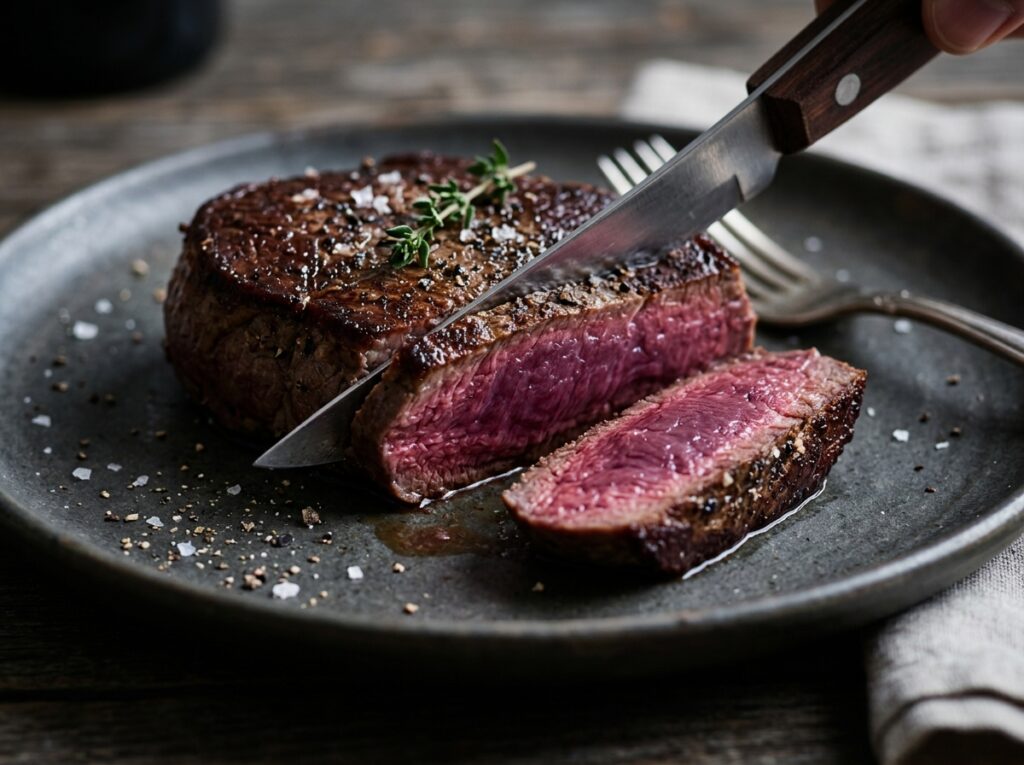
Blue steak, also called blue rare, is steak cooked very lightly. The outside gets seared fast over high heat, while the inside stays deep red and only slightly warmed. In some steakhouses, you might also hear black and blue, which usually means a darker char outside with that same cool center.
Why is it called “blue”? The center can look dark red or purplish, almost bluish under some light. It isn’t actually blue, of course. It just looks that way compared with a typical rare or medium-rare steak.
A lot of people hear “blue steak” and think “raw steak.” That’s not quite right. The surface is cooked. The center is barely touched by heat.
Blue steak vs rare steak
Blue steak and rare steak aren’t the same.
A blue steak usually lands around 115 to 120°F in the center, though chefs vary a bit. The inside often feels cool or lukewarm.
A rare steak is warmer inside, often around 120 to 125°F, sometimes a bit higher depending on the kitchen. It still looks very red, but it won’t feel as cool as blue.
That difference matters because more heat usually means less food safety risk.
Why some people love it
Blue steak fans like it for texture and pure beef flavor. The meat stays extra soft, and the inside doesn’t lose much moisture. Lean, tender cuts can taste silky this way.
Still, blue isn’t ideal for every steak. A fatty ribeye, for example, often tastes better with more time on the heat because the fat needs warmth to soften and render. A leaner cut like filet usually makes more sense.
Quick facts
- Blue steak is lightly seared outside and nearly raw inside.
- It’s usually served from whole muscle beef cuts, not ground beef.
- The official USDA minimum for beef steaks is 145°F with a 3-minute rest.
- Blue steak sits well below that target.
Is blue steak safe to eat?
Here’s the short version: blue steak can be lower-risk than it looks, but it isn’t fully safe by official food safety standards.
For a healthy adult, a blue steak made from an intact whole cut of beef, kept cold, handled cleanly, and seared well on all sides is often a calculated risk people choose. That’s why you see it on steakhouse menus.
Still, “people eat it” and “it’s completely safe” are not the same thing.
What official food safety guidance says
As of 2026, the USDA still recommends cooking whole cuts of beef, veal, and lamb to 145°F (63°C) and letting them rest for at least 3 minutes.
Blue steak usually does not reach that temperature.
So from a strict USDA point of view, blue steak falls below the recommended safe minimum.
The CDC also warns that raw or undercooked animal foods can raise your risk of foodborne illness. That includes undercooked beef.
Why a steak is different from a burger
Here’s the part most people miss.
On an intact steak, bacteria are usually found on the outside surface. When you sear the surface hard, you kill much of that bacteria. That’s why a rare or blue steak can be lower-risk than people expect.
Ground beef is a different story. Once meat is ground, surface bacteria get mixed all through the burger. Now the inside matters just as much as the outside. That’s why a burger should never be judged by steak rules.
Did you know?
A blue steak can be lower-risk than an undercooked burger, because the burger can carry bacteria all the way through the center.
The real-world answer
So, is blue steak safe to eat in real life?
A better way to say it is this: blue steak is a riskier choice than steak cooked to USDA temperature, but a less risky choice than other undercooked meats like burgers or chicken.
That’s why context matters so much.
A freshly cut filet from a reputable butcher, cooked right away in a ripping-hot pan, is one situation.
A bargain pack of pre-tenderized steaks that sat too long in a warm car is a very different one.
Why blue steak carries real risk
Blue steak gets treated like a style choice, but food safety doesn’t care about style. It cares about bacteria, time, temperature, and handling.
Surface contamination isn’t the only problem
People often say, “Steak only has bacteria on the outside.” That’s partly true, but not always the full story.
Bacteria can move deeper into the meat if the steak has been:
- mechanically tenderized
- blade tenderized
- needle tenderized
- injected with marinade or solution
- cut or handled carelessly
Once that happens, a blue center becomes more risky because the inside may now hold bacteria too.
Warning:
If the package says mechanically tenderized or blade tenderized, don’t cook it blue. That’s one of the clearest red flags.
Storage mistakes matter more than people think
A lot can go wrong before the steak even hits the pan.
Beef should stay refrigerated at 40°F (4°C) or below. If it sits at room temperature too long, bacteria can multiply fast. The usual rule is no more than 2 hours out of refrigeration, or 1 hour if the room is very hot.
Picture this. You buy a nice strip steak, then leave it in the car while you finish errands. Later, you sear it blue and assume the crust fixed everything. It didn’t. A hot crust can’t undo bad storage.
Cross-contamination matters too. Dirty cutting boards, the same tongs used on raw and cooked meat, or hands that touched raw beef and then seasoning jars can all add risk.
Common misconception: expensive beef means safer beef
Price doesn’t equal safety.
A premium steak can taste better and have better marbling, but bacteria don’t care what you paid. A luxury cut can still be mishandled during processing, shipping, storage, or prep.
If you’re shopping for premium beef, knowing the difference between Wagyu and Kobe beef helps with quality and flavor, but it doesn’t make blue steak automatically safe.
Dry-aged beef works the same way. Dry aging changes flavor and texture. It doesn’t sterilize the meat.
Common misconception: a hard sear fixes everything
A strong sear helps. It does not fix every problem.
It won’t make a tenderized steak safe in the center. It won’t erase bacteria from bad storage. It won’t protect someone with a weak immune system.
That’s why the smart question isn’t just, “Was it seared?” The smarter question is, “What happened before the sear?”
How to make blue steak safer at home
If you still want blue steak, you can lower the risk. Not remove it. Lower it.
That’s a big difference.
Pick the right cut
Start with an intact whole-muscle steak from a trusted butcher or grocery store with good turnover.
Good choices often include:
- filet mignon
- strip steak
- top sirloin
- tenderloin medallions
Huge, dramatic cuts can be harder to get right. A thick bone-in steak like a tomahawk steak looks great on the table, but it isn’t the easiest pick for blue doneness at home.
Restaurant menus can also be confusing. If an old steakhouse label throws you off, learning what a Delmonico steak means on a menu can help you choose with more confidence.
A few cuts are best skipped for blue cooking. Avoid anything labeled tenderized, injected, pre-marinated, or cubed. And don’t treat ground beef like steak. That’s a different risk level.
Use a simple safer routine
You don’t need a lab setup. You just need a clean routine.
- Buy cold steak and keep it cold.
Put it in the fridge as soon as you get home. - Cook it soon.
The longer raw meat sits around after opening, the more chances things can go wrong. - Pat it dry and use very high heat.
A dry surface sears better and faster. - Sear every outside surface well.
Not just the flat sides. Hit the edges too. - Use clean tools the whole time.
Raw tongs and cooked tongs should not be the same unless you wash them.
A cast-iron pan works really well here because it holds high heat. A grill can work too, as long as you actually sear the outside fast and hard.
Pro tip:
Ask your butcher for a steak that has not been mechanically tenderized. That one question can save you a lot of guesswork.
Don’t guess by color alone
Color can fool you.
A steak can look red and still be warmer than you think. Another steak can look darker because of age, oxygen exposure, or the animal’s muscle type. That’s why “it looked raw” doesn’t always tell the full story.
If you want less guessing, use a thermometer. If you’re not sure where to place it or how to read it, this guide on how to read a meat thermometer makes the process simple.
For blue steak, many cooks aim for the low 100s in the center. From a safety point of view, that’s still below the USDA target. A thermometer won’t change that, but it will tell you the truth.
Rare may be the smarter middle ground
Not everyone who wants a juicy steak needs true blue doneness.
If you like tenderness and a red center but want a little more safety margin, rare or medium-rare can be a better compromise. You still get plenty of moisture and flavor, and the center gets more heat than blue.
That middle ground often makes sense for home cooks who like steakhouse results but don’t want to push the edge.
Should you order blue steak at a restaurant?
Sometimes, yes. Just don’t order it blindly.
A good steakhouse can often do blue steak better than a home cook because the kitchen has hotter equipment, experienced line cooks, and fast service. That helps with crust and consistency.
Still, restaurant blue steak is not magic. The same food safety rules apply.
Ask a few smart questions
You don’t need to interrogate the server. A few simple questions are enough.
- Is the steak an intact cut, or has it been tenderized?
- Which cut do they recommend for blue rare?
- Can they give it a hard sear on all sides?
- Is the steak marinated or injected?
Those questions matter more than asking for the “freshest” steak. Freshness helps, but it’s only one part of the picture.
Restaurant blue steak vs home blue steak
Restaurants usually do better with speed and heat. That can lower mistakes.
Home cooks usually know the steak’s full history better. That can also lower mistakes.
So which one is safer? There’s no automatic winner.
A great restaurant can serve an excellent blue steak. A careful home cook can too. A sloppy kitchen in either place can turn a low-risk meal into a bad one.
If the staff seems unsure, or if the place doesn’t specialize in steak, don’t feel awkward ordering rare instead.
Who should avoid blue steak?
Some people should skip blue steak altogether. Not because they’re being overly cautious. Because they have more to lose if they get sick.
Blue steak is not recommended for:
- pregnant women
- young children
- adults over 65
- people with a weakened immune system
- anyone recovering from serious illness or dealing with medical treatments that lower immunity
That includes people going through chemotherapy, transplant patients, and some people with chronic health conditions.
Medical note:
If you’re pregnant, immunocompromised, or have a condition that raises your infection risk, follow your doctor’s advice over restaurant tips or internet opinions.
A safer option if you still want tender steak
You don’t have to give up good steak to play it safe.
Choose a tender cut like filet, cook it to 145°F, let it rest, and slice it across the grain. You’ll still get a juicy result, especially if you avoid overcooking past that point.
And if you cook extra, cool leftovers quickly and later reheat steak without drying it out so texture doesn’t go downhill.
- FAQ Section
FAQ
Is blue steak the same as raw steak?
No. Blue steak is seared on the outside but barely cooked inside. Raw steak, like steak tartare, is not seared. The center of a blue steak can still be cool and very red, which is why people sometimes confuse the two.
Can you get food poisoning from blue steak?
Yes, you can. The risk is lower with an intact whole-muscle steak that was stored properly and seared well, but it’s still not zero. Risk goes up if the steak was mechanically tenderized, injected, mishandled, or kept too warm before cooking.
Is blue steak safer than rare steak?
Not really. Rare steak is usually a bit safer because the center gets more heat. Blue steak stays cooler inside, which leaves less room for error. Neither blue nor rare meets the USDA recommendation unless the steak reaches 145°F with a 3-minute rest.
What cut is best for blue steak?
A tender, intact whole-muscle cut is your best bet. Filet mignon and strip steak are common choices. Avoid ground beef, cube steak, injected cuts, and anything labeled mechanically tenderized.
Is blue steak safe during pregnancy?
No. Pregnant women should avoid blue steak and other undercooked meats. Pregnancy raises the stakes with foodborne illness, and even a small risk isn’t worth it.
Why does blue steak feel cold in the middle?
Because it often is. Blue steak gets just enough heat to brown the outside while the center stays cool or only slightly warm. That cool center is part of the style, but it’s also why safety questions come up so often.
- Conclusion
Blue steak isn’t automatically dangerous, and it isn’t automatically safe either. Think of it as a trade-off. You get a very soft texture and intense beef flavor, but you accept more risk than you would with a steak cooked to USDA guidelines.
If you want to try it, make one smart move first: choose the right cut and make sure it hasn’t been mechanically tenderized. Then sear it hard, keep your tools clean, and be honest about who’s eating it. For most people, rare is the easier middle ground. For high-risk eaters, fully following safe temperature guidance is the better call.