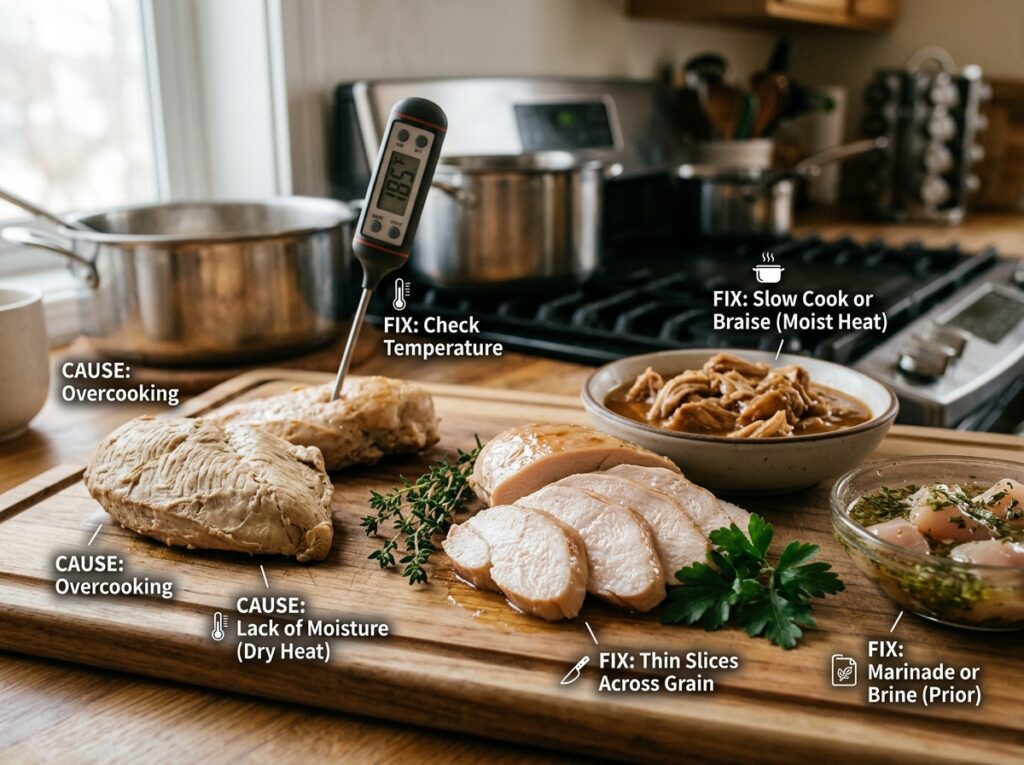
Chewy Chicken Causes and Fixes That Actually Work
You followed the recipe. Timed it right. Even used a good pan. But when you bit into that chicken, it fought back — rubbery, tough, and honestly kind of unpleasant. Sound familiar?
Chewy chicken is one of the most common kitchen frustrations, and it doesn’t just happen to beginners. Even experienced cooks run into this problem more often than they’d like to admit. The tricky part? There isn’t always one single reason behind it. Sometimes it’s about heat. Sometimes it’s the chicken itself. And sometimes, it’s a tiny mistake you didn’t even know you were making.
The good news is that once you understand what’s actually going on inside that piece of chicken, fixing the problem becomes surprisingly straightforward. So let’s break it all down — every real cause, every practical fix, and a few tricks that’ll change how your chicken turns out from now on.
What Does “Chewy” Chicken Actually Mean?
Before we get into causes and solutions, it helps to know what we’re really talking about. Not all bad chicken texture is the same.
Chewy chicken feels rubbery when you bite into it. You have to work your jaw harder than you should. It doesn’t fall apart or shred easily — instead, it has an almost elastic quality. Some people describe it as feeling like a rubber band or gum that you can’t quite chew through.
This is different from dry chicken, which crumbles and feels like sawdust in your mouth. Dry chicken has lost its moisture. Chewy chicken, on the other hand, has a structural problem — the protein fibers have tightened up in a way that makes the meat tough and resistant.
Sometimes you’ll get chicken that’s both chewy AND dry, which is basically the worst-case scenario. But understanding the difference helps you pinpoint what went wrong and choose the right fix.
The Real Reasons Your Chicken Turns Out Chewy
Here’s where most articles give you a simple list and move on. But the truth is, chewiness in chicken can come from multiple directions — how you cooked it, what you bought, how it was stored, and even what happened at the processing plant. Let’s go through each one properly.
Overcooking: The #1 Culprit
This is by far the most common reason. Chicken breast, especially, has very little fat compared to thighs or drumsticks. When you push it past its ideal internal temperature of 165°F (74°C), the proteins contract aggressively. They squeeze out moisture like wringing a towel. What’s left behind is a tight, dense piece of meat that chews like rubber.
And here’s what a lot of people don’t realize — you don’t have to overcook chicken by a lot for this to happen. Even 10–15 extra degrees can make a noticeable difference in texture. If you’re cooking chicken breast to 180°F “just to be safe,” you’re almost guaranteeing chewiness.
Pro Tip: The USDA confirms that chicken is safe at 165°F. You don’t need to go higher. Use a reliable meat thermometer and pull the chicken off heat at around 160–162°F. Carryover cooking will bring it up those last few degrees while it rests.
Undercooking Can Cause Chewiness Too
This surprises people, but yes — undercooked chicken can also feel chewy. Raw or partially cooked chicken has a slippery, jelly-like chewiness that’s distinctly different from the rubber-band texture of overcooked meat. The proteins haven’t set properly, so the meat feels soft yet oddly resistant.
If your chicken looks glossy or translucent in the center and has a strange bounce when you press it, it needs more time. And obviously, undercooked chicken is a food safety risk too. The question of whether 145°F is safe for chicken comes up a lot, and it’s worth understanding the science behind safe cooking temps before you experiment.
Cooking at Too High a Temperature
Blasting chicken on high heat sounds like a fast, easy approach. And for thighs or wings with skin, it can work well. But for lean cuts like boneless, skinless chicken breast? High heat is a problem.
When the outside of the chicken cooks much faster than the inside, you get an uneven texture. The outer layers become tight and chewy while the center might still be underdone. By the time the middle reaches 165°F, the outside has been at 200°F+ for way too long.
Medium heat — around 375°F in the oven or medium on the stovetop — gives the heat time to travel through the meat evenly. Patience matters here.
Skipping the Rest Period
This one is underrated. When chicken comes off the heat, the muscle fibers are contracted and the juices are pushed toward the surface. If you cut into it immediately, those juices run out onto your cutting board. You lose moisture, and the tight fibers don’t have a chance to relax.
Resting chicken for 5 to 10 minutes after cooking lets the fibers loosen up and the juices redistribute throughout the meat. It’s a simple step, but it genuinely transforms the texture. That chewy piece of chicken might have been perfectly fine if you’d just waited a few minutes before slicing it.
The “Woody Breast” Problem
Here’s something that has nothing to do with your cooking technique at all. Woody breast syndrome is a muscle condition that affects commercially raised chickens, particularly those bred for rapid growth. The breast meat develops hard, rigid bands of tissue that feel almost like wood — hence the name.
Research published in the Journal of Poultry Science estimates that this condition affects a significant percentage of commercially produced chicken breasts, especially the larger ones. If you’ve ever bought a thick chicken breast from the supermarket and noticed pale, stiff streaks or patches that felt unusually hard even when raw, you were probably looking at woody breast.
You can’t cook your way out of this. No amount of marinating, pounding, or slow-cooking will fix the underlying tissue abnormality. The best you can do is learn to identify it before cooking and avoid those pieces.
How to spot it: Look for chicken breasts that feel unusually stiff when you press them while raw. They might have white striping — thin white lines running parallel across the surface. Normal chicken breast should feel relatively soft and pliable when raw.
White Striping — A Related Concern
White striping goes hand-in-hand with woody breast. Those visible white lines on the surface of the meat are actually fat deposits within the muscle tissue. Chicken with moderate to severe white striping tends to be chewier and has a less pleasant texture overall.
This condition is more common in larger, conventionally raised birds. If you consistently get chewy results no matter what you do, switching to smaller, organic, or heritage breed chicken breasts might genuinely solve your problem. The difference is often dramatic.
Frozen and Thawed Incorrectly
How you handle chicken before cooking matters more than most people think. If chicken freezes too slowly, large ice crystals form inside the muscle fibers. Those crystals physically puncture the cell walls. When you thaw the chicken, moisture leaks out through those damaged cells, and you’re left with meat that’s both drier and chewier.
The thawing method matters too. Leaving chicken on the counter to thaw at room temperature is a food safety concern (check out this guide on chicken left out overnight), but it also causes uneven thawing — the outside warms up and starts to change texture while the inside is still frozen.
The best method? Thaw chicken slowly in the refrigerator. It takes longer (usually 24 hours for bone-in pieces), but the texture stays much better. If you need a guide on how long thawed chicken lasts in the fridge, that’s worth reading too.
Your Chicken Breast Is Too Thick
This is a sneaky cause that people overlook. A thick chicken breast — especially those massive ones weighing 10–12 ounces — cooks unevenly by default. The thin edge will be overdone by the time the thick center reaches a safe temperature.
Think about it geometrically. If one end of the breast is half an inch thick and the other end is two inches thick, they’re going to cook at wildly different rates. The result? One part is perfect, another part is dry and chewy.
How to Fix Chewy Chicken Every Time
Now that you know what causes the problem, let’s talk solutions. These aren’t complicated techniques — most of them take just a minute or two of extra effort.
Pound It Out for Even Thickness
Before you cook a chicken breast, place it between two sheets of plastic wrap or parchment paper and pound it to an even thickness — about ¾ inch all the way across. You can use a meat mallet, a rolling pin, or even a heavy skillet.
This single step solves the uneven cooking problem entirely. When the whole breast is the same thickness, it all reaches the target temperature at the same time. No more overcooked edges with a raw center.
If you’re deciding between different cuts, understanding the differences between chicken tenderloin and chicken breast can also help you pick the right cut for your recipe.
Brine Your Chicken
Brining is one of the most effective ways to prevent chewy chicken, and it’s ridiculously easy. A basic brine is just water and salt — about 1 tablespoon of kosher salt per cup of water. Submerge your chicken in the brine for 30 minutes to 2 hours before cooking.
What happens during brining? The salt changes the protein structure of the meat through a process called denaturing. The proteins unwind slightly, which does two things: they hold onto more water during cooking, and they don’t contract as aggressively when heated. The result is juicier, more tender chicken that’s much harder to overcook.
You can also do a dry brine by sprinkling kosher salt directly on the chicken and letting it sit uncovered in the fridge for a few hours or overnight. The salt draws moisture out initially, dissolves in it, and then gets reabsorbed into the meat. Dry brining also helps you get better browning on the surface.
Use a Meat Thermometer — Seriously
I know, you’ve heard this before. But this is the single most reliable way to prevent overcooking. Guessing by time alone doesn’t work because every piece of chicken is different — different thickness, different starting temperature, different oven hot spots.
An instant-read digital thermometer takes the guesswork out completely. Insert it into the thickest part of the chicken, and pull the meat off heat when it hits 160–162°F. The temperature will coast up to 165°F during resting.
If you’re not confident about reading a thermometer correctly, this guide on how to read a meat thermometer walks you through it step by step.
Marinate with Acid (But Not Too Long)
Acidic marinades — think lemon juice, vinegar, yogurt, or buttermilk — break down the surface proteins of chicken and can make it more tender. Yogurt-based marinades work particularly well because the lactic acid tenderizes gently without turning the outer layer mushy.
Here’s the catch though: don’t marinate too long in highly acidic liquids. Lemon juice or vinegar can actually make chicken chewier if left on for more than 2 hours. The acid over-denatures the proteins on the surface, causing them to tighten up and become tough. It’s the same effect you see in ceviche — acid “cooks” the meat.
A good rule of thumb:
- Lemon juice or vinegar marinades: 30 minutes to 2 hours max
- Yogurt or buttermilk marinades: 2 to 8 hours (overnight is fine)
- Soy sauce or wine-based marinades: 1 to 4 hours
Let It Come to Room Temperature Before Cooking
Taking chicken straight from the fridge to a hot pan means the outside has to work overtime just to heat through to the center. While the outside gets hammered by high heat, the inside is still catching up from 38°F.
Pull your chicken out of the fridge 15 to 20 minutes before cooking. This lets the meat warm up slightly so it cooks more evenly throughout. Don’t leave it out longer than 30 minutes for food safety reasons, but even a short rest at room temperature makes a real difference.
Choose the Right Cooking Method for the Cut
Not every cooking method works equally well for every cut of chicken. Lean, boneless breasts need a different approach than bone-in thighs.
For boneless, skinless chicken breast: Pan-searing over medium heat, baking at 375°F, or poaching in gently simmering liquid all work well. These methods allow the heat to travel through the meat without the outside getting blasted. If you want a reliable oven method, learning how long to bake chicken breast at 350°F gives you a tested baseline to work from.
For bone-in pieces like drumsticks: Higher heat works great because the bone conducts heat from the inside while the skin protects the outside. Baking chicken drumsticks at 400°F gives you crispy skin and juicy meat — the fat in dark meat keeps things moist even at higher temperatures.
For whole chicken or large pieces: Lower and slower is your friend. A roast at 350°F with a thermometer check keeps everything even and tender.
The Velveting Technique
If you’ve ever wondered why Chinese restaurant chicken is impossibly silky and tender, the answer is usually velveting. This technique involves coating chicken pieces in a mixture of egg white, cornstarch, and a little rice wine or soy sauce, then briefly blanching them in water or oil before stir-frying.
The cornstarch and egg white create a protective coating around each piece of chicken. This barrier insulates the meat during high-heat cooking, preventing the proteins from contracting too quickly. The result is tender, almost slippery-smooth chicken that stays that way even after being tossed in a hot wok.
To velvet chicken at home: mix 1 egg white, 1 tablespoon of cornstarch, 1 tablespoon of soy sauce, and a pinch of salt. Toss your sliced chicken in this mixture and refrigerate for 15–30 minutes. Then blanch the pieces in simmering water for about 60 seconds before draining and continuing with your recipe.
Can You Fix Chicken That’s Already Chewy?
Honestly? It depends on how bad it is. If it’s mildly overcooked, you can salvage it.
Shred it. Chewy chicken is much more tolerable when shredded into small pieces. Toss it in a sauce — barbecue, teriyaki, curry, Buffalo — where the liquid can rehydrate the outer fibers slightly. Use it in tacos, sandwiches, wraps, or soup. You won’t get restaurant-quality chicken this way, but it’ll be edible and even enjoyable.
Simmer it in broth. Cut the chicken into thin slices and let it simmer in warm (not boiling) chicken broth for a few minutes. The low, gentle heat won’t tighten the proteins further, and the broth adds back some moisture.
Make chicken salad. Chop it fine, mix it with mayo, celery, and seasonings. The small pieces and creamy dressing mask the texture issue almost completely.
If you’re dealing with woody breast, though, there’s really no fix. That’s a structural problem with the meat itself, and the best move is to toss it or use it in a heavily processed application like soup where texture is less noticeable.
Chicken Breast vs. Chicken Thighs: Why Thighs Are More Forgiving
There’s a reason professional chefs tend to prefer dark meat for most dishes. Chicken thighs have more fat and connective tissue than breasts. That fat keeps the meat moist during cooking, and the collagen in connective tissue actually melts into gelatin at higher temperatures, making the meat more tender — not less.
You can overcook a chicken thigh by a good 15–20 degrees past the ideal temperature and still have something that tastes great. Try that with a breast and you’ll be chewing for a while.
If chewy chicken is a persistent problem for you, switching to thighs for recipes like stir-fries, curries, casseroles, and grilling might solve the issue entirely. They’re also cheaper per pound in most grocery stores, so it’s a win-win.
That doesn’t mean chicken breast can’t be great — it absolutely can. It just needs a little more care and attention.
Does Boiling Make Chicken Chewy?
Boiling gets a bad reputation, and some of it is deserved. True boiling — water at a rolling, aggressive boil (212°F) — can absolutely make chicken chewy. The violent, high heat tightens the muscle fibers quickly, and the agitation can actually break the meat apart on the surface while leaving the inside tough.
Poaching is different, and it works beautifully. Poaching means cooking chicken in liquid that’s barely simmering — around 170–180°F. You should see small bubbles rising gently from the bottom, not a rolling boil. At this temperature, the proteins set slowly and gently. The meat stays tender and moist.
If you’re curious about cooking frozen chicken in water, this guide on whether you can boil frozen chicken covers the right way to do it without ending up with a chewy mess.
The Role of Chicken Quality and Sourcing
Something that rarely gets discussed in cooking articles: the chicken you buy matters enormously.
Commercially raised broiler chickens in the U.S. are typically slaughtered at around 6–8 weeks of age. These birds have been bred for rapid growth, and they put on breast meat at an unnatural rate. This rapid growth is directly linked to conditions like woody breast and white striping.
Chickens labeled as “free-range,” “pasture-raised,” or “heritage breed” tend to have more natural muscle development. Their meat has better texture, more flavor, and a lower incidence of these myopathy conditions. Yes, they cost more — sometimes significantly more. But if chewy chicken is driving you crazy despite doing everything else right, the quality of your raw ingredient might be the missing piece.
Air-chilled chicken also tends to have better texture than water-chilled chicken. Most conventional chicken in the U.S. is cooled in a chlorinated water bath after slaughter, which causes the meat to absorb water. This extra water evaporates during cooking, which can contribute to drier, chewier results. Air-chilled chicken doesn’t absorb that extra water, so the texture stays more natural.
Quick Reference: Ideal Internal Temperatures
Knowing your target temps eliminates most chewy chicken problems. Here’s what you need:
- Chicken breast (boneless): Pull at 160°F, rest to 165°F
- Chicken breast (bone-in): Pull at 162°F, rest to 165°F
- Chicken thighs: 175–185°F (higher is actually better for dark meat)
- Chicken drumsticks: 175–185°F
- Whole chicken: 165°F at the thickest part of the thigh
Did you know? Dark meat tastes best at higher temperatures because the collagen needs heat to convert into gelatin. A chicken thigh at exactly 165°F is safe to eat but won’t be as tender or flavorful as one cooked to 180°F. This is the opposite of breast meat, where every degree above 165°F costs you moisture and tenderness.
FAQ
Why is my chicken chewy even though I didn’t overcook it?
If your thermometer says 165°F and the chicken is still chewy, you’re likely dealing with woody breast syndrome — a condition in commercially raised chickens where the breast muscle develops hard, fibrous tissue. This isn’t a cooking error. The meat itself has a structural issue. Try buying smaller chicken breasts (under 8 ounces) or switching to air-chilled, organic brands. Thighs are another great alternative since they rarely have this problem.
Can marinating fix chewy chicken?
Marinating can help prevent chewiness, but it won’t fix chicken that’s already overcooked. Dairy-based marinades (yogurt, buttermilk) are the most effective because lactic acid gently tenderizes without making the surface mushy. Acidic marinades with lemon or vinegar work too, but keep the time under 2 hours or they’ll actually make the texture worse. For best results, combine marinating with proper cooking technique — right temperature, right heat level, and resting after cooking.
Is chewy chicken safe to eat?
Chewy texture alone doesn’t mean chicken is unsafe — but it depends on why it’s chewy. Overcooked chicken that’s chewy and rubbery is fully safe, just unpleasant. Undercooked chicken that feels slimy and chewy with a translucent or pink center is NOT safe and can harbor harmful bacteria like Salmonella. Always verify doneness with a meat thermometer. If the internal temp is 165°F or above, the chicken is safe regardless of texture.
Does reheating chicken make it chewy?
Yes, reheating can definitely make chicken chewier, especially if you use high heat. Microwaving on full power is the worst offender — it heats unevenly and continues to tighten the already-cooked proteins. To reheat chicken without adding chewiness, use low and slow methods. Warm it in a 300°F oven covered in foil with a splash of broth, or reheat gently on the stovetop in a sauce. The moisture and lower heat help keep the texture closer to its original state.
What’s the best cut of chicken to avoid chewiness?
Bone-in, skin-on chicken thighs are the most forgiving cut. Their higher fat content and connective tissue make them naturally resistant to overcooking. If you prefer white meat, chicken tenderloins are thinner and more uniform than full breasts, so they cook more evenly and are less likely to turn chewy. For breasts specifically, look for smaller ones (6–8 ounces), pound them to even thickness, and brine before cooking.
One Last Thought
Chewy chicken isn’t a mystery — it’s a solvable problem with clear causes. Most of the time, it comes down to overcooking, uneven thickness, or skipping basic steps like brining and resting. Sometimes, though, the chicken itself is the issue, and no cooking technique can overcome woody breast or poor-quality meat.
Start with the simplest fixes first. Get a good thermometer. Pound your chicken breasts flat. Let them rest after cooking. These three changes alone will transform your results. And if you’re still struggling after all that, give chicken thighs a real chance — you might never go back to breast meat again.
Your next piece of chicken doesn’t have to be a chewing exercise. You’ve got the knowledge now. Go put it to work.