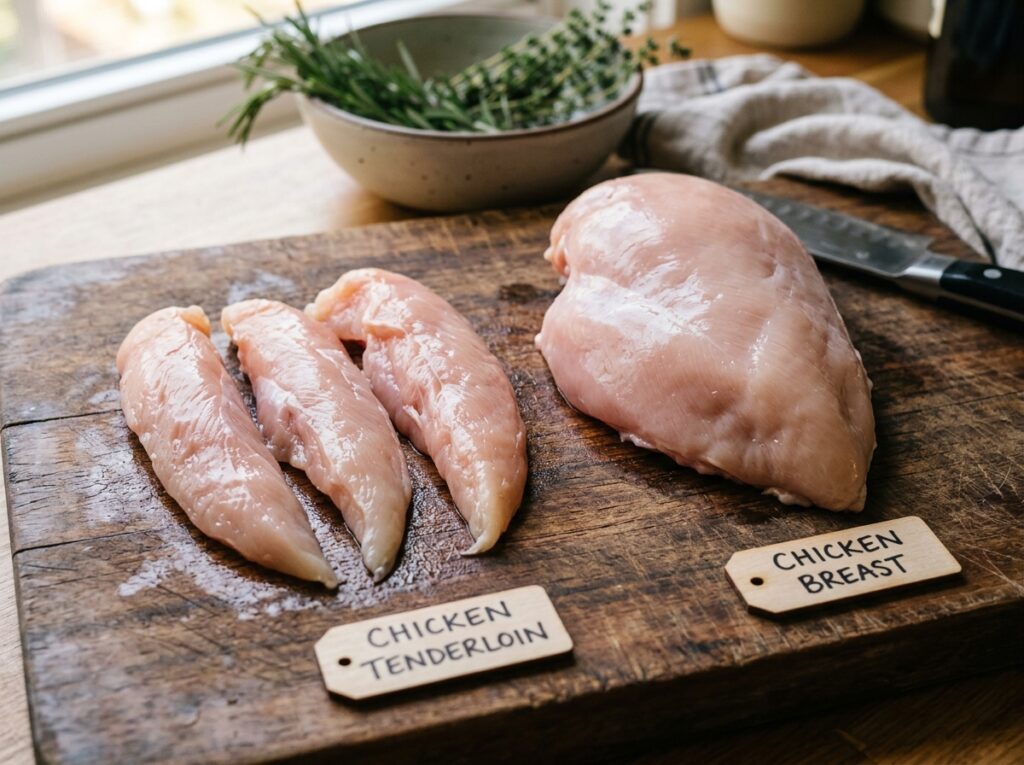
Chicken Tenderloin vs Breast — Which One Should You Pick?
Tenderloin?
Here’s something that surprises a lot of people — the chicken tenderloin isn’t a separate part of the bird. It’s actually a small strip of meat attached to the underside of the breast. You know that thin, floppy piece that sometimes hangs off when you buy a whole breast? That’s the tenderloin.
It’s technically called the pectoralis minor, the smaller of the two chest muscles. Think of it like this: if the chicken breast is the main act, the tenderloin is the backup singer. Smaller, softer, and a little more delicate.
Each chicken has exactly two tenderloins — one under each breast half. Because it’s a muscle that doesn’t do heavy lifting (chickens aren’t exactly known for their push-ups), the tenderloin stays incredibly tender. That’s literally where the name comes from.
You’ll sometimes hear people call them “chicken tenders” or “chicken fingers,” but there’s a subtle difference worth knowing. True chicken tenderloins are a specific anatomical cut. Those breaded chicken tenders you get at a restaurant? They could be made from tenderloins, but they’re often just breast meat sliced into strips. Not the same thing.
What About the Chicken Breast?
The chicken breast is the pectoralis major — the large, thick muscle that makes up the bulk of the chicken’s chest. It’s the most popular cut of chicken sold in the United States, and the USDA reports that Americans consume roughly 93 pounds of chicken per capita annually (2024 data), with breast meat accounting for the biggest share.
A whole chicken breast (both halves together, bone-in) can weigh over a pound. What you usually find in stores are split breasts — one half, boneless and skinless — weighing somewhere between 6 and 10 ounces each. If you’ve ever wondered how many chicken breasts come in a pound, the answer depends on size, but you’ll typically get two to three pieces.
The shape matters too. A chicken breast is thick at one end and tapers down to a thin edge. That uneven thickness is actually the number one reason people overcook their chicken breasts. The thin part dries out while the thick part is still catching up.
Tenderloin vs Breast: The Real Differences That Matter
Let’s break down what actually separates these two cuts where it counts — on your plate, in your wallet, and in your kitchen.
Size and Shape
A chicken tenderloin is narrow, uniformly thin, and roughly 5–6 inches long. Its even thickness is a big deal because it means more consistent cooking. No thin edges burning while the center stays raw.
A chicken breast, on the other hand, is wider, thicker, and irregularly shaped. That thick-to-thin taper can be frustrating. Many home cooks pound their breasts flat or butterfly them just to get even cooking — an extra step you don’t need with tenderloins.
Texture and Tenderness
This is where the tenderloin earns its name. The tenderloin has a noticeably softer, more delicate texture. It almost melts in your mouth when cooked properly. The muscle fibers are finer, and there’s less connective tissue to deal with.
Chicken breast is firmer and denser. It can absolutely be juicy and delicious when cooked right, but it’s far less forgiving. Overcook a breast by even a couple of minutes and you’ll end up with something that feels like chewing on a rubber band. That’s a common chewy chicken problem that frustrates a lot of home cooks.
There’s also a small tendon that runs through each tenderloin — a white, tough strip you might want to remove before cooking. Some people leave it, some pull it out with a fork and knife. It won’t hurt you, but it can be a bit chewy if left in.
Flavor
Here’s the honest truth: the flavor difference between tenderloin and breast is subtle. Both are mild, lean white meat. If you seasoned them identically and cooked them to the same internal temperature, most people would struggle to tell them apart in a blind taste test.
That said, the tenderloin does tend to absorb marinades and seasonings slightly better because it’s thinner and has a more porous texture. If you’re marinating chicken for a stir-fry or curry, tenderloins soak up flavor faster — usually 15–30 minutes is enough, compared to 1–2 hours for a thick breast to get the same depth of flavor.
Nutrition Comparison
Both cuts are nutritional powerhouses for anyone watching their protein intake. Here’s a side-by-side look per 3-ounce cooked serving (based on USDA FoodData Central, 2024):
Chicken Breast (skinless, boneless): ~128 calories, 26g protein, 2.7g fat, 0g carbs
Chicken Tenderloin: ~100 calories, 18g protein, 2g fat, 0g carbs
The breast gives you more protein per serving simply because you’re eating a bigger, denser piece of meat. Per gram, though, the protein content is nearly identical. If you’re a bodybuilder tracking every macro, breasts give you a slight edge. For everyone else? The difference is barely worth worrying about.
Both cuts are low in saturated fat and contain zero carbohydrates. They’re also good sources of niacin (vitamin B3), phosphorus, and selenium.
Price
Here’s where things get interesting. Chicken tenderloins are almost always more expensive than chicken breasts — sometimes $1–3 more per pound. As of early 2025, you’ll typically see boneless skinless breasts at $3–5 per pound and tenderloins at $4–7 per pound, depending on your location and whether you’re buying organic.
Why the price gap? Two reasons. First, supply: each chicken only produces about 3–4 ounces of tenderloin meat versus over a pound of breast meat. Second, convenience: tenderloins require less prep, cook faster, and are more kid-friendly, so demand stays high.
Pro Tip: If you buy whole boneless chicken breasts, the tenderloin is often still attached. Pull it off yourself and you’ve basically gotten your tenderloins for free. That’s the best deal in the chicken aisle.
Cooking: Where the Choice Really Shows Up
The cut you pick should depend on what you’re making. These two pieces of chicken behave differently in the kitchen, and matching the right cut to the right recipe saves you time and frustration.
Best Uses for Chicken Tenderloins
Tenderloins shine in quick-cooking situations. Their thin, even shape means they cook fast — usually 3–4 minutes per side on a medium-high skillet. That speed is a lifesaver on busy weeknights.
They’re perfect for breaded chicken strips (the real kind, not the processed stuff), quick sautés, stir-fries, chicken satay skewers, and kid-friendly meals. Kids tend to prefer tenderloins because they’re easier to eat, less intimidating in portion size, and have that softer texture.
Tenderloins also work beautifully on the grill, but you need to pay attention. Because they’re thin, they can go from perfectly cooked to overcooked in under a minute. High heat, quick sear, and pull them off the moment they hit 165°F internal temperature. A good meat thermometer isn’t optional here — it’s essential.
If you’ve seen the debate about whether 145°F is safe for chicken, it’s worth reading up on. The USDA’s official recommendation remains 165°F, though some chefs and food scientists argue for lower temps held for longer periods. With thin tenderloins, though, they reach 165°F so quickly that there’s really no reason to experiment.
Best Uses for Chicken Breasts
Chicken breast is your go-to when you need thick, substantial pieces of meat. Think stuffed chicken breast, chicken parmesan, grilled chicken for salads, sliced chicken for sandwiches, or any recipe where the chicken is the main event on the plate.
Baking is where breasts really excel. A properly baked chicken breast at 350°F for about 25–30 minutes gives you a juicy, perfectly cooked piece of protein that you can slice, shred, or serve whole. The key is not to skip the thermometer check and resist the urge to crank up the heat “just to be safe.” Higher heat doesn’t make chicken safer — it just makes it drier.
Breasts are also better for meal prep. Because they’re bigger, you can cook a batch on Sunday, slice them up, and use them across multiple meals throughout the week. Just make sure to store them properly. Cooked chicken stored in the fridge stays safe for 3–4 days when kept at or below 40°F.
For shredding — like for tacos, soups, or enchiladas — breast is the better choice. You get more meat per piece, and the firmer texture shreds into nice, distinct strands. Tenderloins tend to fall apart into mush when you try to shred them.
The Overcooking Problem (and How to Fix It)
Both cuts can turn into dry, disappointing shoe leather if you overcook them. But breasts are far more prone to this problem because of their thickness.
A few tricks that work for both cuts:
Brining is probably the single best thing you can do for lean chicken. Soaking your chicken in a simple solution of water, salt, and a touch of sugar for 30 minutes to an hour makes a massive difference. The salt changes the protein structure, helping the meat retain moisture during cooking. Even a quick 15-minute brine works wonders on tenderloins.
Pounding your breasts to even thickness (about ¾ inch) solves the uneven cooking problem entirely. Put the breast between two sheets of plastic wrap and use a meat mallet, rolling pin, or even a heavy pan. This one step eliminates the dry-edges-raw-center issue.
Resting your chicken for 5 minutes after cooking lets the juices redistribute. Cut into it immediately and those juices run out onto your cutting board instead of staying in the meat where you want them.
Which One Should You Buy? A Practical Decision Guide
Your choice depends on a few honest questions.
Are you cooking for kids or picky eaters? Go with tenderloins. The smaller size, softer texture, and faster cook time make life easier. Kids eat them without complaint, and you spend less time in the kitchen.
Are you on a tight grocery budget? Chicken breasts win on value. You get more meat per dollar, and if you remove the attached tenderloins yourself, you get both cuts for the price of one. That’s smart shopping.
Are you meal prepping for the week? Breasts are more practical. They hold up better in the fridge, slice neatly, and give you versatile protein you can toss into salads, wraps, grain bowls, and pastas.
Are you making a quick weeknight dinner? Tenderloins get dinner on the table in 15 minutes flat. Season them, sear them, done. If you don’t want to deal with pounding, butterflying, or monitoring a thick piece of meat, tenderloins remove all that hassle.
Are you counting macros or building muscle? Breasts give you slightly more protein per serving. For serious athletes or bodybuilders, that small edge adds up over dozens of meals per week.
Did you know? You can often find frozen bags of chicken tenderloins at big warehouse stores like Costco or Sam’s Club for significantly less than fresh tenderloins at regular grocery stores. The quality is usually just fine — flash-frozen chicken retains its moisture and nutrition well. Just thaw them safely in the fridge overnight rather than on the counter. If you’re in a pinch, you can even boil frozen chicken safely, though the texture won’t be quite as good as thawed-first methods.
Can You Swap One for the Other in Recipes?
Yes, but with some adjustments.
If a recipe calls for chicken breast and you’re using tenderloins instead, you’ll need to reduce your cooking time significantly — often by 30–50%. Don’t walk away from the stove. What takes a breast 25 minutes in the oven might only take tenderloins 12–15 minutes.
Going the other direction — swapping breasts for tenderloins in a recipe — works too, but you’ll want to pound the breast thinner or slice it into strips to mimic the tenderloin’s shape. Otherwise you’ll end up with unevenly cooked chicken and a recipe that doesn’t quite taste right.
For marinated or sauced dishes like curries, stews, or slow-cooker recipes, the swap is almost seamless. The liquid environment forgives a lot of sins, and both cuts absorb flavors nicely when they’re simmering in sauce.
One place where the swap doesn’t work great: anything battered and fried. Real chicken tenderloins have that perfect finger-food shape and size. Cutting a breast into strips works, but the texture isn’t identical. The tenderloin’s natural grain creates a slightly different bite — a bit more pull-apart, less dense. If you’re making chicken tenders for a game day spread, use actual tenderloins if you can.
Storage and Food Safety: Same Rules Apply
Both cuts follow the same food safety guidelines. Raw chicken — whether tenderloin or breast — lasts 1–2 days in the fridge and up to 9–12 months in the freezer if properly wrapped.
The danger zone for chicken is between 40°F and 140°F. If you accidentally leave chicken out overnight, toss it. No exceptions. Bacteria like Salmonella and Campylobacter multiply rapidly at room temperature, and no amount of cooking will neutralize all the toxins they produce.
Once cooked, both cuts store well for 3–4 days in the fridge in an airtight container. Tenderloins tend to dry out a bit faster when reheated because they’re thinner, so consider adding a splash of broth or sauce when reheating them to bring back some moisture. And yes — that reheating tip works for any lean protein, not just steak.
FAQ
Is chicken tenderloin healthier than chicken breast?
Neither one is significantly healthier than the other. Both are lean, high-protein, low-fat cuts of white meat. Chicken breast has a slight edge in protein per serving simply because it’s a larger, denser cut. But if you’re eating a balanced diet, both cuts fit perfectly into a healthy meal plan.
Why are chicken tenderloins more expensive?
Supply and convenience. Each chicken only produces about 3–4 ounces of tenderloin compared to over a pound of breast meat. Tenderloins also require less prep work and cook faster, which drives demand up. You can save money by buying whole breasts and removing the attached tenderloins yourself.
Can I use chicken tenderloins for grilling?
Absolutely. Tenderloins grill beautifully — they cook in just 3–4 minutes per side on medium-high heat. The key is to avoid overcooking. Use a meat thermometer and pull them off the grill at 165°F. Skewering them (like chicken satay) helps prevent them from falling through the grates and gives you more control.
Do I need to remove the tendon from chicken tenderloins?
You don’t need to, but most cooks prefer to. The white tendon that runs through the tenderloin can be tough and chewy when cooked. To remove it, hold the tendon end with a paper towel (for grip), place a fork tine on either side of the tendon, and pull. It slides right out in a couple of seconds.
Are “chicken tenders” from restaurants made from actual tenderloins?
Sometimes, but not always. Many restaurants and fast-food chains use breast meat sliced into strips rather than actual tenderloins. True tenderloin-based tenders have a softer texture and slightly irregular shape. If the “tender” is perfectly uniform and very thick, it’s probably cut from a breast.
So, Which One Wins?
Neither — and that’s the real answer. Chicken tenderloin and chicken breast are both excellent cuts that serve different purposes in your kitchen. The tenderloin is your quick, tender, hassle-free option. The breast is your versatile, budget-friendly workhorse that handles almost any recipe you throw at it.
If you’ve been defaulting to one cut without thinking about it, try the other one next time. Grab some tenderloins for a fast Tuesday night dinner. Stock up on breasts for Sunday meal prep. Once you understand how each cut behaves — how it cooks, how it tastes, and where it fits — your chicken game gets a whole lot better.
And remember that little trick: buy whole breasts, pull off the tenderloins, and you’ve got the best of both worlds sitting right there in your fridge.