Shank or Butt Ham — What’s Actually Different?
Nearly 80% of Americans serve ham at least once during the holiday season — and most of them stand in the grocery store staring at two labels without knowing which one to grab. Shank ham. Butt ham. They’re both from the same leg of the pig, yet they cook differently, taste differently, and work for completely different situations.
If you’ve ever brought home the wrong cut and ended up with something dry, hard to carve, or just not what you pictured, you already know the frustration. The thing is, neither cut is “better” in some universal sense. One just happens to be better for you, depending on what you’re cooking, how many people you’re feeding, and how comfortable you are with a carving knife.
Let’s break down exactly what separates these two cuts so you can walk into that meat aisle with confidence.
Where Do These Cuts Actually Come From?
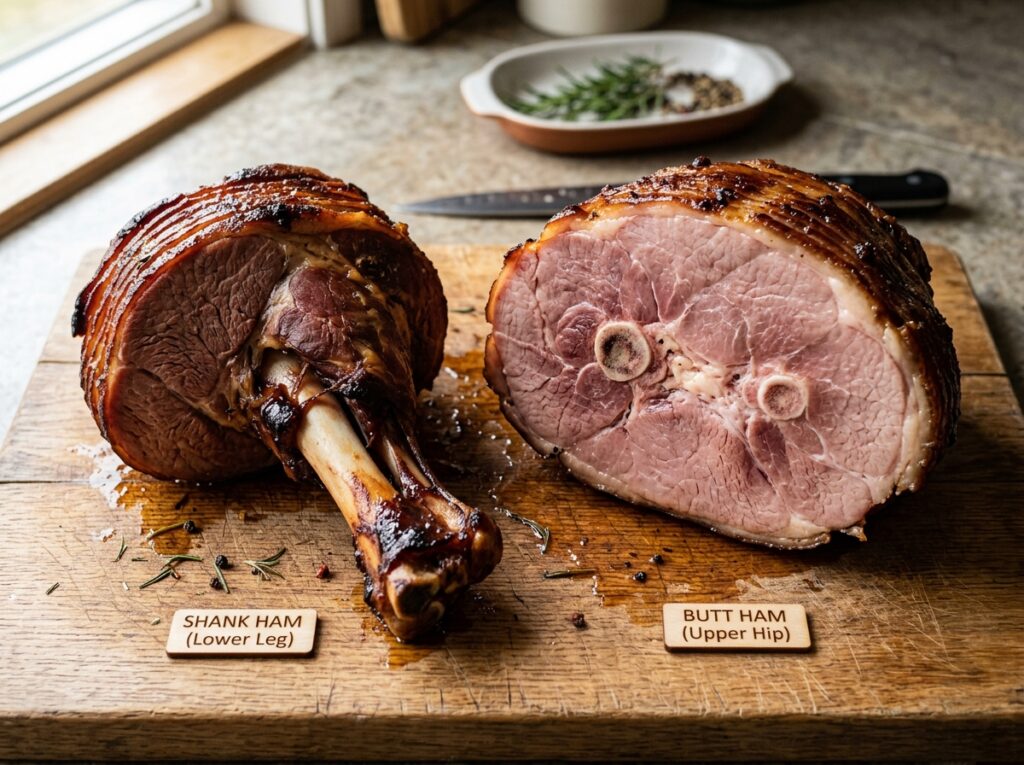
Here’s the thing most people don’t realize — shank ham and butt ham come from the same rear leg of the pig. They’re just two halves of it.
Picture the pig’s hind leg like your own. The shank is the lower portion, running from about the knee down to the ankle. The butt (sometimes called the “sirloin” or “rump” portion) is the upper part, closer to the hip. A whole ham is the entire back leg, and butchers simply split it into these two sections.
That single difference in location on the leg changes everything — the bone structure, the muscle composition, the fat distribution, and how forgiving each piece is when you cook it.
Quick Fact: The word “butt” here has nothing to do with the pig’s rear end in the way you might think. It refers to the upper, thicker portion of the leg. Confusing? Absolutely. But now you know.
Shank Ham: The Classic Crowd-Pleaser
The shank half is what most people picture when they hear the word “ham.” It’s that iconic, tapered shape — wide at the top, narrowing down toward the bone at the bottom. You’ve seen it in holiday movies, on magazine covers, on every Thanksgiving and Easter table across the country.
What Makes It Special
The shank has one main leg bone running through it, and the meat surrounds that bone in a fairly uniform way. This is a huge deal because it means carving is straightforward. You can slice around the bone without fighting through a maze of connective tissue.
The meat itself tends to be a bit leaner than the butt end. The muscles in the lower leg work harder during the pig’s life (think of how much your calves work compared to your thighs), so you get a firmer texture with well-defined muscle fibers. The flavor is clean, porky, and classic.
The fat cap on the outside is where the magic happens. That layer of fat bastes the meat as it cooks, and it’s the perfect canvas for a glaze. Honey-mustard, brown sugar and pineapple, maple bourbon — whatever glaze you love, the shank’s shape and fat distribution hold it beautifully.
Where It Falls Short
Because the shank is leaner, it can dry out faster if you overcook it. That’s the trade-off. You’re getting easier carving and a prettier presentation, but you need to be a little more careful with your cooking time and temperature.
There’s also slightly less total meat on a shank compared to a butt of similar weight, because the bone-to-meat ratio tilts a bit more toward bone. Not dramatically, but enough that you’ll notice if you’re feeding a big crowd on a budget.
If you’re planning to reheat a honey baked ham you bought pre-cooked, the shank portion tends to reheat more evenly thanks to its consistent thickness around the bone.
Butt Ham: The Underrated Powerhouse
The butt half doesn’t get the same love in pop culture, but ask any butcher or experienced cook, and they’ll tell you it has some serious advantages.
What Makes It Special
The butt portion sits higher on the leg, closer to the hip joint. This part of the animal does less direct movement, so the muscles are a bit more marbled with fat. That intramuscular fat translates to more moisture and richer flavor during cooking.
You get more meat per pound with the butt half. The bone structure is different — there’s a hip bone (sometimes called the aitch bone) and sometimes part of the pelvic bone embedded inside. The meat wraps thickly around these bones, which means more servable portions per dollar spent.
For pulled or shredded ham dishes, the butt half is fantastic. The extra fat keeps everything juicy, and the meat shreds nicely once it’s cooked through. If you’re making ham salad, ham and bean soup, or sandwiches from leftovers, this cut gives you better material to work with.
Where It Falls Short
Carving. This is where the butt ham tests your patience.
That hip bone sits at an awkward angle inside the meat. Unless you’ve worked around one before, you’ll likely find yourself sawing in weird directions, ending up with uneven slices, and leaving good meat stuck to the bone. It’s not impossible — it just requires either some practice or a willingness to look up a quick tutorial before you start.
The shape is also rounder and less photogenic on a platter. If presentation matters to you (and it should — we eat with our eyes first), the butt half takes a bit more effort to make look impressive.
Pro Tip: Ask your butcher to remove the hip bone before you take the butt ham home. Some grocery stores sell “boneless butt ham” for exactly this reason. You’ll lose a tiny bit of flavor that the bone adds during cooking, but you’ll gain a massive amount of convenience.
Side-by-Side: How They Actually Compare
Let’s put these two cuts next to each other on the things that matter most.
Flavor: The butt ham wins by a small margin. More intramuscular fat means deeper, richer taste. The shank is still delicious — just a touch leaner and cleaner in flavor.
Texture: Shank meat is firmer with defined grain. Butt meat is softer, more tender, and a little more forgiving if you overshoot your cook time by 15 minutes.
Ease of Carving: Shank wins, hands down. One simple bone, predictable slicing. The butt ham’s irregular bone structure makes carving trickier.
Meat-to-Bone Ratio: Butt ham gives you more actual meat per pound you’re paying for.
Presentation: The shank’s tapered shape looks stunning on a holiday table. The butt is rounder and less dramatic.
Price: Generally similar, though you might find the shank priced slightly higher during holiday season due to demand.
Best for Glazing: Shank. That exposed fat cap and tapered shape create more surface area for a caramelized, sticky glaze.
Best for Leftovers: Butt. More meat overall, and the fattier texture stays moist when refrigerated and reheated.
Cooking Methods: Getting the Best From Each Cut
Both cuts respond well to slow, low-temperature cooking in the oven. But they each have sweet spots worth knowing about.
Cooking a Shank Ham
Set your oven to 325°F and plan for about 15–18 minutes per pound for a pre-cooked (city) ham, or 22–26 minutes per pound if you’ve got a raw (country) ham. Score the fat cap in a diamond pattern, stud with cloves if you like, and add your glaze during the last 30 minutes.
The shank’s shape means the narrower end will cook faster than the thicker top. To manage this, you can tent the thinner end with foil halfway through cooking. This prevents it from drying out while the rest catches up.
Use a reliable meat thermometer and pull the ham when the thickest part reads 140°F for a pre-cooked ham, or 145°F for a fresh, uncooked ham. Let it rest for 15–20 minutes before carving. The internal temperature will climb another 5 degrees or so during the rest.
Cooking a Butt Ham
Same oven temperature — 325°F — works great here. Because the butt is thicker and rounder, it tends to cook a bit more evenly than the shank. You’re still looking at about 15–18 minutes per pound for pre-cooked.
The extra fat in the butt means you can afford to be slightly less paranoid about drying it out. That doesn’t mean you should ignore it, but you’ve got a wider margin for error.
One trick that works particularly well with butt ham: cook it cut-side down in the roasting pan. The flat side where the butcher separated it from the shank creates a stable base. The fat and juices run down through the meat instead of away from it.
If you’re dealing with other pork cuts and want to nail the temperature, understanding internal pork butt temp is worth a read — especially since the naming overlap between pork butt (shoulder) and butt ham confuses a lot of people.
Which One Should You Pick? Real Scenarios That Help You Decide
Theory is fine, but let’s get practical. Here are real situations and which cut makes more sense for each.
You’re hosting Thanksgiving or Easter dinner for 8–12 people
Go with the shank. You want something that looks gorgeous when you bring it to the table, and you want carving to go smoothly while everyone watches. The shank delivers on both. A 7–8 pound bone-in shank half will serve 10–12 people comfortably.
You’re cooking for a potluck or big casual gathering
Butt ham is your friend here. You’ll get more servable meat, and since nobody’s watching you carve at a buffet table, the tricky bone structure doesn’t matter. Cut it up in the kitchen, pile it on a platter, and let people serve themselves.
You want amazing leftovers for the week
Butt ham, again. The higher fat content means your day-three ham sandwich still tastes juicy instead of chalky. Ham fried rice, ham and cheese omelets, ham and potato soup — all of these are better with meat that hasn’t dried out in the fridge.
You’re a first-time ham cook
Shank, without question. The simpler bone structure and more predictable shape mean fewer things can go wrong. You’ll feel more confident, and the result will look like you’ve been doing this for years.
You’re making a spiral-sliced ham
Most pre-sliced spiral hams you see at the store are shank halves, and there’s a good reason for that. The single bone and consistent meat thickness make spiral slicing possible. You can find spiral-sliced butt hams, but they’re less common and often don’t slice as cleanly.
You want to smoke the ham
Either cut works on a smoker, but the butt ham handles long smoke sessions better because the fat keeps everything lubricated. If you’re already familiar with pork tenderloin in the oven at 400 or other pork roasting methods, you’ll find that smoking a butt ham follows similar patience-and-temperature principles — just stretched over a longer time.
Carving Tips That Save You From Embarrassment
Nobody talks about this enough, but carving is where a great ham dinner either shines or falls apart. Here’s what works for each cut.
Carving a Shank Ham
Place the ham on the cutting board with the cut (flat) side down so it sits stable. Start slicing perpendicular to the bone, working from the wider end toward the narrow end. Once you’ve cut to the bone, run your knife along the bone horizontally to release all the slices at once.
A sharp knife matters more than technique. If you’re working with a dull blade, you’ll tear instead of slice, and your beautiful ham will look shredded. A good chef knife like the Dalstrong Omega makes a real difference for jobs like this.
Carving a Butt Ham
This one takes a slightly different approach. Locate the bone first — feel around with your fingers or make a small exploratory cut. Once you know where the bone sits, carve slices away from it at the angle the bone dictates. You’re essentially working around an irregularly shaped obstacle.
Don’t try to get perfect uniform slices. It won’t happen with the butt ham’s bone structure, and you’ll just frustrate yourself. Aim for reasonably even pieces, and remember that slightly imperfect slices taste exactly the same as perfect ones.
What About Bone-In vs. Boneless?
Both shank and butt hams come in boneless versions. Are they worth it?
Boneless hams are easier to carve — obviously — and you’re paying purely for meat weight. But you do lose something. The bone contributes flavor during cooking, and it acts as a natural heat conductor, helping the ham cook more evenly from the inside out.
Boneless hams are also typically reformed and pressed into a uniform shape, which means the texture can feel a bit different. Some people describe it as slightly “spongy” compared to a bone-in ham. It’s not bad, just noticeably different.
If convenience is your priority, boneless works fine. If you want the best possible flavor and don’t mind the carving challenge, stick with bone-in. And keep that bone after carving — it’s liquid gold for split pea soup, bean soup, or any stock-based recipe.
The bone-in versus boneless debate shows up across all kinds of meat cuts. If you’ve ever compared chicken tenderloin vs chicken breast, you know how much the specific cut affects your cooking approach, even within the same animal.
Storing Your Leftover Ham the Right Way
A whole ham generates a lot of leftovers, and how you store them determines whether you enjoy those leftovers or toss them.
Wrap cut ham tightly in plastic wrap or aluminum foil, or store it in airtight containers. Refrigerated ham stays good for 5–7 days after cooking. If you know you won’t eat it all in a week, slice or cube the meat and freeze it. Frozen ham keeps its quality for about 2 months, though it remains safe indefinitely in the freezer.
The butt ham’s fattier meat actually holds up better in the fridge and freezer because fat protects against moisture loss. Lean shank ham can taste dry by day four or five unless you’ve stored it with some of its pan juices.
If you’re the type to meal-prep, you can also portion leftover ham and pair it with other make-ahead foods. Knowing how long cooked rice lasts in the fridge helps you plan ham fried rice later in the week without worrying about food safety.
The Cost Factor: Getting More Value From Your Dollar
Ham is one of the most economical large-format meats you can buy, but the price does fluctuate based on the cut and time of year.
During peak holiday weeks (the two weeks before Easter, Thanksgiving week, Christmas week), shank hams tend to cost more because demand skyrockets. Butt hams often sit right next to them at a lower price per pound because fewer people specifically ask for them.
Here’s a smart move: buy the butt ham during peak season when it’s cheaper, and buy shank ham in the off-season when prices drop. A whole bone-in ham (either half) typically runs between $2 and $5 per pound depending on the brand, preparation style (smoked, honey-glazed, etc.), and whether it’s on sale.
For the best deal on a per-serving basis, the butt ham usually wins because of its superior meat-to-bone ratio. You might pay the same per pound, but you’ll get more actual edible meat on your plate.
Wet-Cured vs. Dry-Cured: Does It Affect the Shank vs. Butt Decision?
Most hams sold at American grocery stores are wet-cured (city hams) — they’ve been brined or injected with a saltwater solution and then smoked. These are ready to eat or just need reheating.
Dry-cured (country hams) are rubbed with salt and spices and aged for weeks or months. They’re intensely flavored, much saltier, and require soaking before cooking.
For wet-cured hams, either the shank or butt works great. The brine penetrates both cuts fairly evenly, and the smoking process flavors the exterior similarly.
For dry-cured hams, the butt half’s extra fat becomes even more valuable. The aging process removes moisture, and that intramuscular fat is what keeps a dry-cured butt ham from turning into shoe leather. If you’re working with a country ham, the butt half is almost always the safer, more forgiving choice.
How Much Ham Do You Actually Need?
Planning portions can be tricky, especially with bone-in cuts where you’re paying for weight you can’t eat.
A reasonable rule: ¾ pound of bone-in ham per person if ham is the main course. So for 10 guests, you’re looking at a 7.5-pound ham. If ham is one of several main dishes, you can drop that to about ½ pound per person.
For boneless ham, ⅓ to ½ pound per person is usually enough.
If you’re serving ham alongside a turkey, figuring out how much turkey breast per person helps you balance both proteins without over-buying or under-buying.
And always buy more than you think you need. Nobody ever complained about having too many ham leftovers.
FAQ
Is shank ham or butt ham more tender?
Butt ham is generally more tender because it has more intramuscular fat (marbling). The muscles in the upper leg don’t work as hard during the pig’s life, so the fibers stay softer. Shank ham is firmer and has a more defined grain, which some people actually prefer for its texture and “bite.”
Can you use shank and butt ham interchangeably in recipes?
For most recipes, yes. Soups, casseroles, sandwiches, quiches — any recipe that calls for diced or shredded ham won’t care which cut you started with. The difference really only shows up when you’re roasting a whole half-ham and care about carving ease or presentation. If the recipe doesn’t specify, use whichever you have.
Why is my ham dry, and which cut prevents this?
Dry ham almost always comes from overcooking. Both cuts can dry out, but the butt ham is more forgiving because its higher fat content provides a buffer. If you’ve had dry ham in the past, try cooking to the correct internal temperature (140°F for pre-cooked, 145°F for raw) instead of relying on time alone. Covering the ham with foil for most of the cooking time and only uncovering it for glazing during the last 20–30 minutes also makes a big difference.
Is the shank ham or butt ham better for smoking?
Both work well, but the butt ham handles extended smoke sessions better. The extra fat prevents the meat from drying out during the long, low-and-slow process. Shank ham can absolutely be smoked — just watch it more carefully and consider spritzing with apple juice or cider every 45 minutes to keep the surface moist.
What should I do with the ham bone after carving?
Don’t throw it away — seriously. A ham bone is the foundation of incredible soup. Toss it in a pot with water, dried beans or split peas, onion, carrots, celery, and a bay leaf. Simmer for 2–3 hours. The bone releases gelatin and deep pork flavor that no amount of seasoning can replicate. You can also freeze the bone for up to 3 months if you’re not ready to make soup right away.
Your Next Move
Now you know the real differences. The shank ham gives you easier carving, better presentation, and that classic holiday look. The butt ham gives you more meat, richer flavor, and a more forgiving cook. Neither one is the “wrong” choice — they’re just suited to different priorities.
Think about what matters most for your specific meal. Are you presenting a centerpiece at a holiday dinner? Grab the shank. Are you feeding a crowd at a casual party and want maximum meat for your money? Go with the butt. Cooking ham for the first time and feeling a little nervous? The shank’s simplicity will keep your stress level down.
Whichever cut you choose, get a good thermometer, don’t overcook it, and save that bone. You’ll be glad you did.