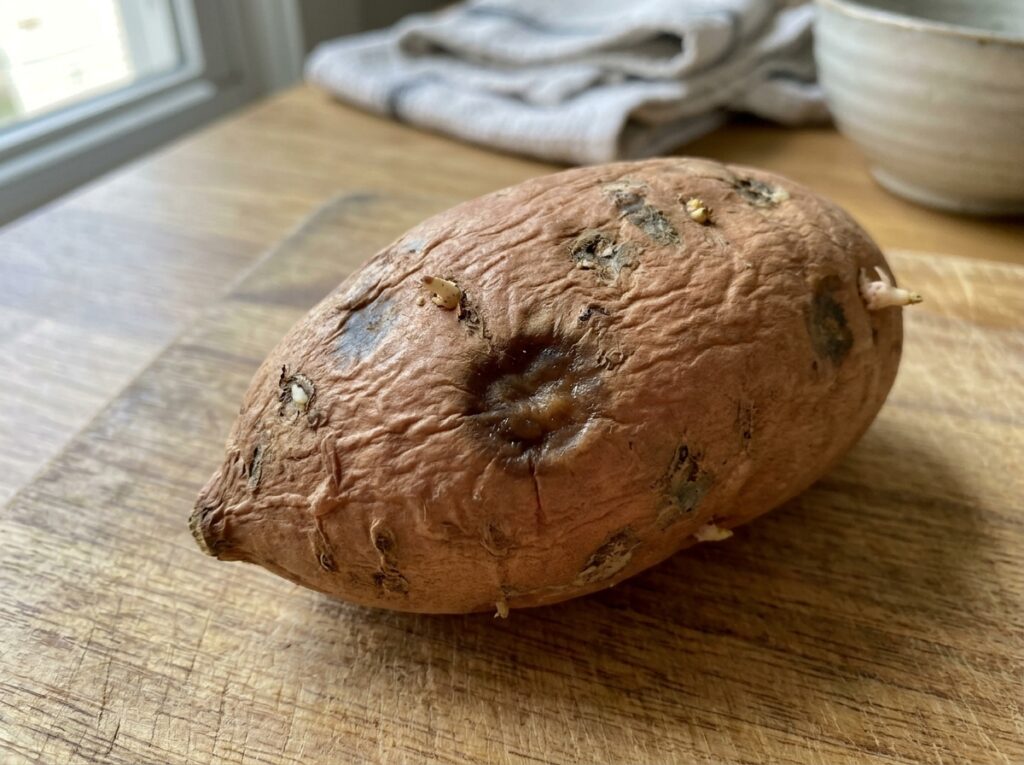
How to Tell if a Sweet Potato Is Bad Before Cooking
You pull a sweet potato from the pantry, and it feels softer than you remember. There’s a dark spot on one end, dinner is coming up, and now you’re stuck with the question nobody wants to guess at: should you cook it or toss it? If you’re trying to figure out how to tell if a sweet potato is bad, the good news is that a few simple checks usually give you a clear answer.
Quick answer: a sweet potato is usually bad if it feels mushy or slimy, smells sour or musty, shows mold, leaks liquid, or has dark, wet discoloration inside. Small sprouts or light wrinkling don’t always mean it’s spoiled. If it looks rotten or smells off, don’t try to save it.
How to tell if a sweet potato is bad at a glance
A bad sweet potato usually gives itself away pretty quickly. You don’t need lab tools, and you don’t need to overthink it. Most of the time, your eyes, nose, and fingertips are enough.
The biggest warning signs
Here are the signs that should make you stop and take a second look:
- Very soft, mushy, or collapsing spots
- Slimy skin or sticky liquid on the surface
- Fuzzy mold that looks white, green, gray, or black
- Sour, musty, or fermented smell
- Leaking juice or wet, sunken patches
- Dark brown, black, or gray flesh inside that looks wet or spread out
If you spot more than one of these, the sweet potato is done. Don’t try to rescue it.
A fresh sweet potato should feel firm, dry, and heavy for its size. The skin may be rough. It may look lumpy. That part is normal. You’re not looking for perfect beauty here. You’re looking for signs of rot.
A few signs that look scary but often aren’t
Now for the part that confuses a lot of people.
A sweet potato can look a little tired without being unsafe. A bit of wrinkling usually means it has lost moisture. That affects texture, but not always safety. A few small sprouts can also happen with age. If the potato is still firm and smells normal, it may still be usable.
The same goes for the milky white liquid some sweet potatoes release when you cut them. That’s often just sap or starch, not spoilage.
Quick fact: Sweet potatoes don’t need to look perfect to be good. They just need to be firm, dry, and free of rot.
How to check a sweet potato before you cook it
If you want a simple routine, use this three-part check: look, press, cut.
Start with the skin
Pick up the sweet potato and really look at it, not just from one side. Turn it in your hand.
The skin should look dry. A little dirt is fine. A scar or rough patch is also common. What you don’t want to see is skin that looks wet, shiny in a slimy way, moldy, or sunken in.
A bad spot usually doesn’t hide well. It may look darker than the rest of the potato. It may feel damp. Sometimes it has a ring around it where the flesh underneath has started to break down.
Here’s a real-life example. Say you find one with a dry scratch on the surface, but the potato is still hard and the inside looks bright orange after cutting. That’s probably just cosmetic damage. On the other hand, if the mark is soft, damp, and smells weird, that’s not just a blemish.
Press it and smell it
Next, give it a gentle press.
A good sweet potato feels solid. An older one may have a little give, especially near the ends, but it still shouldn’t feel like a sponge. If your thumb sinks in easily, or the potato feels hollow, that’s a bad sign.
Then smell it.
Fresh sweet potatoes don’t have a strong smell. They may smell faintly earthy. Some barely smell like anything at all. Once spoilage starts, the smell changes. It may turn sour, musty, stale, or almost alcohol-like.
That smell test matters more than people think. A sweet potato can sometimes look almost okay from the outside and still smell clearly wrong once you bring it close or cut it open.
Warning: Don’t taste a questionable sweet potato to “test” it. Spoilage isn’t something you should sample.
Cut it open and read the inside
If you’re still unsure, slice it open.
The inside of a healthy sweet potato depends on the variety. It may be orange, cream, white, or even purple. Whatever the color, it should look fresh, moist, and even. It should not look wet in a rotten way, stringy in a decayed way, or patchy with spreading dark areas.
A few things you might see:
Normal signs
- Bright, solid flesh
- A little white sap
- Small dry spots from minor bruising
- Slight drying near the ends in an older potato
Bad signs
- Large black or brown patches
- Gray, dull, or wet-looking flesh
- Mold inside the cut area
- A sour or fermented smell after slicing
One small dark bruise near the end can often be cut off. But if the discoloration spreads deep into the center, or the flesh around it looks wet, toss the whole thing.
Think of it like an apple. A little bruise? Fine to trim. A soft, rotting section with bad smell? Not worth saving.
If you’re swapping sweet potatoes for white potatoes in a recipe, this guide on how long to boil potatoes can help with timing.
Bad sweet potato or just old? How to tell the difference
This is where most people get stuck. Not every ugly sweet potato is spoiled. Some are just old.
Is a soft sweet potato always bad?
Not always.
A sweet potato that feels slightly softer than fresh may just be aging. If it still smells normal and the inside looks fine, you can often cook it. The texture may be a bit drier or less fluffy, but it may still be safe.
The problem starts when “soft” turns into mushy, wet, or squishy.
Here’s an easy way to judge it:
A sweet potato that feels like a firm avocado? Maybe old.
A sweet potato that feels like a soaked sponge? Toss it.
Also check whether the softness is even or isolated. One tiny soft spot may be trim-able if the rest is solid and there’s no smell. Several soft spots, especially with moisture, mean decay has started.
Are sprouts on sweet potatoes okay?
A little sprout on the end can look alarming, but it doesn’t always mean the sweet potato is bad.
If the potato is still firm, with no mold or foul smell, you can usually cut off the sprouts and use it soon. Sprouting mostly means it has been stored for a while and is trying to grow.
But there’s a line.
If the sweet potato is heavily sprouted, shriveled, soft, or losing moisture fast, quality has dropped a lot. At that point, even if it’s not rotten, it may not taste good. If it also smells off, throw it out.
Pro tip: A sprouted sweet potato is your pantry’s way of telling you, “Use me now.”
What about black spots, holes, or white liquid?
This is one of the most searched questions on the topic, and for good reason. These signs can mean very different things.
White liquid inside or after cutting is often normal. It’s a starchy sap. You’ll notice it more in some sweet potatoes than others. If the flesh is firm and smells fine, that white ooze is not usually a spoilage sign.
Tiny black spots can be a bruise or pressure damage. If the spot is small, dry, and the rest of the flesh looks healthy, you can cut it out.
Deep black areas, especially if they are wet, spreading, or paired with a bad smell, mean the potato is going bad.
Holes or tunnels are different. They can point to insect damage or breakdown inside. If the hole is shallow and dry, you might trim it. If it looks dirty, wet, or the inside around it is damaged, it’s better to toss it.
A good rule? If the bad-looking part is small, dry, and clearly limited, trimming may be okay. If it looks wet, active, moldy, or spreading, don’t bother.
Can you cut off the bad part and still eat the rest?
Sometimes yes. Sometimes no.
A small dry bruise, scar, or tough spot can often be cut away. That’s a quality issue.
But if you see mold, slime, soft rot, or smell sourness, don’t trim and keep going. Discard the whole sweet potato.
That’s because spoilage can spread below the surface, even if you only see a small patch on top. Root vegetables may look solid outside while the inside is already breaking down.
Common misconception: If you cook a bad sweet potato long enough, it becomes safe.
It doesn’t work like that. Heat can soften it. Heat can brown it. Heat does not undo rot or mold.
So if you find yourself arguing with the potato for five minutes, that’s usually your answer. Food should not feel like a courtroom case.
How to tell if cooked sweet potato is bad
Raw sweet potatoes are only half the story. A lot of people actually want to know about baked, mashed, or roasted sweet potatoes sitting in the fridge.
How long cooked sweet potatoes last
Cooked sweet potatoes usually last about 3 to 5 days in the fridge if you store them in a sealed container.
That includes:
- baked sweet potatoes
- mashed sweet potatoes
- roasted cubes
- sweet potato casserole leftovers
After that, the risk goes up and the quality drops fast.
Also, once cooked sweet potatoes sit out at room temperature for too long, the clock changes. Following USDA food-safety guidance, cooked foods should not sit out for more than 2 hours, or 1 hour if the room is very hot above 90°F.
The same basic safety rule used for what to do with chicken left out overnight applies here too: once cooked food sits out too long, it’s safer to toss it.
Spoilage signs in leftovers
Cooked sweet potatoes go bad a little differently than raw ones.
Watch for:
- sour smell
- watery liquid pooling in the container
- slimy or sticky surface
- visible mold
- bubbling or fermenting look
- strange color changes, especially gray or dull brown
A dry edge by itself isn’t a big deal. That can just mean the leftovers weren’t covered tightly. But slime, sourness, or fuzzy spots are different.
The same fridge habits matter for the rest of your meal too. If you’re storing sides and leftovers together, it helps to know how long cooked rice lasts in the fridge and how long fried chicken stays good in the fridge.
If you served sweet potatoes with dips or toppings, this guide on how long salsa lasts after opening is useful too.
Warning: Reheating leftovers does not reset the spoilage clock. If they’ve already gone bad, warming them up won’t fix that.
How to store sweet potatoes so they last longer
A lot of spoilage problems start with storage, not with the potato itself.
Whole raw sweet potatoes
Raw sweet potatoes like a place that is cool, dark, dry, and well ventilated. Think pantry, cellar, or a cabinet away from heat.
The sweet spot is around 55°F to 60°F if you can manage it, though most home kitchens aren’t exact. What matters most is avoiding heat, moisture, and direct sun.
Store them in:
- a basket
- a paper bag
- a crate
- any container with airflow
Don’t seal them in plastic if moisture is building up. That can speed rot.
Don’t wash them before storing either. Extra moisture shortens their life.
And try not to keep them right next to the oven, dishwasher, or a sunny window. Warm spots age them fast.
Should you refrigerate raw sweet potatoes?
Usually, no.
Raw sweet potatoes don’t love the refrigerator. Cold temperatures can change their texture and flavor. They may develop a hard center or weird internal discoloration from chilling.
Did you know? A refrigerated raw sweet potato can look fine outside and still cook oddly inside.
If your kitchen runs very hot and the fridge feels like your only option, it may slow some spoilage, but you may lose quality. For most people, a cool pantry works better.
Peeled or cut sweet potatoes
Once you peel or cut a sweet potato, it becomes more delicate.
Store cut pieces in the fridge and use them soon. For best quality, aim for within 24 hours. You can keep them in an airtight container, or submerged in cold water in the fridge if you’re prepping ahead for a meal.
If the water turns cloudy, the pieces smell sour, or the surface gets slippery, toss them.
Meal prep is great. Mystery fridge containers are not.
Cooked sweet potatoes
Cool them, pack them in a sealed container, and get them into the fridge within 2 hours.
Shallow containers help them cool more evenly. That’s useful for mashed sweet potatoes or casseroles.
If you know you won’t eat them in a few days, freezing is a better move than pushing fridge time too far.
Pro tip: Check your sweet potatoes once a week. One rotting potato can affect the smell and moisture around the others, especially in a bag or bin.
When you shouldn’t take chances
Some kitchen calls are close. This one usually doesn’t need drama.
Throw the sweet potato away right away if it has mold, slime, leaking liquid, deep rot, or a strong off smell. The cost of replacing one sweet potato is tiny compared with the cost of getting sick.
Be extra careful if you’re cooking for:
- young children
- older adults
- pregnant people
- anyone with a weakened immune system
This article is general food-safety guidance, not medical advice. If someone eats spoiled food and feels sick, contact a medical professional.
A good final test is this: would you feel totally okay serving it to someone else? If not, trust that instinct.
- FAQ Section
FAQ
Can you eat a sweet potato that has sprouted?
Yes, if it’s still firm and smells normal. Cut off the sprouts and use the sweet potato soon. If it’s also soft, shriveled, moldy, or wet, throw it away.
Is a sweet potato bad if it’s soft but not moldy?
Not always. A slightly soft sweet potato may just be old. Cut it open and check the inside. If the flesh is firm, even in color, and smells fine, it may still be okay. If it’s mushy, wet, sour-smelling, or dark inside, it’s bad.
What does the white stuff inside a sweet potato mean?
In many cases, that white liquid is just starchy sap. It’s normal and not a sign of spoilage by itself. The concern starts if the white material looks fuzzy like mold, or the potato also smells bad or feels slimy.
Can you cut mold off a sweet potato and eat the rest?
It’s safest not to. Mold and soft rot can spread below the surface, even if you only see a small patch. If a sweet potato has mold, discard the whole thing.
How long do raw sweet potatoes last?
Whole raw sweet potatoes often last 3 to 5 weeks in a cool, dry pantry, sometimes longer if storage conditions are ideal. Heat, moisture, and damage shorten that time fast.
How long do cooked sweet potatoes last in the fridge?
Cooked sweet potatoes usually stay good for 3 to 5 days in the fridge in a sealed container. If they smell sour, feel slimy, or show mold before then, toss them.
- Conclusion
Most of the time, knowing how to tell if a sweet potato is bad comes down to a quick 30-second check: look at the skin, press for firmness, smell it, and cut it open if needed. A little wrinkling or a small sprout doesn’t always mean trouble. Mold, slime, sour smell, and wet dark spots are the real red flags.
So the next time a sweet potato looks questionable, don’t guess and don’t taste-test. Give it that fast check, trust what you see, and cook with confidence.