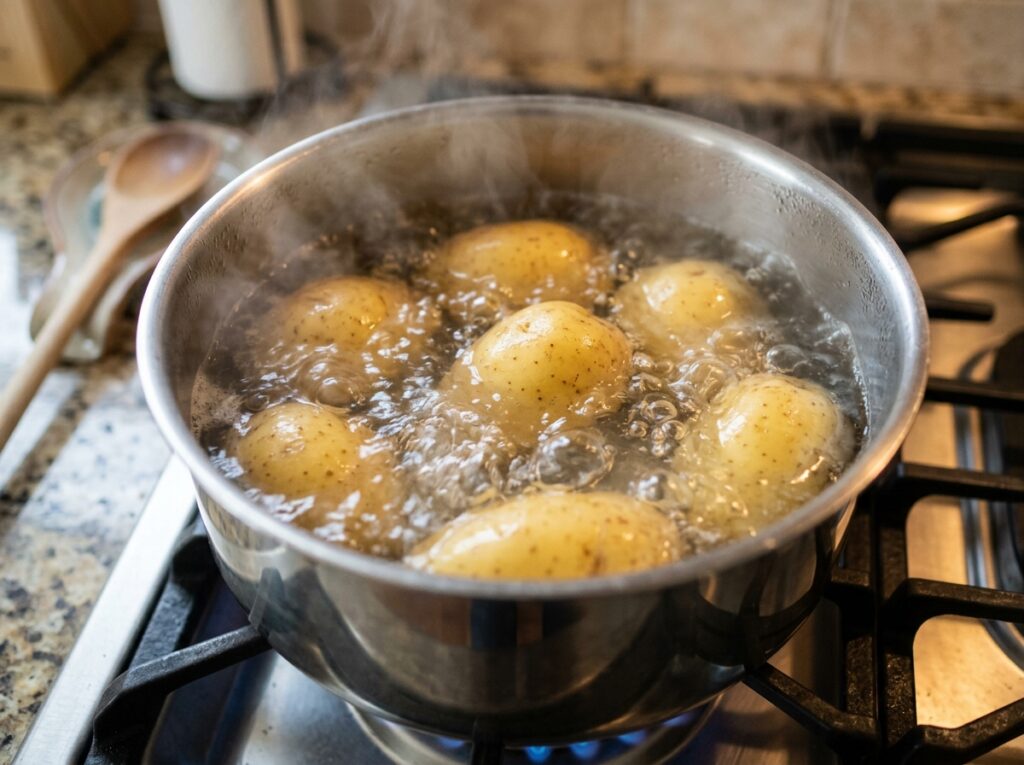
How Long Does It Take to Boil Potatoes Perfectly?
A potato can be done in 12 minutes or take over 30, and the difference usually has more to do with size than skill. If you’ve ever pulled potatoes off the stove and found them soft outside but hard in the middle, you know how frustrating that is. The good news? Once you know the timing rules, boiling potatoes gets a lot easier.
How Long Does It Take to Boil Potatoes?
Here’s the short answer most people want right away:
Cut potatoes usually take 10 to 20 minutes. Whole potatoes usually take 15 to 35 minutes.
The exact time depends on three things: the size of the pieces, the type of potato, and whether you start them whole or cut up.
A simple timing chart makes this much easier:
| Potato Prep | Average Boiling Time |
|---|---|
| 1-inch potato cubes | 10–15 minutes |
| 2-inch chunks | 15–20 minutes |
| Small whole baby potatoes | 15–20 minutes |
| Medium whole Yukon Gold or red potatoes | 20–25 minutes |
| Large whole russet potatoes | 25–35 minutes |
Those times usually count after the water reaches a boil or steady simmer. If you start with cold water, which you should, total stove time will be longer by several minutes.
Quick fact: If you’re boiling potatoes for mashed potatoes, cutting them into even chunks is the fastest and most reliable method. Whole potatoes take longer and don’t always cook as evenly.
If you’re staring at a pot and wondering, “Okay, but what does done actually look like?” the answer is simple: a fork or knife should slide in with very little resistance. Not force. Not a jab. Just a smooth push.
What Affects How Long Potatoes Take to Boil?
Boiling potatoes sounds basic, but the clock changes fast based on what’s in the pot. A big russet and a handful of baby reds don’t behave the same way.
Size matters more than most people think
Size is the biggest factor. Not brand. Not pan color. Not secret family method.
A 1-inch cube cooks much faster than a whole potato because heat reaches the center sooner. Think of it like cooking a whole chicken breast versus slicing it into strips. Smaller pieces cook faster because there’s less distance for the heat to travel.
That’s why recipes for mashed potatoes often tell you to cut them into chunks first. It saves time and gives you more even texture.
If your pieces are all different sizes, you’ll get a mixed result. The small ones turn mushy while the big ones stay firm in the center. That’s usually the reason behind potatoes that feel “kind of done” but not really right.
The type of potato changes the result
Not all potatoes boil the same way.
Russet potatoes are starchy. They’re great for mashed potatoes because they break down into a fluffy texture. They can also fall apart faster if you overcook them.
Yukon Gold potatoes are a favorite for many home cooks because they’re creamy, buttery, and hold up well. They work for mash, soup, and simple boiled side dishes.
Red potatoes and baby potatoes are more waxy. They keep their shape better, which makes them great for potato salad or dishes where you want clean pieces instead of a mash.
Did you know? Waxy potatoes usually stay neat in the pot because they have less starch than russets. That’s why potato salad recipes often lean toward red potatoes.
If you also keep sweet potatoes at home, don’t treat them exactly the same as regular potatoes. And before cooking them, it helps to know how to tell if a sweet potato is bad, since spoilage signs can look a little different.
Whole, halved, and cubed potatoes cook differently
Whole potatoes take the longest. Halved potatoes shave off some time. Cubed potatoes are fastest.
That sounds obvious, but it matters when you’re cooking on a weeknight and dinner needs to move. If you need potatoes ready in under 20 minutes, cut them up. If you want them to stay intact for a platter or salad, keep them whole or halved.
A large whole russet can take over half an hour. The same potato, cut into chunks, may be done in 15 to 18 minutes.
Your cooking setup changes the timing too
A few kitchen details can quietly stretch the clock:
- A crowded pot takes longer to return to a boil.
- Very cold water plus very large potatoes means more total stove time.
- High altitude can add 5 to 10 extra minutes because water boils at a lower temperature.
- A pot with a lid reaches a boil faster, though you’ll often want to lower the heat once the water gets going.
So if a recipe says 15 minutes and yours take 20, that doesn’t mean you did something wrong. Your potato size or your setup may just be different.
How to Boil Potatoes Evenly Every Time
If you want potatoes that are tender all the way through, not split outside and raw inside, the method matters almost as much as the timing.
Start with cold water, not boiling water
This is the step many people skip.
Put the potatoes in the pot first, then cover them with cold water by about an inch. Starting cold helps the potatoes cook from the outside to the center at a more even pace.
If you drop raw potatoes into already boiling water, the outside can race ahead while the middle stays firm. That’s the classic “soft shell, hard center” problem.
Salt the water
Salt won’t turn your potatoes into restaurant magic, but it does make them taste better all the way through.
You don’t need a huge amount. Just add enough that the water isn’t bland. A good pinch for a small pot or a teaspoon or two for a larger pot works well for most home cooking.
Use a gentle boil, not a violent one
People say “boil potatoes,” but once the water starts bubbling, a steady simmer is better than a wild rolling boil.
A hard boil bangs the potatoes around, roughs up the edges, and can break apart delicate pieces. That matters a lot if you’re making potato salad or soup.
Follow this simple method
- Wash the potatoes well. Peel them if your recipe calls for it.
- Cut them into even pieces if you want faster cooking.
- Place them in a pot and cover with cold water by about 1 inch.
- Add salt, bring the water to a boil, then lower to a steady simmer.
- Check for doneness with a fork or knife near the lower end of the time range.
- Drain right away once they’re tender.
That’s it. No fancy trick. Just even pieces, cold water, and a gentle simmer.
Pro tip: If you’re using potatoes for mash, drain them well and let them sit in the colander for a minute or two. That extra steam helps dry off surface moisture, which gives you fluffier mashed potatoes instead of watery ones.
Lid on or off?
Use the lid to help the pot reach a boil faster. Once it’s boiling, crack the lid or remove it.
Potatoes release starch, and starchy water can foam up and spill over if the pot is fully covered. If you’ve ever had cloudy water hiss down the side of the pot, you know the mess.
Best Boiling Times for Common Potato Dishes
The best boiling time depends on what you’re making. “Done” for mashed potatoes isn’t always the same as “done” for potato salad.
For mashed potatoes
If mashed potatoes are the goal, cut russets or Yukon Golds into chunks about 1 to 2 inches wide.
Boil them for 15 to 20 minutes. Start checking around the 15-minute mark. They should be fully tender, with no firmness in the center.
You actually want them a little softer for mash than you would for salad. If a fork slides in easily and the piece almost wants to split, you’re in the right zone.
A real-life example helps here. Say you’re cooking 2 pounds of Yukon Gold potatoes for four people. Cut them into medium chunks, simmer them, and expect around 16 to 18 minutes once the water is boiling.
If those mashed potatoes are part of dinner, you can easily pair them with mains like baked salmon at 350 or baked chicken breast at 350. The timing lines up nicely for a simple weeknight meal.
For potato salad
For potato salad, use red potatoes, baby potatoes, or Yukon Golds if you want creamy pieces that still hold their shape.
Whole small potatoes often take 15 to 20 minutes. Halved or chunked potatoes usually take 12 to 15 minutes.
You don’t want them too soft here. If they’re overcooked, they’ll fall apart the second you stir in mayo or dressing.
A good test is this: the fork should go in easily, but the potato should still hold its shape when lifted.
For soup, stew, or curry
If the potatoes will keep cooking in broth or sauce after boiling, pull them a little early.
Parboiled chunks usually need 8 to 10 minutes if they’re going into another pot to finish later. That way they won’t turn grainy or disappear into the soup.
This is helpful if you’re making a thick stew and want the potatoes tender at the same time as the other ingredients.
For whole potatoes
Whole potatoes work best when you want them stuffed later, peeled after boiling, or served simply with butter and herbs.
Small whole potatoes take about 15 to 20 minutes. Medium ones take 20 to 25 minutes. Large whole russets can run 25 to 35 minutes.
The larger they are, the more you should rely on the fork test instead of the clock.
How to Tell When Boiled Potatoes Are Done
Timers help, but the potato gets the final say.
Use the fork test
Push a fork into the thickest part of the potato.
If the fork slides in easily and comes out without much drag, the potato is done. If you need pressure, give it a few more minutes.
Always test the largest piece, not the smallest one floating near the top.
A knife works too
A small knife or paring knife gives you an even clearer read, especially with whole potatoes.
Slide the knife into the center. If it glides in and out smoothly, you’re good. If it catches in the middle, the center still needs more time.
Look for texture clues
Sometimes the potato tells you what’s happening before you even poke it.
Here’s what to watch for:
- Undercooked: center looks chalky or feels firm
- Properly cooked: evenly soft, holds shape, fork slides in easily
- Overcooked: edges split, surface looks shaggy, pieces break apart when drained
Warning: Don’t leave boiled potatoes sitting in hot water after they’re done. They keep cooking, and that’s one of the fastest ways to end up with soggy potatoes.
Common Mistakes That Ruin Boiled Potatoes
A lot of boiled potato problems come from just a few habits. The nice part? They’re easy to fix.
Cutting uneven pieces
If one chunk is twice the size of another, they won’t finish together. That leads to a frustrating pot of half-mushy, half-hard potatoes.
Try to keep pieces close in size, even if they’re not perfect. Think “same neighborhood,” not “exact ruler measurement.”
Starting in hot water
This one trips up a lot of people who are trying to save time.
Hot water sounds faster, but it often gives you uneven cooking. The outside softens too quickly while the inside lags behind.
Cold water gives you a better result almost every time.
Boiling too aggressively
A full blast boil can smash tender potatoes against each other, especially peeled pieces. You want movement in the water, just not chaos.
Lower the heat once the pot reaches a boil. A steady simmer is your friend.
Walking away too long
Potatoes don’t go from raw to ruined in one minute, but they can cross the line pretty quickly near the end.
If your timer says 15 minutes, start checking around 12 or 13. That small habit makes a big difference.
Draining too late
Once potatoes are done, drain them. Don’t let them hang out in hot water while you answer a text or set the table.
That extra soak steals texture.
How to Store Leftover Boiled Potatoes
Boiled potatoes are great for meal prep, but only if you store them the right way.
Let them cool a bit, then refrigerate them within 2 hours. According to standard USDA leftover guidance, cooked potatoes are usually best within 3 to 4 days in the fridge.
Store them in a covered container. If they’re already cut, keeping them dry helps them hold up better.
You can reuse boiled potatoes in a lot of easy ways:
- pan-fry them for breakfast
- toss them into soup
- mash them with butter and garlic
- roast them for crispy edges
- add them to a salad bowl
If you’re meal prepping more than one side at a time, it also helps to know how long cooked rice lasts in the fridge, since rice and potatoes often end up in the same weekly prep routine.
Boiled potatoes also fit well into a “cook once, eat twice” plan. Make extra tonight, then crisp them in a skillet tomorrow with eggs, salmon, or chicken.
4. FAQ Section
FAQ
Do you start timing potatoes before or after the water boils?
Most boiling times are counted after the water reaches a boil or steady simmer. If you start the potatoes in cold water, total time on the stove will be longer. For many home cooks, that means adding another 8 to 12 minutes before the actual boiling time even begins.
How long does it take to boil potatoes for mashed potatoes?
For mashed potatoes, cut potatoes into chunks and boil them for 15 to 20 minutes. Russets and Yukon Golds are the most common choices. Check them early, because slightly overcooked potatoes are better for mash than undercooked ones.
How long does it take to boil whole potatoes?
Small whole potatoes usually take 15 to 20 minutes. Medium whole potatoes take 20 to 25 minutes. Large whole russets often need 25 to 35 minutes. The surest test is still a fork or knife in the center.
How long does it take to boil cubed potatoes?
Cubed potatoes usually take 10 to 15 minutes if the cubes are about 1 inch wide. Bigger chunks may need closer to 15 to 20 minutes.
Should you peel potatoes before boiling?
It depends on the dish. Peel them for very smooth mashed potatoes or if you want a cleaner texture. Leave the skin on for potato salad, rustic mash, or simple buttered potatoes. The skin also helps whole potatoes stay intact while they cook.
Why are my potatoes still hard after boiling?
The usual reasons are simple: the pieces were too large, they weren’t cut evenly, the heat was too low, or you tested too soon. Give them another 3 to 5 minutes and test the biggest piece again.
Can you boil potatoes too long?
Yes, absolutely. Overboiled potatoes turn waterlogged, split open, and fall apart when drained. That can work for some mashed potato recipes, but it’s bad news for potato salad, soups, or any dish where you want clear pieces.
Do potatoes boil faster with the lid on?
Yes, the pot reaches a boil faster with the lid on because it traps heat. Once the water is boiling, remove the lid or leave it slightly open so the starchy water doesn’t foam over.
5. Conclusion
Boiling potatoes gets a lot easier once you stop guessing and start looking at size, type, and purpose. If you want the simplest rule to remember, keep this one: cut potatoes usually need 10 to 20 minutes, and whole potatoes usually need 15 to 35. Start them in cold salted water, simmer gently, and test the biggest piece before draining.
If you’re cooking potatoes tonight, cut them evenly and start checking a few minutes early. That one small move will save you from a lot of mushy or undercooked dinners.