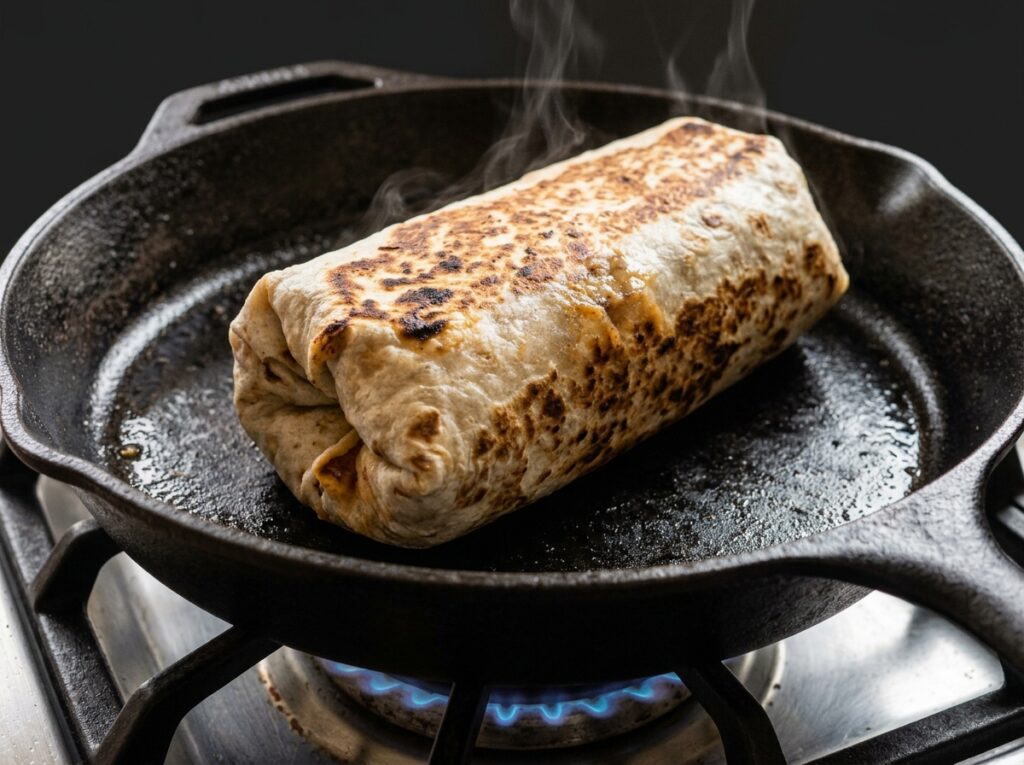
How to Reheat a Burrito and Keep It Crispy
A burrito can go from perfect to disappointing in two minutes flat. One blast in the microwave, and the tortilla turns rubbery while the middle stays cold. The good news? Learning how to reheat a burrito isn’t hard. You just need the right method for the kind of burrito you have, whether it’s a leftover Chipotle-style giant, a breakfast burrito, or one pulled straight from the freezer
How to Reheat a Burrito Without Ruining It
Why burritos are tricky to reheat
A burrito looks simple, but it reheats unevenly for one big reason: the outside and the inside behave very differently.
The tortilla is thin. It heats fast. Rice, beans, cheese, meat, and sauces are dense and hold cold spots longer. So the tortilla can feel hot while the center still needs more time. That’s why so many reheated burritos end up chewy on the outside and lukewarm in the middle.
There’s another issue. Burritos often mix wet and dry ingredients. Salsa, beans, sour cream, cheese, and rice all release moisture in different ways. That’s great when the burrito is fresh. It’s not so great the next day.
Quick answer: For most refrigerated burritos, the best all-around move is to reheat them at 350°F in the oven for 15 to 20 minutes. If you want speed, use the microwave first, then crisp the outside in a skillet or air fryer for a couple of minutes.
Did you know? Dense fillings like rice and beans usually stay cool longer than melted cheese. So a gooey burrito doesn’t always mean a fully heated burrito.
Most people looking up this topic want one of four things:
- the fastest way to reheat a burrito
- the best way to keep the tortilla from getting soggy
- safe reheating times for a frozen burrito
- a method that works for restaurant burritos with lots of fillings
That’s where a lot of basic articles fall short. They give one time and one method, then move on. Real life isn’t that neat. A bean and cheese burrito doesn’t reheat like a steak burrito packed with rice, lettuce, and sour cream.
Before you reheat a burrito
Check whether the burrito is still safe to eat
Start here, because no reheating trick can save a burrito that has already gone bad.
If the burrito has been in the fridge for more than 3 to 4 days, it’s smarter to toss it. That lines up with USDA leftover guidance for cooked foods. If it sat out at room temperature for more than 2 hours, or more than 1 hour in hot weather above 90°F, don’t reheat it.
A burrito often contains meat, rice, beans, cheese, and maybe dairy toppings. That mix makes it more perishable than people think.
Rice deserves extra caution. If your burrito has a heavy rice filling, it helps to know how long cooked rice lasts in the fridge before you count on it for leftovers.
Warning: If the burrito smells sour, feels slimy, or has a strange texture, throw it out. Trust your nose and your eyes.
Remove cold toppings and extra moisture
Some burritos are easy to reheat whole. Others need a quick edit before they go near heat.
Try to remove these ingredients before reheating:
- lettuce
- sour cream
- guacamole
- fresh pico de gallo
- sliced avocado
Why bother? Because warm lettuce is sad, hot sour cream gets watery, and guacamole loses its fresh taste fast. You’ll get a much better burrito if you reheat the main filling, then add the cold toppings back after.
Fresh salsa can go back on top once the burrito is hot, but make sure it’s still good. If you’re not sure, here’s a helpful guide on how long salsa lasts.
Remove foil, loosen wrappers, and size it up
Restaurant burritos often come wrapped in foil and paper. Take all of that off before reheating in the microwave. Foil and microwaves don’t mix.
For the oven, foil can actually help. It traps heat and keeps the tortilla from drying out too fast.
Big burrito? Cut it in half.
That one little step helps a lot. A giant burrito from Chipotle, Qdoba, or a local taqueria can be so thick that the center stays cold long after the outside looks done. Cutting it in half gives you more even heat and shorter reheating time.
Frozen burrito? You can reheat it straight from frozen, but thawing it overnight in the fridge gives you better texture and fewer cold spots.
Pro tip: If you only plan to eat half, reheat only half. Every extra reheat hurts texture and raises food safety risk.
Best ways to reheat a burrito
Different tools give different results. Here’s the simple version.
| Method | Best for | Time from Fridge | Texture |
|---|---|---|---|
| Microwave | Speed | 1.5 to 3 minutes | Soft tortilla |
| Oven | Best overall | 15 to 20 minutes | Even heat, good texture |
| Air fryer | Crisp outside | 8 to 12 minutes | Crunchy shell |
| Skillet | Grilled finish | 6 to 8 minutes | Golden outside, hot center |
How to reheat a burrito in the microwave
The microwave is the fastest option, and for a lot of people, that’s the whole point. Lunch break? Late-night snack? This is the method you’ll use most.
The trick is to lower the power a little and add just a bit of moisture.
Put the burrito on a microwave-safe plate. Wrap it in a slightly damp paper towel. That helps the tortilla stay soft instead of turning stiff around the edges.
Heat it at 70% power for 60 seconds. Flip it over. Then heat for another 45 to 90 seconds, depending on the size. Let it rest for 1 minute before you bite in.
That rest time matters. Heat keeps moving inward after the microwave stops.
For a large burrito, you may need closer to 2 1/2 to 3 minutes total, still with a flip halfway through. Don’t just hammer it on high for three straight minutes. That’s how you get a rubbery tortilla and hot lava on one side with a cold center on the other.
A microwave is best for:
- bean and cheese burritos
- breakfast burritos
- smaller homemade burritos
- burritos you don’t mind eating soft rather than crisp
Want a better finish? Use a hybrid method. Microwave the burrito until it’s mostly hot, then toss it in a skillet for a minute or two per side. You get the speed of the microwave and a much better tortilla.
How to reheat a burrito in the oven
If you care about even heating, the oven is usually the safest bet. It takes longer, but it gives you fewer surprises.
Preheat your oven to 350°F. That temperature works well because it heats the center without scorching the tortilla too fast.
For a softer burrito, wrap it loosely in foil and place it on a baking sheet. Heat for 15 to 20 minutes if it came from the fridge.
For a crispier outside, keep it wrapped for the first 10 to 12 minutes, then open the foil for the last 5 to 8 minutes.
If the burrito is frozen, plan on 35 to 45 minutes at 350°F. Turn it once about halfway through if it’s especially thick.
The oven is a smart choice for:
- large burritos with rice and meat
- burritos with a lot of filling
- burritos you want heated all the way through
- meal prep burritos from the freezer
A toaster oven works the same way, just on a smaller scale.
One more tip: place the burrito seam-side down. That helps it stay closed while the cheese melts and the filling loosens up.
How to reheat a burrito in an air fryer
The air fryer is a favorite for people who like a crisp tortilla. It’s faster than the oven and usually gives better texture than the microwave.
Set the air fryer to 325°F to 350°F. Lightly brush or spray the burrito with oil if you want a golden finish, though that part is optional.
Heat a refrigerated burrito for 8 to 12 minutes, flipping halfway through. For a frozen burrito, you’ll usually need 15 to 18 minutes.
Air fryers can brown the outside fast, so keep an eye on it. If the tortilla starts getting dark before the center is hot, lower the heat a bit and give it more time.
This method is best for:
- burritos you want crisp
- grilled-style burritos
- bean, beef, or chicken burritos without lots of wet toppings
It’s not the best pick for a wet burrito or one covered in sauce. Air doesn’t do much for a sauce-soaked tortilla except dry out the edges.
Quick fact: Air fryers are great at fixing a limp tortilla, but they don’t always heat thick fillings evenly on the first try. For oversized burritos, microwave for 45 seconds first, then finish in the air fryer.
How to reheat a burrito on the stove
A skillet gives you one of the best textures of all, especially if you like a burrito with a lightly crisp, pan-grilled outside.
Set a skillet over medium-low heat. Add a tiny bit of oil, or go dry if the tortilla already has enough fat from cheese or meat.
Place the burrito seam-side down and cover the pan with a lid. That trapped heat helps warm the center before the outside gets too dark.
Cook for about 3 to 4 minutes per side. Turn it carefully and keep the heat gentle.
This method works really well for burritos that were grilled or pressed the first time around. It also helps revive a breakfast burrito without making the eggs too rubbery.
For a thick burrito, don’t be stubborn. Give it 30 to 45 seconds in the microwave first, then move it to the skillet. That combo saves time and gives you better texture.
Pro tip: Press lightly with a spatula. Don’t flatten it like a smash burger. You want contact with the pan, not a filling spill.
Match the method to the kind of burrito you have
Bean and cheese burritos are the easiest
These are the most forgiving burritos to reheat.
Beans and cheese warm fairly evenly, and there usually aren’t any cold toppings to remove. Microwave, oven, skillet, and air fryer all work fine.
If you want fast and easy, go microwave. If you want a slightly crisp edge, use a skillet or air fryer.
Meat and rice burritos need more patience
A burrito stuffed with chicken, steak, carnitas, or ground beef plus rice is thicker and slower to heat in the center.
That’s where people get fooled. The tortilla feels hot, the cheese melts, and you think it’s done. Then the first bite reaches a cool center.
For these, the oven or the microwave-plus-skillet combo works best. If you want to check the middle without guessing, a quick probe thermometer helps. Here’s a simple guide on how to read a meat thermometer.
If you kept steak filling separate from the tortilla, warm it on its own first. For that, this guide on how to reheat steak without drying it out can help.
Breakfast burritos need gentler heat
Eggs can turn rubbery fast. Potatoes can stay cold in the middle. Cheese melts early and tricks you into thinking the whole burrito is ready.
For a breakfast burrito, medium microwave power or low oven heat works well. If it’s frozen, thawing overnight in the fridge gives you the best result.
A skillet is also a good option if the burrito isn’t too thick. Cover the pan, keep the heat low, and give it time.
Wet burritos and sauce-covered burritos belong in the oven
A wet burrito is the one burrito that really should not go in the air fryer, and the microwave isn’t ideal either unless you’re in a rush.
Place it in an oven-safe dish, cover it loosely with foil, and heat at 350°F for 20 to 25 minutes from the fridge. If the sauce is thick and cold, it may need a little longer.
Want the cheese on top to bubble? Remove the foil for the last few minutes.
Restaurant burritos often need a quick rebuild
A burrito from a restaurant can be packed with lettuce, pico, sour cream, rice, beans, sauces, and a ton of meat. That sounds great fresh. It’s messy the next day.
Your best move is often to open it, remove the cold toppings, tighten the wrap again, and then reheat it.
That sounds like extra work, but it fixes two problems at once. You get safer, more even heat, and you avoid the warm-sour-cream situation nobody wants.
Common burrito reheating mistakes
Blasting it on high from the start
High heat feels faster, but it usually gives worse results.
The outside overheats before the center catches up. In the microwave, that means rubbery tortilla edges. In the air fryer or skillet, it means a dark shell with cool filling.
Gentler heat takes a little longer, but it works better.
Reheating the burrito exactly as it came
Cold toppings are the usual problem here.
A burrito fresh from a restaurant might be built for immediate eating, not reheating. If you toss the whole thing in the microwave with lettuce, sour cream, and watery salsa inside, the texture goes downhill fast.
Take thirty seconds to remove what doesn’t belong in the heat. Your burrito will taste much closer to fresh.
Trusting the outside instead of the center
This is the most common mistake of all.
A hot tortilla doesn’t prove a hot filling. The center matters most, especially with meat, rice, and dairy inside.
Common misconception: If the cheese is melted, the burrito is done. Not always. Cheese melts before the center reaches a safe temperature.
Reheating the same burrito over and over
People do this more than they realize. You heat half, put it back, heat it again later, and maybe again the next day.
That’s rough on texture, and it’s not great for food safety. Reheat only the amount you plan to eat.
Burrito food safety rules you shouldn’t ignore
Reheat leftovers to 165°F
USDA guidance says leftovers should reach 165°F. For a burrito, that means the center, not just the surface.
If you don’t want to guess, use a quick-read thermometer. Insert it into the thickest part of the filling after reheating.
This matters most for burritos with chicken, beef, pork, eggs, or dairy.
Keep leftover burritos cold, then heat once
Store the burrito in the fridge within 2 hours of cooking or buying it. Wrap it well or place it in an airtight container.
Most leftover burritos are best within 3 to 4 days. For longer storage, freeze them. Quality is usually best within 2 to 3 months, though they may stay safe longer if kept fully frozen.
Know when the answer is “don’t eat it”
Sometimes the best reheating method is no reheating method at all.
Toss the burrito if:
- it sat out too long
- it smells off
- the filling looks slimy or separated in a strange way
- it’s older than 4 days in the fridge
- you don’t remember when you bought or made it
If the filling contains poultry and you left it on the counter overnight, don’t gamble. This guide on chicken left out overnight explains why that’s a bad bet.
- FAQ Section
FAQ
Can you reheat a burrito in the microwave without making it soggy?
Yes. Wrap the burrito in a slightly damp paper towel, use medium or 70% power, flip it halfway, and let it rest for a minute after heating. If you want a better tortilla, finish it in a skillet for 1 to 2 minutes per side.
What’s the best way to reheat a frozen burrito?
The oven is usually the best method for a frozen burrito because it heats more evenly. Bake it at 350°F for about 35 to 45 minutes. If you want it faster, thaw it overnight in the fridge or microwave it briefly first, then finish in the oven or air fryer.
Should you remove sour cream and lettuce before reheating a burrito?
Yes, if you can. Sour cream gets watery, lettuce wilts, and fresh toppings lose their texture. Reheat the burrito filling and tortilla, then add cold toppings back after.
Can you reheat a burrito twice?
You can, but it’s not ideal. Quality drops each time, and food safety gets shakier if the burrito spends too much time cooling and warming again. It’s better to reheat only the portion you plan to eat.
How long does it take to reheat a burrito in the oven?
A refrigerated burrito usually takes 15 to 20 minutes at 350°F. A frozen burrito often takes 35 to 45 minutes. Very large burritos may need extra time, especially if they’re packed with rice and meat.
Is an air fryer better than a microwave for reheating a burrito?
For texture, yes. An air fryer gives you a crisp outside and a more freshly made feel. For speed, the microwave wins. If you want both, use the microwave first and the air fryer second.
- Conclusion
The best way to reheat a burrito depends on what you care about most. If you need it fast, use the microwave smartly. If you want the best overall texture, go with the oven. If you love a crisp tortilla, the air fryer or skillet will make you happier.
Your next step is simple: check that the burrito is still safe, remove the cold toppings, and pick the method that fits the burrito in front of you. Do that, and yesterday’s burrito won’t taste like a leftover problem. It’ll taste like lunch you actually wanted.