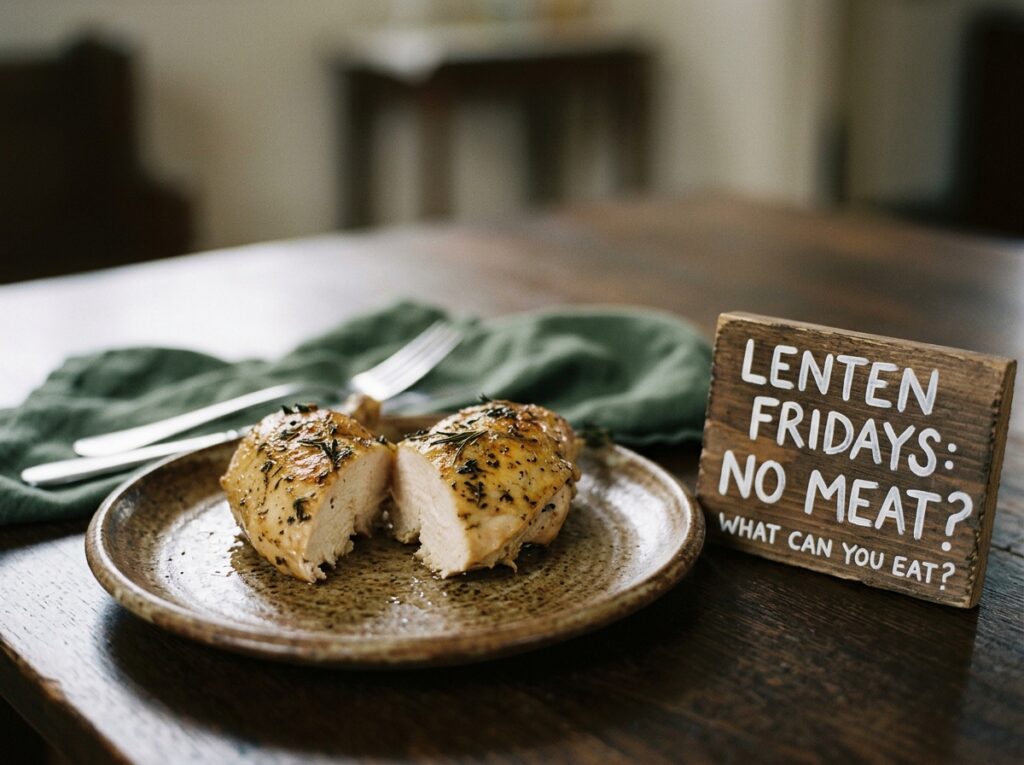
Can You Eat Chicken During Lent? A Simple, Honest Guide
Every year, around 1.3 billion Catholics worldwide observe Lent — a 40-day period of prayer, fasting, and self-discipline leading up to Easter Sunday. And every single year, the same question pops up in kitchens, group chats, and Google searches: Can you eat chicken during Lent?
It sounds like a simple yes-or-no question. But the answer depends on which day of Lent you’re talking about, which Christian tradition you follow, and how strictly you choose to observe. Some people think all meat is off-limits for the entire 40 days. Others believe only red meat is restricted, so chicken and fish get a pass. And some folks aren’t sure there are any food rules at all.
If you’ve ever stood in your kitchen on a Friday in March, staring at a pack of chicken breasts and wondering whether you’re “allowed” to cook them — this article is for you. We’ll break down the actual rules, explain where they come from, and give you practical alternatives so you don’t feel stuck eating plain pasta for six weeks straight.
What Exactly Is Lent, and Why Does Food Matter?
Lent is a season observed by many Christian denominations, most prominently the Roman Catholic Church, but also by Eastern Orthodox, Anglican, Lutheran, and some Methodist and Presbyterian communities. It begins on Ash Wednesday and ends just before Easter — spanning approximately 46 calendar days (with Sundays often excluded from the fasting count, giving you 40 actual days of observance).
The season is meant to mirror the 40 days Jesus spent fasting in the desert, as described in the Gospels of Matthew, Mark, and Luke. Fasting, prayer, and almsgiving (charitable acts) are the three pillars. Food restrictions aren’t arbitrary — they serve as a form of sacrifice and spiritual discipline. The idea is that giving up something you enjoy helps you focus on your faith.
Now, here’s where chicken enters the picture. The Catholic Church has specific guidelines about abstinence from meat on certain days during Lent. And yes, chicken counts as meat. But the rules don’t apply the same way every single day of the season, which is exactly where the confusion starts.
The Short Answer: It Depends on the Day
Let’s get right to the point.
On most days during Lent, yes — you can eat chicken. The restriction on meat only applies to specific days, not the entire 40-day period. Here’s the breakdown for Roman Catholics, since their guidelines are the most widely discussed:
Ash Wednesday and Good Friday are days of both fasting and abstinence. On these two days, you’re expected to avoid meat entirely — and that includes chicken. You’re also supposed to eat only one full meal and two smaller meals that together don’t equal a full meal.
Every Friday during Lent is a day of abstinence from meat. So from the Friday after Ash Wednesday all the way through Good Friday, Catholics are asked to skip meat on Fridays. Again, chicken falls under this rule.
All other days — Monday through Thursday, plus Saturdays and Sundays — chicken is perfectly fine, at least according to official Church teaching.
So if someone tells you “you can’t eat any meat for all of Lent,” that’s not what the Catholic Church actually requires. The blanket 40-day meat ban is more common in Eastern Orthodox traditions, which we’ll get to shortly.
Quick fact: The U.S. Conference of Catholic Bishops (USCCB) clearly states that abstinence from meat applies to Catholics aged 14 and older on Ash Wednesday and all Fridays of Lent. Fasting (limiting meal size) applies to adults aged 18–59.
Why Is Chicken Considered “Meat” but Fish Isn’t?
This is probably the most asked follow-up question, and honestly, it confuses a lot of people. You might be thinking: “Wait, if I can’t eat chicken on Lenten Fridays, why is a fish fry totally acceptable?”
It seems contradictory. Fish is animal flesh. Chicken is animal flesh. So why does one get a pass?
The distinction goes back centuries and has more to do with medieval classification and cultural context than modern biology. In traditional Catholic teaching, “meat” — or carne in Latin — referred specifically to the flesh of warm-blooded land animals. That means beef, pork, chicken, lamb, and other poultry or livestock.
Fish and other cold-blooded creatures (like shrimp, crab, lobster, and even alligator in some regional interpretations) were placed in a separate category. They were considered humbler, less indulgent, and more accessible to the poor. Meat from land animals, on the other hand, was associated with feasting and celebration — exactly what you’re supposed to step away from during Lent.
So it’s not that fish “isn’t meat” in the way we’d define it today. It’s that the Church’s definition of meat, established hundreds of years ago, specifically means warm-blooded land animals. Chicken, being a warm-blooded bird, falls squarely in the “meat” category.
Does this make perfect biological sense in 2025? Not really. But Church traditions aren’t always about scientific logic — they’re about spiritual discipline and continuity with centuries of practice.
Did you know? Some dioceses in the United States have historically granted special permission to eat certain meats on St. Patrick’s Day when it falls on a Friday during Lent. This isn’t a universal rule — it depends on the local bishop’s decision. So don’t assume it applies everywhere.
What Different Christian Traditions Say
Not all Christians observe Lent the same way, and the rules around chicken vary quite a bit depending on your denomination.
Roman Catholic
As we covered, chicken is off-limits on Ash Wednesday, Good Friday, and all Fridays during Lent. On all other days, you can eat chicken without any issue. The guidelines come from the Code of Canon Law (Canons 1250–1253), and individual bishops’ conferences can adjust them for their region.
It’s also worth knowing that Sundays during Lent are technically not fasting days in the Catholic tradition. Some people choose to maintain their Lenten sacrifices on Sundays anyway, but strictly speaking, the Church doesn’t require it.
Eastern Orthodox
Orthodox Christians follow a significantly stricter fasting tradition. During Great Lent, many Orthodox believers abstain from all animal products — not just meat, but also dairy, eggs, fish, and even olive oil on certain days. Under these rules, chicken is absolutely not allowed for the entire Lenten period, not just Fridays.
Fish is permitted on only two specific feast days during Lent: the Annunciation (March 25) and Palm Sunday. Shellfish, interestingly, is sometimes allowed on weekends during Lent, depending on the tradition.
So if you follow Eastern Orthodox practice, chicken during Lent is a clear no — any day, any meal.
Protestant Denominations
Most Protestant churches don’t have mandatory fasting rules during Lent. Anglicans and Episcopalians often follow guidelines similar to Catholics, recommending abstinence from meat on Fridays. Lutherans may observe Lent with personal sacrifices but generally don’t enforce specific dietary restrictions.
If you’re Baptist, Methodist, Pentecostal, or non-denominational, Lent might not be part of your tradition at all — and there’d be no restriction on eating chicken or any other food.
The Bottom Line Across Traditions
The strictness really ranges from “no animal products at all for 40+ days” (Orthodox) to “skip meat on a few specific days” (Catholic) to “it’s entirely up to you” (most Protestants). Your denomination — and your personal level of observance — determines whether that chicken dinner is on or off the table.
Who’s Exempt from Lenten Fasting Rules?
The Catholic Church recognizes that fasting and abstinence aren’t realistic or safe for everyone. Certain groups are officially exempt:
Children under 14 are not required to abstain from meat. Adults over 59 are excused from fasting (though not necessarily from abstinence). Pregnant or nursing women are exempt. People who are ill or have medical conditions that require specific dietary needs don’t have to follow the restrictions. Manual laborers whose work demands high caloric intake have historically been given exceptions as well.
If you fall into one of these categories and you’re worried about eating chicken on a Lenten Friday — don’t be. The Church’s position is that your health and well-being come first.
Pro tip: If you’re genuinely unsure whether an exemption applies to you, talk to your parish priest. They can offer guidance specific to your situation, and you might be surprised at how understanding and flexible the conversation can be.
What Can You Eat on Lenten Fridays Instead of Chicken?
Alright, so you know chicken is off the menu on Fridays during Lent. But what do you actually eat? You don’t have to resign yourself to sad, plain salads for six consecutive Fridays. There are genuinely delicious options.
Fish and seafood are the go-to for most people. Salmon, shrimp, tilapia, cod, tuna — take your pick. If you’re looking for the best way to prepare salmon, baking it at 350°F gives you a perfectly cooked fillet without much effort.
Eggs and dairy are allowed on Lenten Fridays for Catholics (not for Orthodox Christians, though). So omelets, frittatas, mac and cheese, and cheese quesadillas are all fair game.
Vegetarian and vegan meals work beautifully during Lent. Think pasta with marinara sauce, vegetable stir-fry, bean burritos, lentil soup, or mushroom risotto. If you’ve never cooked with baby bella mushrooms, they’re perfectly fine to eat and add great flavor to meatless dishes.
Grain-based dishes like rice bowls, couscous salads, or hearty grain soups can be filling and satisfying. If you’ve got leftover cooked rice in the fridge, a quick fried rice with vegetables and egg makes an easy Friday dinner.
You can also get creative with potatoes. Baked potatoes, potato soup, or roasted potato wedges are simple comfort food. If you’re boiling them, knowing how long to boil potatoes can be the difference between a creamy mash and a watery mess.
The point is: meatless Fridays don’t have to feel like punishment. With a little planning, they can actually introduce you to meals you’ll want to make year-round.
What About the Rest of the Week?
Here’s something a lot of people get wrong: they assume that once Lent starts, meat is gone until Easter. For Catholics, that’s simply not true.
Monday through Thursday, plus Saturday, you can eat chicken, beef, pork, turkey — whatever you want. There’s no Church rule restricting meat on those days during Lent.
Now, if you personally choose to give up meat for the entire 40 days as a voluntary sacrifice, that’s a meaningful and valid choice. Many people do this. But it’s your personal decision, not a Church mandate. The only days the Church requires abstinence from meat are the ones we’ve already covered: Ash Wednesday, Good Friday, and Fridays in between.
So if you’re planning your weekly meals during Lent, you can absolutely bake chicken breast at 350°F on a Tuesday or make chicken drumsticks at 400°F on a Thursday. Just save those fish tacos and veggie stir-fries for Friday.
And if you’ve got chicken that you thawed in the fridge earlier in the week but Friday snuck up on you — don’t let it go to waste. Cook it and save it for Saturday, or freeze it again if you need to. Speaking of food safety, if you’ve ever left chicken out overnight, you’ll want to read about why that’s a food safety risk you shouldn’t take.
Good Friday: The Strictest Day of Lent
If there’s one day during Lent when you should definitely avoid chicken, it’s Good Friday. This is the day Christians commemorate the crucifixion of Jesus, and it carries the strictest fasting and abstinence rules of the entire Lenten season.
On Good Friday, Catholics are expected to both fast (one full meal plus two smaller meals) and abstain from all meat. Many Catholics also extend this reverence beyond just food — limiting entertainment, spending extra time in prayer, and attending church services.
Chicken, beef, pork, turkey, lamb — none of it is appropriate on Good Friday according to Church teaching. If you want a deeper look at the specific rules around Good Friday and poultry, we’ve covered that in detail: Can You Eat Chicken on Good Friday?
Even many non-strict observers — people who might eat chicken on other Lenten Fridays — choose to follow the rules on Good Friday out of respect for the day’s significance.
Does the Type of Chicken Matter?
Some people wonder whether the form of chicken changes anything. What about chicken broth in a soup? Chicken flavoring in a packet of ramen? A tiny piece of chicken in a salad?
The traditional guideline is pretty straightforward: if it contains the flesh of a warm-blooded animal, it counts. So chicken broth made from actual chicken — technically, yes, that breaks abstinence. Chicken flavoring that’s artificially created and doesn’t contain real meat? That’s generally considered fine, though opinions vary.
As for portion size — “just a little bit of chicken” doesn’t create a loophole. The spirit of abstinence isn’t about technicalities; it’s about genuine sacrifice. If you’re trying to find ways to sneak chicken into your Friday meals, you might be missing the point of the practice altogether.
That said, accidentally eating chicken on a Friday during Lent isn’t a catastrophic sin. If you genuinely forgot, most priests will tell you not to stress about it. Intention matters in Catholic moral theology. An honest mistake is very different from deliberately ignoring the rule.
A Brief History of Lenten Fasting Rules
The fasting practices we follow today look nothing like the original Lenten observances. In the early centuries of Christianity (around the 2nd to 4th centuries), Lenten fasting was intense. Many Christians ate only one meal a day, consumed in the evening, and avoided all animal products — meat, fish, eggs, dairy, and even wine.
By the Middle Ages, the rules had become more standardized but were still quite strict. Meat was forbidden throughout Lent, not just on Fridays. Fish was allowed, which is why “Fish Friday” became so culturally ingrained in Catholic communities, especially in Europe.
The major shift came after the Second Vatican Council (Vatican II) in the 1960s. The Church significantly relaxed Lenten requirements. The mandatory abstinence from meat was reduced to Ash Wednesday, Good Friday, and Fridays of Lent — a far cry from the all-Lent meat ban of earlier centuries.
In 1966, Pope Paul VI issued Paenitemini, an apostolic constitution that reformed the laws of fasting and abstinence. And in 1983, the revised Code of Canon Law further simplified the rules that Catholics follow today.
So the current practice of “no meat on Fridays during Lent” is actually one of the most relaxed versions of Lenten fasting in the Church’s 2,000-year history. Your great-grandparents probably had it a lot stricter.
What Happens If You Eat Chicken on a Restricted Day?
Let’s be honest — this is what many people really want to know. “If I eat chicken on a Friday during Lent, is it a serious sin?”
According to Catholic teaching, deliberately choosing to eat meat on a day of required abstinence is considered a sin. Traditionally, it was classified as a mortal sin if done with full knowledge and deliberate consent. In practice, many modern Catholics and priests take a more pastoral approach — recognizing that human forgetfulness, social situations, and genuine confusion about the rules can all play a role.
If you ate chicken on a Lenten Friday by mistake, that’s not the same as intentionally disregarding the rule. And if you did intentionally skip the abstinence, the recommended path is confession — the Sacrament of Reconciliation — where you can discuss it with a priest.
But here’s what most priests will emphasize: Lent isn’t about guilt-tripping yourself over a piece of chicken. It’s about growing closer to God through intentional sacrifice. If you slip up, acknowledge it, learn from it, and move forward. The goal isn’t perfection — it’s sincerity.
Practical Meal Planning Tips for Lent
Planning your meals around Lenten rules doesn’t have to be complicated. A few simple strategies can save you a lot of Friday-evening stress.
Plan your protein swaps in advance. Know which Fridays are coming up and stock your fridge with fish, eggs, or beans. A simple baked salmon or shrimp stir-fry takes about the same time as cooking chicken.
Batch-cook soups and stews. A big pot of lentil soup, minestrone, or clam chowder on Thursday night gives you a ready-to-eat Friday dinner. Leftovers work for Saturday lunch, too.
Don’t forget about breakfast and lunch. The abstinence rule applies all day, not just at dinner. So that chicken salad you usually pack for lunch? Swap it for a tuna salad or a veggie wrap on Fridays.
Use Lent as a chance to try new recipes. Treat meatless Fridays as an opportunity rather than a limitation. You might discover that you love a good eggplant parmesan, a crispy fish taco, or a hearty lasagna baked at 350°F with spinach and ricotta instead of meat.
Keep it simple. You don’t need to make elaborate meals every Friday. A grilled cheese sandwich with tomato soup is perfectly acceptable, deeply comforting, and takes about 15 minutes.
FAQ
Can I eat chicken on Sundays during Lent?
Yes. Sundays are not considered fasting or abstinence days in the Roman Catholic tradition. You’re free to eat chicken, beef, pork, or any other meat on Sundays throughout Lent. Some people choose to maintain their voluntary sacrifices on Sundays, but the Church doesn’t require it.
Is chicken broth allowed on Fridays during Lent?
Technically, broth made from real chicken is an animal product and would break abstinence. Many Catholics avoid it to stay within the spirit of the rule. If your broth is vegetable-based or uses artificial chicken flavoring, it’s generally considered acceptable.
Can I eat chicken during Lent if I’m not Catholic?
If you belong to a denomination that doesn’t observe Lenten fasting (most Protestant traditions), there’s no restriction. If you’re Eastern Orthodox, the rules are actually stricter — no chicken at all during Great Lent. And if you’re not religious, obviously, eat whatever you’d like.
What’s the penalty for eating meat on a Lenten Friday?
There’s no “penalty” in a legal sense. The Catholic Church considers deliberate violation of abstinence rules a sin, which should be addressed through the Sacrament of Reconciliation (confession). It’s a matter of conscience and spiritual discipline, not punishment.
Do children have to avoid chicken on Lenten Fridays?
The obligation to abstain from meat begins at age 14 in the Roman Catholic Church. Children younger than 14 are not required to follow this rule, though many families encourage kids to participate in age-appropriate ways.
Your Lent, Your Journey
Eating chicken during Lent isn’t a black-and-white issue — the answer shifts depending on the day of the week, your denomination, and how you personally practice your faith. For most Catholics, chicken is only off-limits on Ash Wednesday, Good Friday, and the Fridays in between. The other 34 or so days of Lent? Chicken is perfectly fine.
If you’re observing Lent this year, try to focus less on the “rules” as restrictions and more on what the practice actually offers: a chance to slow down, reflect, and be intentional about your choices — at the dinner table and beyond.
And if you’re looking for ways to make your chicken meals even better on the days you can eat it, or need guidance on how long chicken takes to digest, we’ve got you covered. Lent only lasts 40 days — but good cooking habits last all year.