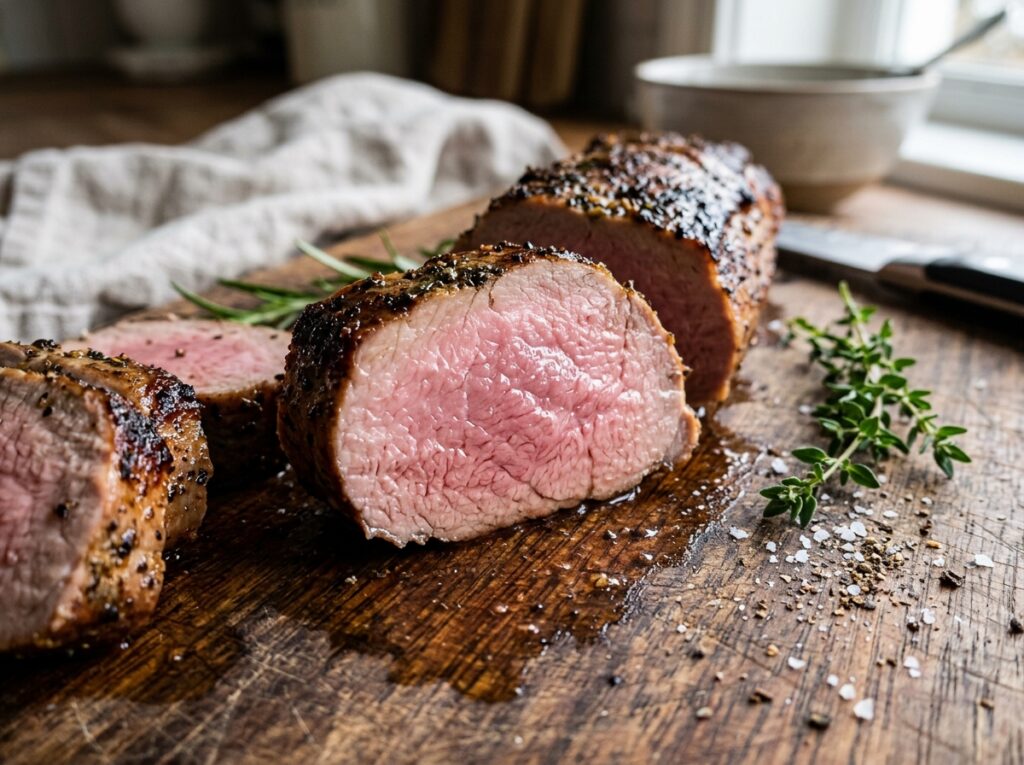
Pink Pork Tenderloin: Is It Safe to Eat?
Here’s the short answer most people want right away: pork tenderloin can be slightly pink in the middle and still be fully cooked.
The key number is 145°F (63°C), followed by a 3-minute rest. That’s the USDA guidance for whole cuts of pork, and pork tenderloin is a whole cut.
So if your tenderloin hit 145°F in the thickest part, then rested, a blush of pink inside is normal. In fact, that’s often where pork tenderloin tastes best. Push it far past that, and you’re much more likely to end up with dry, chalky meat.
Quick fact: A pork tenderloin that looks a little pink can be safer than one that looks white but was never checked with a thermometer.
If you want the full temperature breakdown, this guide to the internal temp for pork tenderloin makes the target easy to remember.
Why a safe pork tenderloin can still look pink
A lot of cooks still trust color more than temperature. That makes sense. Color is what you see. But meat doesn’t always follow neat little rules.
Color depends on more than heat
The pink color in pork comes from myoglobin, a protein in muscle. As pork cooks, myoglobin changes color. Still, that change doesn’t happen the exact same way every time.
One tenderloin might turn pale at 145°F. Another might still have a soft pink center at the same temperature. Both can be safe.
A few things affect that color:
- the age of the animal
- the pH of the meat
- the cooking method
- whether the pork was brined or marinated
- whether it was smoked or cooked gently
That’s why two tenderloins cooked side by side can look a little different once sliced.
If you’ve ever smoked meat and seen a pink ring even after it’s clearly cooked, same basic idea. Color can stick around after the meat is safe.
The old pork rule still confuses people
For a long time, people were told to cook pork to 160°F and wait until it looked gray or white all the way through. That advice stuck hard.
Then USDA updated its guidance for whole cuts of pork in 2011, lowering the safe minimum to 145°F with a 3-minute rest. Why the change? Better food safety science, updated cooking standards, and a better understanding of how whole cuts behave.
That means your parents may still say, “Pork isn’t done until there’s no pink.” They’re repeating what they were taught.
Did you know? The reason so many pork recipes still overcook tenderloin is simple: lots of older cookbooks and blog posts never caught up.
Pink juices don’t always mean raw meat
Another common belief says raw-looking juices mean raw pork. Not always.
That pink or reddish liquid isn’t straight blood. Most blood is removed during processing. What you’re usually seeing is water mixed with myoglobin.
So if you slice pork tenderloin and see pink juice on the board, that alone doesn’t prove it’s undercooked. Temperature tells you much more than juice color ever will.
Common misconception: “If the juices aren’t clear, the pork isn’t done.”
That’s not a reliable safety test.
What temperature makes pork tenderloin safe to eat?
If you remember one number from this whole article, make it 145°F.
USDA guidance for pork tenderloin
For whole cuts of pork, USDA says the safe minimum is:
145°F (63°C) + 3 minutes of rest
That includes pork tenderloin, pork loin, and pork chops.
The reason temperature matters is simple. Heat kills harmful germs. Color doesn’t. You can’t tell food safety by the shade of pink in the center.
If you want to compare tenderloin with other cuts, the safe internal temp for pork chops follows the same whole-cut rule, even though the shape and cooking time are different.
Why the 3-minute rest matters
That rest isn’t just for juiciness. It’s part of the safety recommendation.
Once you take the pork off the heat, the temperature doesn’t stop moving right away. It often rises a little more. That’s called carryover cooking.
Resting also lets the juices settle back into the meat. Slice too early, and you’ll lose moisture onto the cutting board.
A tenderloin that looked a touch too pink right out of the oven may look more even after a few minutes of rest. That’s why checking too soon can lead to bad calls.
Pro tip: If you know your oven well, you can pull a tenderloin a few degrees early and let carryover bring it up. If you’re new to cooking pork, keep it simple and verify that the final temp actually reaches 145°F.
Tenderloin is different from ground pork and bacon
This part matters.
Pork tenderloin is a whole muscle cut. Ground pork is not. Once meat is ground, anything on the surface gets mixed throughout. That’s why ground pork needs to reach 160°F (71°C).
Bacon is different too. It’s cured, processed, and sliced. If you’ve ever wondered why bacon has its own rules, this article on can you eat bacon raw explains why it’s not the same question as pink pork tenderloin.
So don’t use the tenderloin rule for everything with the word “pork” on the package. Cut matters.
How to check pork tenderloin the right way
If you’ve been guessing doneness by color, this is the part that will save you the most stress.
Use a thermometer, not a hunch
A quick-read digital thermometer is your best friend here. It settles the whole pink-or-not debate in seconds.
Stick the probe into the thickest part of the tenderloin. Go in from the side if that feels easier. You want the tip in the center of the meat, not too shallow and not touching the pan or baking sheet.
If you’re not fully confident with probe placement, this guide on how to read a meat thermometer can help you get an accurate reading without second-guessing yourself.
What cooked pork tenderloin usually looks like
A properly cooked tenderloin often has:
- a pale outer edge
- a warm pink or blush-colored center
- juices that look moist, not thick and raw
- a texture that feels firm but still tender
Think of it like a juicy steak cooked to medium instead of a gray hockey puck. Pork tenderloin is very lean, so it benefits from stopping at the right moment instead of being blasted until it’s dry.
A faint pink center is not the same as a raw center. Raw pork usually looks glossy, wet, and almost translucent. Safe cooked pork looks set, opaque, and warm through the middle.
Signs it may still need more time
There are times when pink pork really is undercooked. Here’s where to be careful.
Warning: Put it back on the heat if any of these are true:
- the center reads below 145°F
- the middle looks shiny, jelly-like, or translucent
- the thickest part feels cool, not hot
- one end is done but the middle is clearly lagging behind
Thickness can throw people off. Pork tenderloin is narrow, but the center still cooks more slowly than the tapered ends.
If you don’t have a thermometer, you can make a decent guess by texture and heat, but it’s still a guess. For meat safety, guessing isn’t great.
How to cook pork tenderloin so it stays juicy
A lot of people asking “Can pork tenderloin be pink?” are really asking something else too: “How do I cook it without drying it out or serving it raw?”
Good question. Tenderloin cooks fast. That’s why it’s easy to overdo.
A simple oven method that works
Roasting is one of the easiest ways to cook pork tenderloin well.
- Pat the tenderloin dry and season it.
- Sear it in a hot pan for a little color if you want.
- Roast it at 400°F until the thickest part reaches 145°F.
- Rest it for at least 3 minutes.
- Slice and check the center.
That’s it. No fancy trick needed.
If you want timing help, this guide to pork tenderloin in the oven at 400 is useful because tenderloins vary in size and thickness.
Most tenderloins land somewhere around 20 to 30 minutes in the oven, but don’t lock yourself to the clock. A thicker piece can need more time. A thin one can race past the sweet spot before you know it.
Resting changes the final result
Here’s where many cooks slip up. They cook the pork, pull it out, slice it right away, then panic at the color.
Resting does three helpful things:
It finishes the cooking gently.
It keeps more juice inside the meat.
It gives you a more reliable final texture.
Cutting too early makes the center seem softer and redder than it may look a few minutes later. It also drains out the juices you wanted in every slice.
Real-life example: pink, juicy, and safe
Let’s say you roast a 1.25-pound pork tenderloin. Your thermometer reads 146°F in the center. You rest it for 5 minutes. Then you slice it and see a light pink blush in the middle.
That tenderloin is safe.
Now imagine the other version. You keep cooking because you want zero pink. The internal temp hits 160°F or more. You slice it and yes, it’s pale all the way through. It’s also dry.
That’s the trade-off many people have been making for years without realizing it.
Common mistakes that make pork seem unsafe
A lot of the confusion around pink pork comes from a few very normal mistakes.
Trusting color alone
This is the big one.
Color can fool you in both directions. Pork can look pink and be safe. It can also look pale near the outside while the center still needs more time.
If you use only your eyes, you’re cooking with incomplete information.
Cutting into it too soon
You want to check. Totally fair. Dinner’s ready, everyone’s hungry, and the meat smells good.
Still, slicing immediately after cooking creates two problems. You lose juices, and you judge the color before the pork has finished resting. That can make safe meat look more questionable than it really is.
Confusing pork tenderloin with pork loin
These are not the same cut.
Pork tenderloin is long, narrow, and very lean. It cooks quickly.
Pork loin is wider, larger, and often sold as a roast. It takes longer and behaves differently in the oven.
They share the same USDA minimum for whole cuts, but the cook time is not interchangeable. Swap them in a recipe without adjusting, and you’ll get confusing results fast.
Following old recipes without checking the date
A recipe that tells you to cook tenderloin until it’s gray or “no pink remains” is probably leaning on older advice.
That doesn’t mean the writer was careless. It may just be outdated.
You don’t need to throw the whole recipe out. Just use the seasoning and method, then trust your thermometer.
Should some people cook pork tenderloin a bit more?
This is where safety and comfort meet.
The safe minimum and your comfort level
USDA says 145°F with a 3-minute rest is safe for whole cuts of pork. That’s the science-based minimum.
Still, some people feel better with pork cooked a little more, especially if they grew up eating very well-done pork. That’s okay. You can take tenderloin to 150°F to 155°F and still keep it reasonably juicy if you don’t go too far.
Will it be pink? Maybe a little, maybe not. Color still won’t obey perfectly.
If you’re cooking for higher-risk people
If you’re serving food to a pregnant person, an older adult, a very young child, or someone with a weakened immune system, some families prefer a slightly higher final temperature for peace of mind.
That’s a personal choice, not a different USDA minimum for pork tenderloin.
Note: This article shares general food safety info, not personal medical advice. If you’re cooking for someone with special health needs, follow official USDA guidance and any advice from their doctor.
4. FAQ Section
Is pork tenderloin safe if it’s pink in the middle?
Yes, pork tenderloin can be pink in the middle and still be safe, as long as the thickest part reaches 145°F (63°C) and the meat rests for 3 minutes. Color alone does not tell you if pork is safe.
Is 145°F really enough for pork tenderloin?
Yes. For whole cuts of pork, USDA says 145°F with a 3-minute rest is the safe minimum. Pork tenderloin is a whole cut, so that rule applies.
Why is my pork tenderloin still pink at 160°F?
Meat color depends on more than temperature. Myoglobin, pH, brining, and cooking method can all keep pork looking pink even after it is fully cooked. A thermometer reading is more reliable than color.
Do pink juices mean pork is undercooked?
Not always. Pink juice can be water mixed with myoglobin, not raw blood. Use internal temperature to decide if the pork is done, not juice color.
Can I eat pork tenderloin without using a thermometer?
You can try to judge by texture and cooking time, but it’s not the safest way. Pork tenderloin can stay pink even when done, so a thermometer is the best tool if you want a clear answer.
5. Conclusion
If you remember one simple rule, make it this: pink pork tenderloin isn’t the problem, undercooked pork is. Check the temperature, give it a short rest, and trust the number more than the color. Next time you slice into a tenderloin and see a light pink center, you won’t need to panic. You’ll know exactly what to look for.