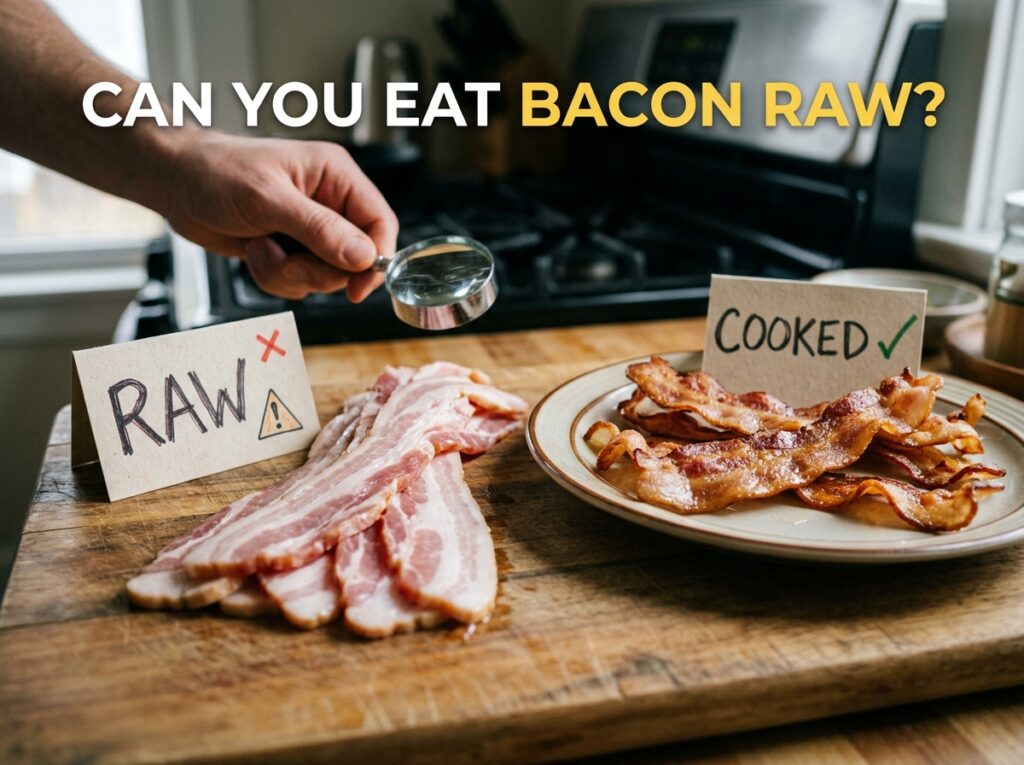
Can You Eat Bacon Raw? The Truth About Uncooked Bacon
You just pulled a pack of bacon out of the fridge, peeled off a strip, and thought — can I just eat this as is? Maybe you’re in a rush. Maybe you’ve heard that bacon is already “cured” so it should be fine. Or maybe you’ve seen someone pop a raw slice into their mouth like it’s no big deal. Whatever brought you here, the answer matters more than you think — because eating raw bacon carries real health risks that most people don’t fully understand.
Let’s break it all down. No drama, no scare tactics. Just honest facts so you can make a smart call.
What Exactly Is “Raw” Bacon?
Before we get to the safety question, let’s clear up what raw bacon actually is.
Most bacon you find at the grocery store has been cured. That means it’s been treated with salt, sodium nitrate, sugar, and sometimes smoke flavoring. This curing process gives bacon its signature salty-smoky taste and extends its shelf life.
But here’s the thing — cured doesn’t mean cooked. Curing is a preservation method. It changes the flavor and texture, and it slows down bacterial growth. It doesn’t kill all harmful pathogens the way cooking at high heat does.
Think of it like this: a cured piece of bacon is in a gray zone. It’s not “raw” in the same way a fresh pork chop straight from the butcher is raw, but it’s also not ready to eat the way a slice of deli ham or prosciutto might be.
Some bacon is labeled uncured, which means it wasn’t treated with synthetic nitrates — but it’s usually still preserved using natural sources like celery juice powder. And it’s definitely not cooked either.
So when people ask “can you eat bacon raw,” they’re usually asking about eating bacon straight from the package without cooking it. And the short answer? You really shouldn’t.
Why Eating Raw Bacon Is Risky
Let’s talk about what can actually go wrong if you eat uncooked bacon. This isn’t about being overly cautious — these are real, documented health risks.
Bacterial Contamination
Raw or undercooked pork can harbor several dangerous bacteria. The most common culprits include:
Salmonella — This bacteria thrives in raw meat and can cause diarrhea, fever, and abdominal cramps. Symptoms usually kick in within 6 to 72 hours of eating contaminated food and can last up to a week.
Listeria monocytogenes — Particularly dangerous for pregnant women, older adults, and people with weakened immune systems. Listeria can survive refrigeration, which means even properly stored raw bacon isn’t automatically safe.
Staphylococcus aureus — Commonly known as staph, this one produces toxins that can cause violent food poisoning symptoms within hours.
The CDC estimates that roughly 48 million Americans get sick from foodborne illnesses every year. Raw and undercooked meats are among the leading causes.
Parasitic Infections
This is the one that really gets people’s attention. Raw pork can contain parasites — most notably Trichinella spiralis, the roundworm responsible for trichinosis.
Trichinosis symptoms can range from mild (nausea, diarrhea, fatigue) to severe (muscle pain, swelling around the eyes, and in rare cases, heart and breathing complications). According to the USDA, while trichinosis cases have dropped significantly in the U.S. thanks to improved farming practices, the risk isn’t zero — especially with pork products that haven’t been cooked to safe temperatures.
Toxoplasma gondii is another parasite found in undercooked pork. Most healthy adults won’t notice symptoms, but it can be extremely dangerous for pregnant women and immunocompromised individuals.
The Salt and Nitrate Factor
Some people argue that the high salt content and nitrates in cured bacon should kill bacteria. And yes, salt does inhibit bacterial growth — but it doesn’t eliminate it entirely. Nitrates help prevent the growth of Clostridium botulinum (the bacteria that causes botulism), but they don’t make bacon safe to eat without cooking.
The curing process reduces risk. It doesn’t remove it.
⚠️ Warning: No matter how high-quality or fresh your bacon is, eating it without cooking it first puts you at risk for bacterial and parasitic infections. The USDA recommends cooking all pork products to an internal temperature of at least 145°F (63°C).
But Wait — What About Prosciutto and Pancetta?
This is the question that trips people up the most. If you can eat prosciutto and pancetta without cooking them, why not bacon?
Great question. Here’s the difference.
Prosciutto goes through an extended dry-curing and aging process that can last anywhere from 12 to 36 months. During this time, the combination of salt concentration, controlled humidity, and slow dehydration creates an environment where harmful bacteria simply can’t survive. Italian prosciutto production follows extremely strict regulations — the Consorzio del Prosciutto di Parma, for example, has rigid standards going back centuries.
Pancetta is also dry-cured for weeks or months, depending on the producer. This extended curing period is what makes it safe to eat without cooking (though many recipes still call for cooking it).
American-style bacon, on the other hand, goes through a much shorter curing process — typically just a few days. It’s designed to be cooked before eating. The curing it undergoes is more about flavor and preservation for shelf life than about making it safe to consume raw.
So the difference isn’t just cultural — it’s about the duration, method, and intensity of the curing process. You’re not comparing apples to apples here.
What Happens If You Eat Raw Bacon?
Let’s say you accidentally ate a small piece of raw bacon — maybe you were taste-testing while cooking and grabbed an underdone strip. Should you panic?
Probably not. A small amount of cured raw bacon likely won’t make you seriously ill, especially if you’re a healthy adult with a strong immune system. Your stomach acid can handle a lot.
But if you’ve eaten a significant amount, or if you start experiencing any of these symptoms within a few hours to a few days, you should contact your doctor:
- Persistent nausea or vomiting
- Diarrhea that doesn’t improve after 24 hours
- Fever above 101.5°F (38.6°C)
- Severe abdominal cramps
- Muscle pain or swelling (this could indicate trichinosis and usually shows up 1–2 weeks after exposure)
For most people, a tiny nibble of raw bacon is unlikely to cause a trip to the ER. But making a habit of it? That’s playing a risky game you don’t need to play.
💡 Did You Know? Trichinosis symptoms can take anywhere from 1 to 8 weeks to appear after eating contaminated meat. So if you ate raw pork and feel fine the next day, that doesn’t guarantee you’re in the clear.
How to Cook Bacon Safely
Since the answer to “can you eat bacon raw” is a clear no, let’s make sure you’re cooking it right. Because undercooked bacon carries the same risks as raw bacon — just to a lesser degree.
The USDA recommends cooking pork (including bacon) to an internal temperature of 145°F (63°F). With bacon, you’re generally looking for a crispy, golden-brown appearance with no pink, translucent areas remaining.
Here are a few reliable methods:
Pan-Frying — The classic approach. Lay strips in a cold skillet and turn the heat to medium. Flip occasionally until crispy. Starting with a cold pan helps render the fat slowly, giving you evenly cooked, crispy strips instead of burnt edges with chewy middles.
Oven-Baking — Line a baking sheet with parchment paper or aluminum foil, lay out the strips, and bake at 400°F (204°C) for 15–20 minutes. This method is great for cooking large batches without standing over a stove. If you’re looking to understand the difference between baking surfaces, check out this comparison of butcher paper vs parchment paper — it matters more than you’d think.
Microwave — Place strips between paper towels on a microwave-safe plate. Cook on high for about 1 minute per slice. Not the crispiest result, but it works in a pinch.
Air Fryer — Set it to 375°F and cook for 8–10 minutes. Gives you crispy bacon with less mess.
No matter which method you choose, the key is the same: cook it until there are no raw, pink, or translucent sections left. If you’re not sure when your bacon has reached the right point, this guide on how to tell when bacon is done breaks it down perfectly.
🔥 Pro Tip: Investing in a good meat thermometer takes the guesswork out of cooking any meat — not just bacon. If you’ve never used one before, here’s a simple walkthrough on how to read a meat thermometer.
Can You Eat Smoked Bacon Without Cooking It?
Here’s another nuance worth addressing. Some bacon is labeled “smoked,” and people assume that means it’s been cooked by the smoking process.
It depends on the type of smoking.
Cold-smoked bacon is smoked at low temperatures (typically below 100°F/38°C). This adds flavor but doesn’t cook the meat. Cold-smoked bacon still needs to be cooked before eating.
Hot-smoked bacon is smoked at higher temperatures (above 140°F/60°C), which does partially or fully cook the meat. Some hot-smoked bacon products are labeled as “fully cooked” — and those are technically safe to eat without additional cooking, though they’ll taste much better warmed up.
Always read the label. If the package says “ready to eat” or “fully cooked,” you’re fine. If it doesn’t, treat it as raw and cook it before eating.
What About Turkey Bacon or Beef Bacon?
If you’re avoiding pork for dietary or religious reasons and you’re wondering whether turkey bacon or beef bacon is any safer to eat raw — the answer is still no.
Turkey bacon is made from ground turkey that’s been seasoned and pressed into strip shapes. It’s still raw poultry, which carries risks of Salmonella and Campylobacter. Raw poultry is arguably even riskier than raw pork. The USDA recommends cooking all poultry products to at least 165°F (74°C).
Beef bacon is made from beef belly and needs to be cooked just like any other cut of beef. While beef carries a slightly different risk profile than pork (no trichinella, for instance), it can still harbor E. coli and other harmful bacteria.
The bottom line: no matter the animal source, bacon should be cooked before eating.
Storing Bacon Safely to Reduce Risk
Proper storage won’t make raw bacon safe to eat, but it does reduce the chance of additional bacterial contamination.
Unopened bacon stays good in the fridge for about 1 to 2 weeks past its sell-by date. Once opened, use it within 7 days.
Cooked bacon can last in the fridge for about 4 to 5 days if stored in an airtight container. If you’ve ever wondered how long other cooked proteins last, the same principles that apply to fried chicken in the fridge work here — keep it sealed, keep it cold, and trust your nose.
Freezing extends bacon’s life to about 1 month (for best quality). You can freeze it in the original packaging or wrap strips individually in foil for easy single-use thawing.
Never leave raw bacon sitting out at room temperature for more than 2 hours. Bacteria multiply rapidly between 40°F and 140°F — what food safety experts call the “danger zone.” The same rule applies to other perishable foods, as outlined in this piece about chicken left out overnight.
A Quick Word on Pork Safety in General
Bacon is just one part of the larger conversation about safe pork consumption. If you enjoy pork tenderloin, pork chops, or pork butt, the same basic principles apply — cook it to a safe internal temperature and check with a thermometer.
For reference, the USDA updated its pork cooking guidelines back in 2011, lowering the recommended internal temperature from 160°F to 145°F (with a 3-minute rest). This means pork can be slightly pink in the center and still be perfectly safe. If that surprises you, you might want to read about whether pork tenderloin can be pink — it clears up a lot of confusion.
And if you’re cooking a pork tenderloin, knowing the right internal temp for pork tenderloin saves you from both undercooking and drying it out.
FAQ
Is cured bacon safe to eat without cooking?
No. Cured bacon has been treated with salt and preservatives, but it hasn’t been cooked. The curing process slows bacterial growth but doesn’t eliminate pathogens entirely. You should always cook cured bacon to a safe internal temperature before eating it.
Can a small bite of raw bacon make you sick?
A single small bite of cured bacon is unlikely to cause serious illness in a healthy adult, but it does carry some risk. If you experience nausea, diarrhea, fever, or muscle pain in the hours or weeks following, contact your healthcare provider. The risk increases with the amount consumed.
What’s the difference between bacon and prosciutto if both are cured pork?
The key difference is the curing duration and process. Prosciutto is dry-cured and aged for 12 to 36 months under carefully controlled conditions, which eliminates harmful bacteria. American-style bacon is wet-cured for just a few days and is intended to be cooked before eating.
What temperature should bacon be cooked to?
The USDA recommends cooking all pork products, including bacon, to an internal temperature of at least 145°F (63°C). For bacon specifically, cook it until it’s visibly crispy with no pink or translucent areas remaining.
Can you eat pre-packaged “fully cooked” bacon without heating it?
Yes. If the label specifically says “fully cooked” or “ready to eat,” the bacon has already been cooked to a safe temperature during processing. You can eat it cold or at room temperature, though most people prefer to warm it up for better taste and texture.
The Bottom Line
Raw bacon might look harmless sitting there in its neat little package, but it’s not meant to be eaten without cooking. The curing process gives it flavor and extends its shelf life, but it doesn’t make it safe to eat straight out of the wrapper.
The risks — from Salmonella to Trichinella — are real, documented, and completely avoidable. All it takes is a few minutes in a pan, oven, or air fryer. Your bacon will taste infinitely better cooked anyway. Crispy, golden, hot, and safe.
So next time you’re tempted to sneak a raw strip while prepping breakfast, just wait the extra five minutes. Your stomach will thank you.