Calories in a Slice of Pizza — By Type, Topping & Size
Americans eat roughly 3 billion pizzas every single year. That’s about 23 pounds of pizza per person, according to data from the USDA and pizza industry reports. And yet, most people have no clue how many calories they’re actually consuming when they grab a slice.
Here’s the short answer: a single slice of regular cheese pizza from a standard 14-inch pie packs around 250 to 300 calories. But that number can swing wildly — anywhere from 150 to over 400 calories — depending on the crust, the cheese, the toppings, and the size of the slice.
If you’re watching your weight, managing a health condition, or just trying to eat smarter without giving up one of the greatest foods ever invented, this breakdown will give you clear, honest numbers. No fluff. No guilt-tripping. Just straight-up calorie counts so you can make choices that work for your body and your taste buds.
What Determines the Calories in a Pizza Slice?
Before you look at a calorie chart, it helps to understand why pizza calories vary so much. It’s not just about toppings — though they matter. Four main things drive the calorie count of any pizza slice.
Crust thickness and type make the biggest difference most people overlook. A thin crust slice can save you 50–80 calories compared to a regular hand-tossed crust. A deep-dish or stuffed crust? That can nearly double the calorie count because you’re eating significantly more dough and, often, more butter or oil baked into it.
Cheese quantity is the second heavyweight. Mozzarella — the standard pizza cheese — runs about 85 calories per ounce. Most regular slices carry about 1.5 to 2 ounces of cheese. Extra cheese adds another ounce, which means roughly 85 more calories that slip past you without any visual warning.
Toppings play a role that people tend to either overestimate or underestimate. Vegetables like mushrooms, onions, and bell peppers add almost negligible calories — maybe 5 to 15 per slice. Meat toppings like pepperoni, sausage, and bacon can add 30 to 70 calories per slice. And premium toppings like extra meatballs or pulled pork push that number even higher.
Slice size is the sneaky variable. A slice from a 10-inch personal pizza is dramatically different from a slice of a New York-style 18-inch pie. When someone says “I only had two slices,” the actual calorie intake could range from 400 to over 800 depending on where those slices came from.
Calories in a Slice of Cheese Pizza — The Baseline
Cheese pizza is the gold standard for calorie comparison. It’s the simplest version, and every other variety builds on top of it.
A regular slice of cheese pizza from a 14-inch (large) pie typically contains 250 to 300 calories. The USDA lists a generic slice of cheese pizza (about 107 grams) at roughly 272 calories, with about 12 grams of fat, 34 grams of carbs, and 12 grams of protein.
That 272-calorie figure is a useful benchmark, but real-world pizza doesn’t always match government databases. Restaurant slices tend to run a bit higher because they use more cheese and oil than a standard recipe assumes.
Here’s how the numbers shift based on crust style for a cheese pizza slice from a large pie:
Thin crust cheese: roughly 190–230 calories. Less dough means fewer carbs and less overall mass.
Hand-tossed (regular) cheese: roughly 250–300 calories. This is your classic pizzeria slice.
Pan or deep-dish cheese: roughly 310–380 calories. The thicker, oilier crust adds significant calories even before toppings enter the picture.
Stuffed crust cheese: roughly 340–400 calories. You’re essentially adding an extra cheese stick to the edge of every slice.
If you’re tracking your intake and you eat two slices of regular cheese pizza, you’re looking at approximately 500–600 calories — which is a reasonable meal for most adults. Three slices, though, pushes you toward 750–900 calories, and that’s just cheese. Add a soda and breadsticks, and you’re looking at a meal that rivals your entire daily calorie needs.
Calories by Pizza Type — Popular Varieties Compared
Cheese pizza is just the starting point. Most people don’t order plain cheese (unless they’re feeding picky kids). Let’s break down the real-world numbers for popular pizza varieties. All estimates below are based on one slice from a large (14-inch) hand-tossed pie.
Pepperoni Pizza
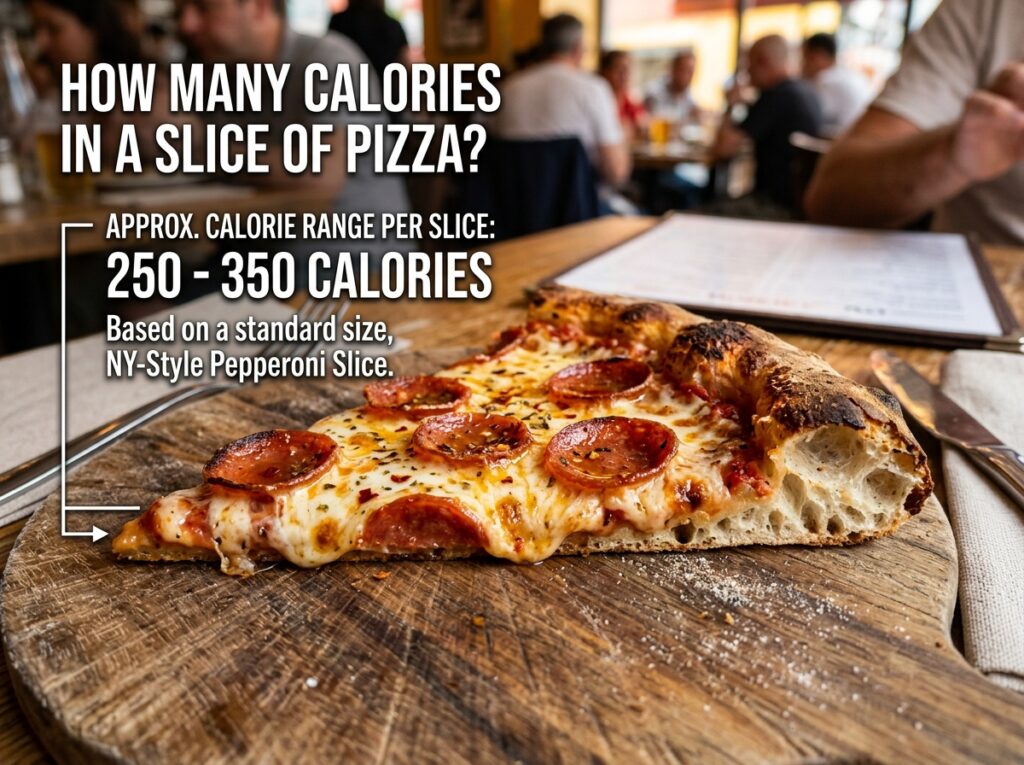
The most ordered pizza topping in America adds roughly 30 to 50 extra calories per slice compared to plain cheese. A typical slice of pepperoni pizza clocks in around 290 to 340 calories. The pepperoni itself contributes fat (about 3–5 extra grams per slice) and a decent hit of sodium.
Meat Lovers / Supreme Pizza
This is where things escalate. With pepperoni, sausage, ham, bacon, and sometimes beef all piled on, a single slice of meat lovers pizza lands around 350 to 430 calories. Some chain restaurant versions push past 450. If you love meat-loaded pizza, just know that two slices are doing the calorie work of a pretty hefty meal.
Veggie Pizza
Good news for plant-based topping fans — a veggie pizza slice typically runs 240 to 290 calories. The vegetables (mushrooms, green peppers, onions, olives, tomatoes) add volume and flavor without much caloric impact. Olives are the most calorie-dense veggie topping, but even they only add about 10–15 calories per slice.
Margherita Pizza
A proper Margherita pizza — fresh mozzarella, tomatoes, basil, olive oil — often comes on a thin crust. A slice usually falls between 200 and 260 calories. It’s one of the lighter options if you’re eating out at a wood-fired pizza spot.
BBQ Chicken Pizza
The BBQ sauce adds sugar, and the chicken adds protein. A slice generally runs 280 to 340 calories. It’s not as heavy as you might expect, but the sugar content in the sauce is something to keep in mind if you’re watching carbs.
Hawaiian Pizza
Ham and pineapple on a regular crust puts a slice at about 260 to 310 calories. The pineapple adds very few calories (about 8–10 per slice), and ham is leaner than pepperoni or sausage, making Hawaiian a moderate option calorie-wise.
White Pizza
No tomato sauce, extra cheese, often ricotta and garlic. A slice of white pizza runs 300 to 370 calories. The absence of tomato sauce saves roughly 10–15 calories, but the extra cheese and ricotta more than make up for it.
Chain Restaurant Pizza — Real Calorie Counts
Numbers from pizza chains are helpful because they’re standardized. You know exactly what you’re getting whether you order in New York or Nebraska. Here’s how the major chains stack up for one large slice of cheese pizza (unless otherwise noted):
Domino’s hand-tossed cheese: approximately 290 calories per slice. Their thin crust cheese drops to around 190 calories. Domino’s publishes detailed nutrition data, and it’s worth checking their website if you order regularly.
Pizza Hut hand-tossed cheese: approximately 300 calories per slice. Their pan pizza (the classic deep crust) jumps to around 350 per slice. If you’re a Pizza Hut fan, switching from pan to thin crust saves you roughly 100 calories per slice — and across three slices, that’s 300 calories you’ve cut without changing your toppings.
Papa John’s original crust cheese: approximately 280 calories per slice. Their garlic dipping sauce, though? That little cup adds 150 calories all by itself. Two cups of garlic sauce equals almost an entire extra slice.
Little Caesars classic cheese: approximately 250 calories per slice. They tend to run slightly smaller slices than Domino’s or Pizza Hut, which partly accounts for the lower number.
Costco cheese pizza: here’s where things get interesting. A Costco pizza slice is massive — cut from an 18-inch pie, each slice weighs significantly more than a standard large slice. One Costco cheese slice packs approximately 700 calories. That’s not a typo. The slices are simply much bigger. Two Costco slices could cover your entire calorie needs for half the day.
Pro Tip: When checking chain pizza calories, always confirm the size of the pizza the calorie data refers to. A “large” at one chain might be 14 inches, while another uses 16 inches. The per-slice calorie counts aren’t directly comparable unless the pizza sizes match.
Frozen Pizza — How It Stacks Up
Frozen pizza is a different animal. Portion sizes are usually smaller, and manufacturers have tight control over ingredients, so the calorie counts are more predictable.
A slice from a standard DiGiorno Rising Crust cheese pizza has roughly 290 to 310 calories. Their thin crust version drops to about 250. Tombstone original cheese runs about 260 calories per slice. Red Baron classic crust cheese lands around 280.
Budget-friendly frozen pizzas like Totino’s Party Pizza are a bit tricky. The entire pizza is only about 740 calories, and if you cut it into four pieces, each piece is around 185 calories. But let’s be honest — most people eat half or the whole thing, which puts you at 370 to 740 calories.
The calorie advantage of frozen pizza isn’t that it’s inherently healthier. It’s that the portions are smaller and clearly labeled. You know exactly what you’re eating because it’s printed right on the box. At a restaurant, you’re guessing.
How to Reduce Calories Without Giving Up Pizza
You don’t have to abandon pizza to eat well. A few smart tweaks can save you 100–300 calories per sitting without making your pizza taste like cardboard.
Choose thin crust over regular or deep-dish. This single switch saves the most calories with the least sacrifice. You still get all the toppings and cheese flavor — just less bread underneath. Across two slices, you might save 100–160 calories. If you’re used to deep-dish, the savings are even more dramatic.
Go easy on the cheese or ask for light cheese. Restaurants will do this if you ask. Cutting the cheese by a third saves roughly 50–60 calories per slice. You’d be surprised how little you miss it when the other flavors — sauce, toppings, herbs — are solid.
Load up on veggie toppings. Mushrooms, spinach, roasted red peppers, onions, tomatoes — they add flavor and texture for practically zero caloric cost. A slice loaded with veggies feels more satisfying than a plain cheese slice, and it often has fewer calories than one with meat toppings.
Skip the stuffed crust. That cheese-filled rim adds 60–100 calories per slice. If the regular crust isn’t exciting enough, ask for a garlic butter brush on thin crust — it adds maybe 20 calories but delivers a lot of flavor.
Watch the sides. The pizza itself isn’t always the calorie bomb. It’s the breadsticks (150 calories each), the garlic knots (100+ calories each), the dipping sauces (50–150 calories per cup), and the sugary drinks that push a pizza meal from reasonable to excessive. A two-slice pizza meal with water is a perfectly normal 500–600 calorie dinner. Add breadsticks, ranch, and a Coke, and you’re past 1,000 before you’ve thought twice.
If you’re someone who tracks how food fits into your daily meals, these small changes add up significantly over weeks and months.
Does Pizza Fit Into a Healthy Diet?
This is the question behind the calorie question. People don’t just Google pizza calories out of curiosity — they want to know if they can eat pizza without wrecking their diet.
The honest answer: yes, absolutely. Pizza can fit into almost any eating plan if you’re reasonable about it.
Two slices of regular cheese pizza give you about 500–600 calories, roughly 24 grams of protein, some calcium from the cheese, and lycopene from the tomato sauce. That’s a legitimate meal. It’s not a salad, but it’s also not the nutritional disaster that diet culture makes it out to be.
The problems start when pizza becomes a daily habit consumed in large quantities — four or five slices at a time, with sides, washed down with soda. That pattern can push a single meal past 1,500 calories easily, which is close to an entire day’s calorie budget for many people.
A practical guideline: treat pizza as a meal, not a snack. Eat it at the table, not mindlessly in front of the TV. Stick to two or three slices. Pair it with a side salad if you want extra volume. And choose your toppings and crust with at least some awareness of what they add.
If you’re cooking at home and looking for other meals to balance your week, knowing how to properly bake chicken breast at 350°F or cook ground turkey gives you easy, protein-rich options for the days when you aren’t eating pizza.
Calories in Pizza — Quick Reference
For those who just want the numbers at a glance, here’s a straightforward reference for one slice from a large (14-inch) pizza:
Cheese (hand-tossed): 250–300 cal
Cheese (thin crust): 190–230 cal
Cheese (deep-dish/pan): 310–380 cal
Pepperoni: 290–340 cal
Meat Lovers: 350–430 cal
Veggie: 240–290 cal
Margherita (thin crust): 200–260 cal
BBQ Chicken: 280–340 cal
Hawaiian: 260–310 cal
White Pizza: 300–370 cal
Costco Cheese (18-inch): ~700 cal
These are ranges because every pizzeria is different. Homemade pizza, chain restaurant pizza, and gourmet brick-oven pizza all hit slightly different numbers even with the same toppings. Use these figures as solid ballpark estimates, and if you need precise counts, check the nutrition info for the specific brand or restaurant you’re ordering from.
What About Homemade Pizza?
Making pizza at home gives you the most control over calories. You decide how much dough, how much cheese, how much sauce, and exactly which toppings go on.
A basic homemade cheese pizza using store-bought dough, half a cup of marinara, and about 8 ounces of shredded mozzarella on a 12-inch crust produces roughly 200–250 calories per slice (cut into 8 slices). That’s noticeably lower than most restaurant versions because you’re not adding the extra oil, butter, and cheese that restaurants use to boost flavor.
You can push those numbers down further by using part-skim mozzarella (about 70 calories per ounce instead of 85), making a cauliflower crust (saves roughly 50–80 calories per slice versus regular dough), or going light on cheese and heavy on roasted vegetables.
Homemade pizza also lets you experiment with higher-protein crusts made from whole wheat flour or even chickpea flour, which adds fiber and keeps you fuller longer.
If you’re spending more time in the kitchen, having the right tools matters. A quality chef knife makes prep work faster, and understanding basics like how long to boil potatoes or how to reheat leftover foods properly keeps your home cooking game strong across all meals — not just pizza night.
How to Burn Off a Slice of Pizza
Sometimes it’s useful to put calories in context by thinking about how much activity they represent. Not because you need to “earn” your food — you don’t — but because it helps you understand what 300 calories actually means for your body.
A 300-calorie slice of pizza takes roughly:
Walking (brisk pace): about 55–65 minutes
Jogging: about 25–30 minutes
Cycling (moderate): about 30–40 minutes
Swimming: about 25–35 minutes
Sitting and doing nothing: your body burns it eventually through basic metabolic functions, but it takes several hours
The point isn’t that you must exercise after eating pizza. The point is that 300 calories is a moderate amount of energy — your body uses it. It’s not going to “sit there forever.” Your body processes and uses that energy whether you work out afterward or not. Exercise is great for your health regardless, but you don’t owe the treadmill anything because you ate pizza.
Pizza and Macronutrients — Beyond Just Calories
Calories tell part of the story, but what’s in those calories matters for how full you feel and how your body uses the energy.
A standard slice of cheese pizza (about 272 calories) typically breaks down to approximately 12g fat, 34g carbs, and 12g protein. That’s a relatively balanced macro profile, though it leans carb-heavy because of the crust.
Protein is the most satiating macronutrient — it keeps you full longer. Pizza’s protein mainly comes from cheese, and adding chicken or lean meat toppings bumps it up. A chicken-topped slice might give you 16–20g of protein, which is genuinely useful for muscle maintenance and keeping hunger away.
Fat in pizza comes from cheese and oil. It’s mostly saturated fat from the cheese, which is worth noting if you’re managing cholesterol. But in reasonable portions, the fat also helps with satiety — it’s part of why pizza feels satisfying.
Carbs come from the crust and are your body’s preferred quick energy source. Thin crust reduces the carb count by about 8–12 grams per slice. If you’re on a lower-carb eating plan, thin crust with protein-rich toppings is your best bet.
The sodium content is the hidden concern with pizza. A single slice can contain 500–700mg of sodium, and the American Heart Association recommends keeping total daily sodium under 2,300mg (ideally 1,500mg). Two or three slices can eat up a huge chunk of your daily sodium allowance, especially if you add cured meat toppings like pepperoni or sausage.
FAQ
How many calories are in 2 slices of pizza?
Two slices of regular cheese pizza from a large (14-inch) pie contain approximately 500–600 calories. If you’re eating pepperoni, expect about 580–680 calories for two slices. Meat lovers or deep-dish? You could be looking at 700–860 calories for just two slices. The exact number depends on crust type, cheese amount, and toppings.
Is pizza okay to eat on a diet?
Yes — pizza can fit into a calorie-controlled diet. The key is portion awareness. Two slices of thin-crust veggie pizza come in around 400–500 calories, which is a perfectly reasonable meal. Choose thinner crust, lighter cheese, and vegetable toppings. Avoid eating half a pie at 10 PM, and pizza won’t sabotage your goals.
Which pizza has the least calories?
Thin crust veggie or thin crust Margherita pizzas tend to have the fewest calories, typically 190–260 calories per slice. Among chain restaurants, a Domino’s thin crust cheese slice is one of the lightest options at around 190 calories. Cauliflower crust pizzas at some chains come in slightly lower, though the difference isn’t always dramatic.
How many calories is a whole pizza?
A whole large (14-inch) cheese pizza with 8 slices contains roughly 2,000–2,400 calories. That’s close to a full day’s caloric needs for an average adult. A whole Costco pizza (18-inch) can exceed 4,200 calories. A small personal pizza (10-inch) usually totals about 800–1,200 calories depending on the style and toppings.
Is Domino’s or Pizza Hut lower in calories?
They’re very close, but Domino’s thin crust options tend to come in slightly lower per slice. A Domino’s thin crust cheese slice has about 190 calories versus about 210 for Pizza Hut’s thin crust. For hand-tossed, both hover in the 280–300 calorie range per slice. The real difference comes down to specific menu items rather than a blanket brand comparison.
Your Next Slice — Eat It Smarter
Pizza isn’t the enemy. It never was. A slice of cheese pizza has roughly the same calories as a large banana with two tablespoons of peanut butter, or a turkey sandwich with cheese. The difference is nobody ever felt guilty about eating a turkey sandwich.
The numbers are simple: 250–300 calories for a regular slice, less if you go thin crust, more if you go deep-dish or pile on the meats. Two slices make a normal meal. Three slices are still fine if the rest of your day was reasonable. The whole pie? That’s a different conversation.
Know your numbers, pick your crust wisely, load up on veggies when you can, and stop worrying about pizza as if it’s some uniquely dangerous food. It’s bread, cheese, sauce, and toppings — and now you know exactly what that costs in calories.
If you’re building a week of balanced meals, pair your pizza nights with lighter cooking on other days. A simple baked salmon at 350°F or some well-seasoned chicken drumsticks baked at 400°F can balance things out nicely. Eating well isn’t about perfection — it’s about making good choices most of the time and enjoying the rest without guilt.