How Many Chicken Breasts in 1 Pound?
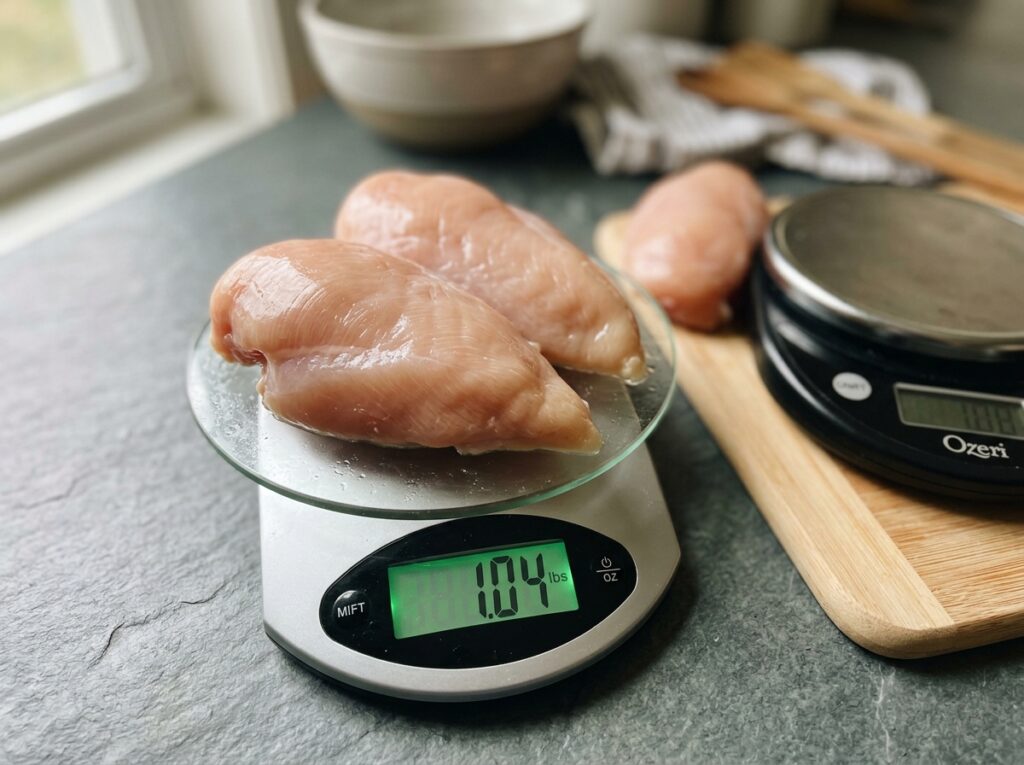
A one-pound pack of chicken can hold one breast or four. That’s why shopping by piece count gets confusing fast. If you’re trying to figure out how many chicken breasts in a pound, the usual answer is 2 medium boneless, skinless chicken breasts. Still, size, bone, skin, and even the brand can change that. Once you know the rough weight range, the guesswork gets a lot easier.
The Short Answer: How Many Chicken Breasts in a Pound?
For most grocery-store packs, 1 pound of chicken breast equals about 2 medium boneless, skinless breasts.
That’s the answer most people want, and for a quick grocery run, it works well. But chicken breasts don’t come in one standard size. Some are small, around 4 to 5 ounces each. Others are huge, closer to 10 or 12 ounces.
Here’s the easy math:
- 1 pound = 16 ounces
- If one breast weighs 8 ounces, you’ll get 2 breasts per pound
- If one breast weighs 4 ounces, you’ll get 4 breasts per pound
- If one breast weighs 12 ounces, you may get just 1 large breast, with a little extra weight from the next piece
Quick fact: The most common range for a boneless, skinless chicken breast is 6 to 8 ounces. That’s why “2 per pound” is such a common rule of thumb.
If you’re buying bone-in split chicken breasts, the answer changes a lot. One bone-in piece can weigh 10 to 16 ounces, sometimes even more. So in that case, 1 pound may be just 1 breast.
Why the Number Changes So Much
Chicken breast count isn’t random. A few simple things change the weight, and once you know them, package labels make more sense.
Boneless, skinless vs. bone-in
A boneless, skinless chicken breast is the version most recipes mean. It’s trimmed, easy to portion, and more consistent in weight.
A bone-in chicken breast includes the rib bone and often the skin. That adds weight, but not edible meat. So if you buy 1 pound of bone-in chicken breast, you’re not getting the same amount of usable meat as 1 pound of boneless breast.
That’s a big reason people get confused. They think “a pound is a pound,” which is true on the scale, but not on the plate.
Store trimming and package style
Not every store cuts chicken the same way. Some breasts are neatly trimmed. Some have extra fat or a bit of the tenderloin attached. Some are sold in smaller “recipe-ready” pieces. Others are the giant family-pack kind that look like they came from a bodybuilding chicken.
If you’ve ever noticed that thin strip under the breast and wondered whether it counts, it helps to know the difference between chicken tenderloin and chicken breast. That attached strip can slightly change the weight of each piece.
You’ll also see size differences between brands. Warehouse stores like Costco often sell larger breasts in bulk packs. Regular grocery chains may sell more medium-sized pieces. Organic or air-chilled chicken can look smaller and denser than some water-chilled packs.
“Two chicken breasts” isn’t a reliable measurement
A lot of recipes still say “use 2 chicken breasts.” Sounds simple, right? The problem is that 2 breasts could mean 10 ounces total or 24 ounces total, depending on what you bought.
That’s why buying by weight is smarter than buying by piece count, especially for meal prep, calorie tracking, or recipe scaling.
Think of it like potatoes. “Two potatoes” doesn’t help much if one is golf-ball sized and the other looks like it could feed a family.
Chicken Breast Weight Chart and Easy Conversions
If you want a faster way to plan meals, this chart gives you a solid estimate.
Average weight by size
| Chicken breast type | Average weight per piece | How many in 1 pound |
|---|---|---|
| Small boneless, skinless | 4–5 oz | 3–4 |
| Medium boneless, skinless | 6–8 oz | 2–3 |
| Large boneless, skinless | 9–12 oz | 1–2 |
| Bone-in split breast | 10–16 oz | About 1 |
These are average ranges, not exact rules. Real packs vary. Still, this table works well for everyday cooking and shopping.
Did you know? Some of the biggest chicken breasts sold in family packs can weigh almost as much as two normal portions by themselves. That’s why one piece sometimes feels like plenty for two people.
How many breasts are in 2, 3, or 5 pounds?
Here’s a simple way to picture it. If your chicken breasts are medium-sized, around 8 ounces each, then:
| Total weight | Likely number of medium breasts |
|---|---|
| 1 pound | 2 |
| 2 pounds | 4 |
| 3 pounds | 6 |
| 5 pounds | 10 |
If the breasts are smaller, you’ll get more pieces. If they’re oversized, you’ll get fewer.
You can also do the math yourself in a few seconds:
Total ounces ÷ average ounces per breast = piece count
For example, let’s say your pack weighs 2.5 pounds. That’s 40 ounces total. If the pack has medium breasts around 8 ounces each, you can expect about 5 breasts.
If the pack has larger breasts around 10 ounces each, you’re looking at about 4 breasts.
Once you do this a couple of times, you’ll start spotting pack sizes almost by instinct.
How Much Chicken Breast Should You Buy Per Person?
A lot of people searching this topic aren’t just curious about weight. They’re trying to answer a more practical question: How much should I buy for dinner?
That depends on how you’re serving it.
For full chicken dinners
If chicken breast is the main part of the meal, a good target is about 6 to 8 ounces of raw boneless chicken per adult.
That means 1 pound usually serves 2 adults for a full chicken dinner.
If you’re feeding kids, lighter eaters, or serving a lot of sides like rice, potatoes, salad, or bread, 1 pound can stretch to 3 or even 4 people.
A simple grilled chicken plate uses more meat per person than chicken chopped into pasta or tucked into tacos. That part matters more than people think.
For salads, pasta, tacos, and meal prep
If you’re slicing or dicing the chicken into another dish, 4 to 6 ounces raw per person often works well.
So for:
- pasta
- salad
- wraps
- quesadillas
- soup
- curry
…a single pound goes further.
Let’s make that real. Say you’re making chicken alfredo for 4 people. If the pasta and sauce do some of the heavy lifting, 1 to 1.25 pounds of chicken breast is usually enough.
Now picture 4 people each getting a full grilled chicken breast with mashed potatoes and green beans. In that case, you may want 1.5 to 2 pounds, depending on the breast size.
For protein tracking
If you meal prep and track macros, use weight, not piece count.
One person’s “one chicken breast” might be 120 calories. Another person’s could be twice that. That’s why people on fitness forums are always comparing notes and getting different answers.
A steady system works better. Weigh the raw chicken before cooking, or weigh the cooked portions after cooking. Just stay consistent.
How to Estimate a Pound Without a Scale
No kitchen scale? No problem. You can still get pretty close.
Start with the package label
The easiest way is the store label. It already tells you the total weight. That number matters more than how many pieces you see.
If a pack says 2.25 pounds and contains 5 chicken breasts, each piece averages about 7.2 ounces. That’s medium-sized chicken.
If a pack says 2 pounds and contains 3 breasts, each one averages about 10.7 ounces. Those are large.
So even if you don’t weigh each piece, you can divide the total weight by the number of breasts in the package and get a solid estimate.
Pro tip: If you split a bulk pack into freezer bags at home, write the total weight on each bag before freezing. Future you will be very grateful.
Use size clues if the label is gone
Let’s say the label is missing, or you already moved the chicken into another container. You can still make a decent guess.
A medium raw chicken breast is usually about the length of your hand and feels thickest in the center. A large one often takes up most of a dinner plate and can look like two servings stuck together.
That’s not perfect, of course. But it helps.
If one chicken breast looks unusually thick and heavy, don’t assume it’s a normal 6-ounce piece. Many are much bigger than that now.
A rough visual guide:
- smaller breasts often weigh 4 to 5 ounces
- medium breasts often weigh 6 to 8 ounces
- large breasts often weigh 9 to 12 ounces
If you cook often, you’ll get better at spotting the difference. It’s a bit like knowing whether an avocado is ripe just by picking it up.
Cooking Weight, Safety, and Smart Shopping Tips
Knowing how many chicken breasts are in a pound helps at the store. Knowing what happens after that helps in the kitchen.
Raw weight vs. cooked weight
Chicken breast loses water as it cooks, so cooked chicken weighs less than raw chicken.
A good everyday estimate is that chicken breast loses about 20% to 25% of its weight during cooking. The exact amount depends on the method, temperature, and how long you cook it.
So if you start with 1 pound raw, you’ll often end up with about 12 to 13 ounces cooked.
That matters for meal prep and recipe planning.
If a recipe needs 1 pound of cooked chicken, don’t buy just 1 pound raw. You’ll want closer to 1.25 to 1.33 pounds raw so you still have a full pound after cooking.
Cook to temperature, not guesswork
Size affects cook time. A thin 5-ounce breast cooks much faster than a thick 10-ounce one.
If you need oven timing, this guide on baking chicken breast at 350 can help match the cooking time to the size of your chicken.
Still, timing only gets you close. The safer move is to check the internal temp. The USDA recommends cooking chicken to 165°F (74°C) in the thickest part.
If you don’t feel fully confident using one, this quick guide on how to read a meat thermometer makes it easy.
Color alone isn’t a great test. Some chicken stays slightly pink near the bone, and some turns white before it’s fully done. Temperature tells the truth.
Frozen, thawed, and texture issues
A lot of people buy chicken in bulk, then freeze it. That’s smart. Just remember that frozen chicken still needs safe handling.
If you’re starting straight from the freezer, read this guide on whether you can boil frozen chicken before you toss it in a pot.
If you thawed it already, storage matters. Here’s how long thawed chicken stays good in the fridge so you don’t push it too far.
And if your cooked chicken turns out rubbery or dry, size may be part of the problem. Thick jumbo breasts are easy to overcook on the outside before the middle is ready. These common causes of chewy chicken and fixes are worth a look.
Warning: Bigger chicken breasts don’t just change the count per pound. They also need more careful cooking. If you cook them like smaller pieces, the texture can go downhill fast.
FAQ Section
Is 1 pound of chicken usually 2 breasts?
Yes, 1 pound of boneless, skinless chicken breast is usually about 2 medium breasts. If the breasts are small, it may be 3 or 4 pieces. If they’re large, it may be 1 or 2.
How many boneless skinless chicken breasts are in 2 pounds?
In most cases, 2 pounds equals about 4 medium boneless, skinless chicken breasts. If the breasts are small, you may get 5 or 6. If they’re large, you may only get 3.
How much does 1 chicken breast weigh?
A typical boneless, skinless chicken breast weighs 6 to 8 ounces. Smaller ones may be 4 to 5 ounces, while large grocery-store breasts can reach 9 to 12 ounces or more.
Does cooked chicken weigh less than raw chicken?
Yes. Chicken breast usually loses about 20% to 25% of its weight as it cooks. So 1 pound raw often becomes 12 to 13 ounces cooked.
How many chicken breasts should I buy for 4 people?
For a full chicken dinner, plan on about 2 pounds of boneless, skinless chicken breast for 4 adults, especially if the breasts are medium-sized. If you’re slicing the chicken into pasta, salad, tacos, or soup, 1 to 1.5 pounds may be enough.
Are bone-in chicken breasts counted the same way?
No. Bone-in chicken breasts weigh more per piece because of the bone and skin. In many cases, 1 pound may be just 1 bone-in breast, and the edible meat will be less than 1 pound of boneless chicken.
Your Easiest Rule of Thumb Next Time
If you want the simplest answer, use this: 1 pound of chicken breast is usually 2 medium boneless, skinless breasts.
That one rule works for most weeknight shopping. After that, just adjust for size. Small pieces give you more per pound. Giant family-pack breasts give you fewer.
Next time you’re at the store, trust the weight on the label more than the number of pieces in the tray. It takes ten seconds to check, and it saves you from buying too little for dinner or way too much for one recipe. Once you do it a few times, you’ll stop guessing altogether.