How to Reheat French Fries and Keep Them Crisp
Cold fries go downhill fast. One hour they’re crisp and salty, and the next they’re limp, chewy, and weirdly sad. The good news? If you know how to reheat French fries the right way, you can bring back a lot of that crunch. You don’t need restaurant gear either. A good air fryer, a hot oven, or even a skillet can do the job if you use the right heat.
Why leftover fries turn soggy in the first place
French fries lose their magic because of moisture.
Right after cooking, the outside is dry and crisp. Then the steam trapped inside starts moving outward. As the fries cool, that steam softens the crust. Once they go into the fridge, the potato starch firms up too. That’s why leftover fries can feel both floppy on the outside and grainy inside.
So what fixes them?
You need high, dry heat for a short time. That heat pushes surface moisture off the fries and helps the outside crisp up again before the inside dries out.
Quick answer: The best way to reheat French fries is in an air fryer at 350°F to 375°F for 3 to 6 minutes. If you’re reheating a larger batch, use an oven at 425°F for 8 to 12 minutes. The microwave will warm them, but it won’t make them truly crispy.
Did you know? A microwave heats water very fast. Fries already hold trapped moisture, so the microwave often steams them before it can crisp them.
Best way to reheat French fries
Not every method gives the same result. If you just want the short version, here it is:
| Method | Temp | Time | Best For |
|---|---|---|---|
| Air fryer | 350–375°F | 3–6 min | Best overall texture |
| Oven | 425°F | 8–12 min | Big batches |
| Skillet | Medium-high | 3–5 min | Small batch, fast fix |
| Toaster oven | 400–425°F | 5–8 min | Small to medium batch |
| Microwave | High | 20–40 sec | Last resort |
Air fryer: the easiest and best option
If you own an air fryer, use it. For most people, it gives the best balance of crispy outside and soft center with very little effort.
Preheat the air fryer to 375°F if your model needs preheating. Spread the fries in a single layer. Don’t pile them up. Cook for 3 to 5 minutes, then shake the basket once halfway through.
Thin fast-food fries often need only 2 to 4 minutes. Thick-cut fries may need 5 to 6 minutes.
Why does this work so well? The hot air moves around the fries from all sides, which helps dry the surface fast. That’s exactly what leftover fries need.
Pro tip: If your fries look dry rather than greasy, toss them with just a few drops of neutral oil before reheating. A little goes a long way. Too much oil makes them heavy.
Oven: best for a full tray
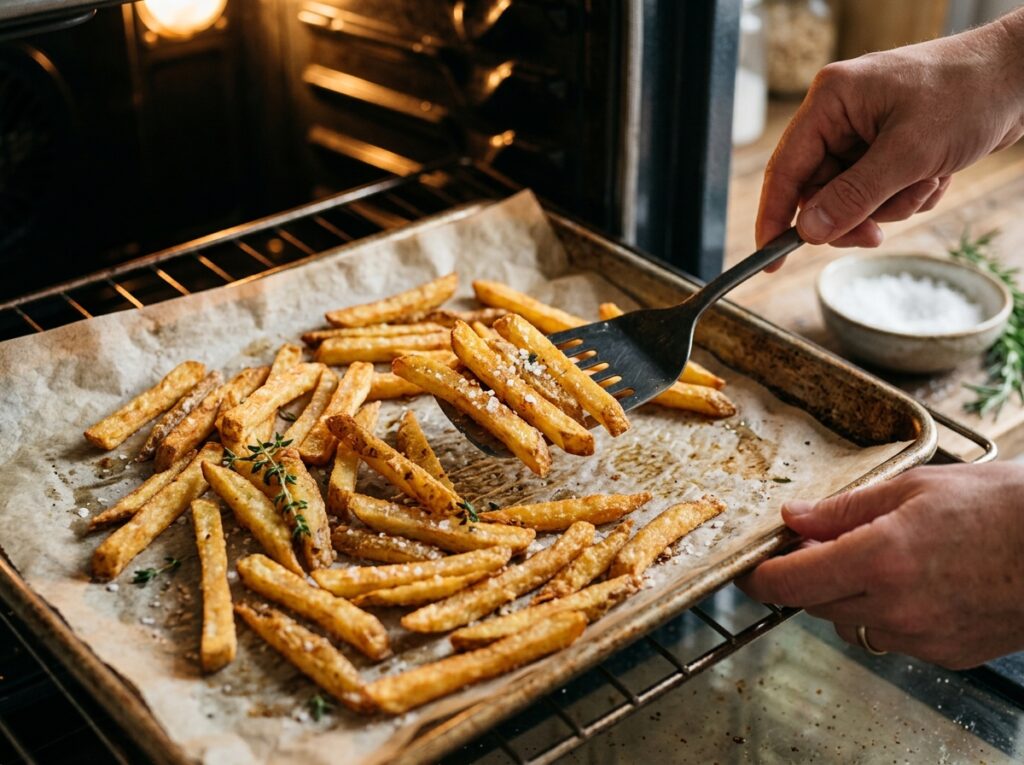
The oven is your best friend when you have a lot of fries to save. Maybe it’s leftover takeout for two. Maybe it’s a whole sheet pan of homemade fries from dinner. Either way, the oven handles volume better than an air fryer basket.
Heat the oven to 425°F. Put the fries on a baking sheet in one layer. If you want easier cleanup, use parchment paper. If you’re not sure which liner belongs on a hot baking sheet, this guide on butcher paper vs parchment paper clears it up.
Bake for 8 to 12 minutes. Flip or stir once around the halfway point.
If you have a convection setting, use it. The moving hot air helps the fries brown a little faster.
A preheated sheet pan can help too. Put the pan in the oven for a few minutes before adding the fries. That hot surface starts crisping the bottoms right away.
Skillet: great for a quick small batch
A skillet works better than many people think.
If you only have a handful of fries left, the stovetop can beat the oven. Heat a nonstick or cast-iron skillet over medium-high heat. Add a tiny bit of oil, then spread the fries out. Let them sit for a minute or two before flipping. Total time is usually 3 to 5 minutes.
The trick is patience. If you keep stirring every few seconds, the fries won’t get that crisp contact with the pan.
This method is especially good for thicker fries or diner-style fries that need stronger surface browning.
Toaster oven: a solid middle ground
A toaster oven is basically a small oven, so the method is simple.
Set it to 400°F to 425°F, arrange the fries in one layer, and heat for 5 to 8 minutes. Check early because toaster ovens can run hot.
This is a nice option if you don’t want to heat your full-size oven for a small meal.
Microwave: only if you’re in a rush
Yes, you can microwave fries. No, it’s not the best choice.
Put the fries on a microwave-safe plate in one layer. Place a paper towel under them to absorb some moisture. Heat in 20-second bursts until warm.
You’ll get hot fries, but not really crisp fries.
If the microwave is your only option, there’s a small trick that helps: microwave them just long enough to warm the center, then move them to a hot skillet for a minute or two. That combo works better than either step alone.
A simple step-by-step method you can follow every time
If you want one easy routine to remember, use this:
- Take the fries out of the fridge and break apart any clumps.
- Pick a dry-heat method like an air fryer, oven, toaster oven, or skillet.
- Spread them in a single layer so steam can escape.
- Heat for a short time, then flip or shake once.
- Eat them right away while they’re still crisp.
That last part matters more than people think. Reheated fries don’t stay crisp forever. They’re best in the first few minutes after reheating.
If your leftovers came from takeout, reheat each item on its own. Fries need short, dry heat. Other foods don’t. The same idea shows up in this guide on how to reheat a burrito. One method rarely fits the whole bag.
And if your fries came with a steak dinner, don’t throw both on the same tray and hope for the best. Fries reheat much faster than meat does. Use separate timing, or follow this guide on how to reheat steak for the steak while you crisp the fries on their own.
How to reheat different types of fries
Not all fries behave the same way. Thin fast-food fries and thick homemade fries need different timing.
Fast-food fries like McDonald’s
These are the easiest to overcook because they’re thin.
Use an air fryer at 350°F to 375°F for 2 to 4 minutes, or a hot skillet for about 2 to 3 minutes. Watch them closely. A minute too long can make them dry and brittle.
Don’t add extra oil unless they look very dry. Most fast-food fries already have enough surface oil.
If you’re trying to rescue McDonald’s fries the next day, the air fryer is your best shot. They’ll never be exactly like fresh-from-the-bag fries, but they can get surprisingly close.
Thick-cut fries, steak fries, and homemade fries
These need a little more time because they hold more moisture inside.
Air fry them at 375°F for 5 to 6 minutes, or bake them at 425°F for 10 to 14 minutes. A light spritz of oil can help if they seem dry or starchy on the outside.
Homemade fries often reheat better than people expect, especially if they were cooked well the first time and stored properly.
A real-life example? Thin fries from a drive-thru can go from cold to crisp in three minutes. A batch of thick pub fries may need twice that.
Waffle fries and curly fries
These do well in the air fryer because all those edges and ridges crisp up nicely.
Use 375°F for 4 to 6 minutes. Don’t crowd the basket. Those shapes trap steam more easily than straight fries do.
Curly fries also have seasoned coatings sometimes, which can darken fast. Check them early.
Sweet potato fries
Sweet potato fries can be tricky. They burn faster because they contain more sugar, and they don’t always crisp the same way regular potato fries do.
Use slightly gentler heat, around 350°F to 360°F, and start checking after 3 to 4 minutes in the air fryer or 7 minutes in the oven.
If they come out soft, that doesn’t always mean you did something wrong. Sweet potato fries naturally reheat a little softer than russet potato fries.
Loaded fries, cheese fries, and gravy-covered fries
These need a different approach.
If you can, separate the toppings from the fries first. Reheat the fries until crisp, then add cheese or toppings near the end. If gravy or sauce is already soaked in, the fries won’t get fully crisp again. You can still warm them, but the texture will be closer to roasted potatoes than classic fries.
For cheese fries, crisp the fries first, then add cheese for the last minute or two.
For loaded fries with meat or fried chicken, use the same leftover care you would for fried chicken in the fridge. Mixed leftovers spoil faster if they sit around too long, so timing matters.
Common mistakes that ruin reheated fries
A lot of bad reheated fries come from a few easy mistakes.
Crowding the basket or tray
This is the big one.
If fries overlap too much, they steam each other. That means soft edges, pale spots, and uneven texture. It feels faster to toss everything in at once, but smaller batches give better results almost every time.
Skipping the preheat
A cold oven or air fryer makes the fries sit there and warm slowly. Slow heat gives moisture more time to collect. Hot, ready equipment starts crisping right away.
Using too much oil
More oil doesn’t mean more crisp. It often means greasy fries with a heavy mouthfeel.
If the fries already came from a restaurant, they likely don’t need any extra oil at all. If they’re homemade and dry, add just a tiny amount.
Heating them too long
People often try to “fix” soggy fries by cooking them longer and longer. Then the outside turns hard while the inside dries out.
The better move is strong heat for a short time. Start with the lower end of the time range, then add a minute only if needed.
Salting too early
Salt is best after reheating, not before. Early seasoning can pull a little extra moisture to the surface.
It’s a small thing, but small things matter with fries.
Trying to save fries that were already gone
Some fries just won’t come back.
If they sat under sauce for hours, got cold in the car, then spent too long in the fridge, don’t expect miracles. At that point, repurpose them. Chop them into breakfast hash, toss them in a skillet with onions, or add them to an egg scramble.
That’s often smarter than chasing perfect crispness from a batch that never had a chance.
Pro tip: Reheated fries are usually best the next day. By day three, the texture drops fast even if they’re still safe to eat.
How to store leftover fries safely
Good reheating starts with good storage. If the fries were stored badly, no method can fully fix them.
Put leftover fries in the fridge within 2 hours of cooking or serving. If the room is very hot, like above 90°F, get them into the fridge within 1 hour.
A shallow container works well. You can also spread them on a plate or tray to cool slightly, then transfer them to a container once they’re no longer piping hot. You don’t want them sitting out forever, but you also don’t want to trap a ton of steam in a sealed box right away.
Plain leftover fries are best within 3 to 4 days, which lines up with standard USDA guidance for cooked leftovers. After that, the texture gets worse and the safety margin gets smaller.
You can freeze them, but quality drops. If you do freeze them, spread them on a tray first so they don’t freeze into one solid block, then bag them up. Reheat straight from frozen in the oven or air fryer and add a couple extra minutes.
Warning: If your fries sat out overnight, toss them. The same food-safety rule that makes chicken left out overnight unsafe applies here too. Bacteria grow in the temperature danger zone, and “it’s just potatoes” doesn’t protect you.
If you keep track of leftovers by category, fries follow a similar storage mindset to other cooked foods. That’s the same basic logic behind articles like fried chicken in the fridge: cool it, refrigerate it promptly, and don’t stretch the fridge clock too far.
Reheat only what you plan to eat. Every extra cool-down and warm-up hurts both texture and safety.
For plain fries, you don’t need to obsess over a thermometer. Just heat them until they’re hot all the way through. If the fries are loaded with meat, cheese, or other toppings, reheating to 165°F in the center is a smart safety target.
4. FAQ Section
FAQ
What is the best way to reheat French fries?
The best way is an air fryer at 350°F to 375°F for 3 to 6 minutes. It brings back crisp edges without drying the center too much. For a big batch, use a 425°F oven for 8 to 12 minutes.
Can you reheat McDonald’s fries?
Yes, and the air fryer works best. Because they’re thin, they usually need only 2 to 4 minutes at 350°F to 375°F. A hot skillet also works well. The microwave will warm them, but they’ll stay soft.
Can you reheat French fries in the microwave?
Yes, but the texture won’t be great. Use a microwave-safe plate, spread the fries out, and heat in 20-second bursts. Put a paper towel under them to absorb some moisture. If possible, finish them in a skillet for better crispness.
How long do leftover fries last in the fridge?
Leftover fries are best within 3 to 4 days if you refrigerated them within 2 hours after cooking or serving. If they smell off, feel slimy, or sat out too long, throw them away.
Can you reheat French fries twice?
You can, but it’s not a great idea. The texture drops a lot after the first reheat, and repeated cooling and reheating isn’t ideal for food safety. Reheat only the portion you plan to eat.
Do you need to add oil when reheating fries?
Usually, no. Restaurant fries already have enough oil. Homemade fries may benefit from a very light spritz if they look dry. Too much oil makes them greasy instead of crispy.
Why are my reheated fries still soggy?
Most likely, one of three things happened: the pan or air fryer wasn’t hot enough, the fries were crowded, or they were heated too long at low power. Fries need space, high heat, and short timing.
5. Conclusion
If you want fries that actually taste worth eating, keep it simple: use high, dry heat, don’t crowd them, and serve them right away. For most kitchens, the air fryer is the easiest win. The oven comes next for big batches. The skillet is perfect when you’re only saving a handful.
So if there’s a cold box of fries in your fridge right now, don’t settle for the microwave unless you have to. Give them a few minutes in the air fryer or oven and see the difference for yourself. Sometimes leftovers really can make a comeback.