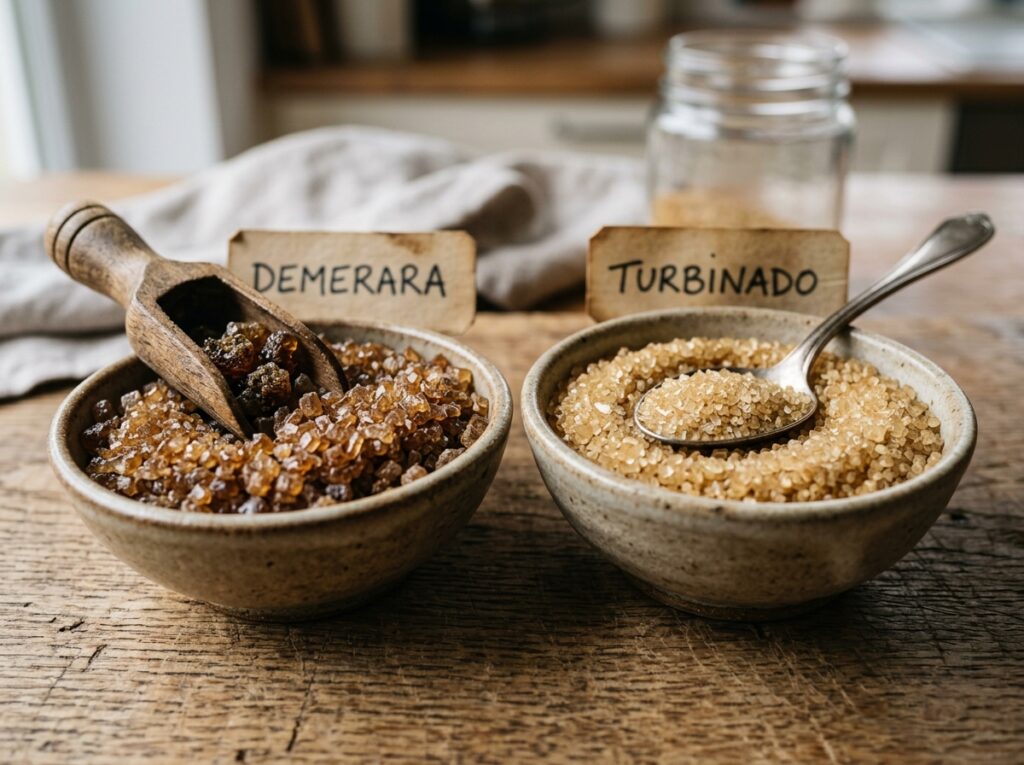
Demerara vs Turbinado: Which Sugar Is Better?
Most people searching this topic want one practical answer: Can I swap demerara and turbinado, or will it mess up my recipe?
That’s the real issue.
Maybe you’re baking muffins and only have one bag in the pantry. Maybe a cocktail recipe calls for demerara syrup, but your store only stocks turbinado. Or maybe you’ve heard one of them is “healthier” and you want the truth before paying extra.
You don’t need a chemistry lecture to sort this out. You just need to know what changes in flavor, texture, and everyday use. Once you understand that, picking the right sugar gets a lot easier.
Demerara vs Turbinado at a Glance
Here’s the fast side-by-side view.
| Feature | Demerara | Turbinado |
|---|---|---|
| Source | Cane sugar | Cane sugar |
| Refining level | Partially refined | Partially refined |
| Crystal size | Usually larger and crunchier | Usually slightly smaller |
| Flavor | Light molasses, toffee, deeper caramel | Mild caramel, cleaner sweetness |
| Color | Light amber to golden brown | Golden blond to light brown |
| Best use | Toppings, crunchy finish, syrups | Coffee, baking, general sweetening |
| Easy to find in U.S. stores | Less common | More common |
The key word here is usually.
That matters because the gap between demerara and turbinado isn’t huge, and some brands overlap a lot. In one store, the difference may be obvious. In another, the bags may look like cousins from the same family reunion.
Quick facts:
- Both come from sugar cane
- Both keep a little molasses
- Both are still added sugar
- Demerara often gives more crunch
- Turbinado often melts a bit easier
If you’re using either one as a topping, the texture matters more than the label. If you’re stirring it into hot tea, the difference gets smaller.
What Are Demerara and Turbinado Sugar, Really?
Demerara sugar explained
Demerara sugar is a coarse cane sugar with large amber crystals and a light molasses flavor.
The name comes from Demerara, a historical region in Guyana. That’s where the sugar became known early on, though much of the demerara sold today is produced elsewhere, including places like Mauritius.
What people usually expect from demerara is pretty consistent:
- large, sparkling crystals
- a dry texture
- a pale brown or amber color
- a subtle toffee or caramel taste
It’s popular in British baking, coffee service, crumble toppings, and cocktail syrup. Sprinkle it on banana bread or scones, and you’ll notice its crunch right away.
Turbinado sugar explained
Turbinado sugar is a partially refined cane sugar spun in a centrifuge, leaving a small amount of molasses on the crystals.
Its name comes from the turbine-like spinning process used during production. In the U.S., many people know turbinado through products like Sugar In The Raw.
Turbinado also has:
- coarse crystals
- a dry feel
- a golden color
- a mild caramel note
That’s why it’s often sold as a “raw sugar” option, even though it isn’t truly raw in the strict mill-to-consumer sense.
Why the labels get confusing
This is where a lot of articles stop too early.
In real grocery shopping, the line between demerara and turbinado can blur. Some brands market them almost the same way. Some bags labeled raw cane sugar are essentially in the turbinado family. Some demerara products are very coarse, while others are closer to turbinado in size and flavor.
So if you’ve looked at the two and thought, “Wait, aren’t these basically the same thing?” you’re not imagining it.
They are close. But the details still matter in recipes.
Did you know?
Most grocery-store “raw sugar” isn’t truly raw straight from the mill. It has still been cleaned and processed enough for retail sale.
The Real Differences That Matter in Your Kitchen
Demerara vs Turbinado: taste, texture, and color
Crystal size and crunch
The biggest everyday difference is crystal size.
Demerara usually has larger, firmer crystals. That makes it great for a crunchy finish on top of muffins, pie crust, cookies, or baked fruit. It tends to hold its shape a little better under oven heat, at least long enough to give you that crackly top.
Turbinado is also coarse, but it often has slightly smaller crystals. It still adds texture, just not always the same bold crunch.
Want a quick image?
Think of demerara as a chunky sweater and turbinado as a lighter knit. Same category, different feel.
Flavor and sweetness
Both sugars are sweet because both are mostly sucrose. So don’t expect a dramatic sweetness gap.
What you may notice is the flavor around the sweetness:
- Demerara often tastes a bit deeper, with light toffee or molasses notes.
- Turbinado usually tastes cleaner and milder.
That difference shows up most in simple foods. Stir either one into black coffee, plain oatmeal, or Greek yogurt, and your tongue can catch it. In a heavily spiced cake, the gap may disappear.
Color and moisture
Demerara is often a shade darker, though this varies by brand. Turbinado usually leans more golden.
Neither one is soft and sticky like brown sugar. Both are dry sugars, which means they pour easily and store well. You won’t get that damp, packable feel you get from dark brown sugar.
How they melt and dissolve
This is another practical point people ask about on forums.
Coarse crystals don’t dissolve as fast as regular white granulated sugar. Since demerara is often a little larger, it can be slower still.
In hot coffee, both usually work fine. In iced tea or a cold cocktail, they can sit at the bottom like tiny pebbles if you dump them straight in.
Pro tip:
For cold drinks, make a quick syrup instead of stirring the crystals in directly.
Nutrition and health
Here’s the plain truth: there isn’t a meaningful health win here.
As of 2026, nutrition databases such as USDA FoodData Central still place raw-style cane sugars in nearly the same calorie and carb range as regular table sugar. A teaspoon is roughly 15 to 16 calories, just like ordinary sugar.
Yes, demerara and turbinado keep a trace amount of molasses. That means tiny amounts of minerals may remain. But “tiny” is the key word. You’d never use enough of it to turn either sugar into a nutrient source.
Common misconception:
Brown-looking sugar isn’t automatically healthier.
If you watch your blood sugar, manage diabetes, or follow a medical eating plan, treat demerara and turbinado like other added sugars and follow your clinician’s advice.
Demerara vs Turbinado in Baking, Coffee, and Cooking
Best uses for demerara sugar
Demerara shines where texture matters.
Its larger crystals make it a favorite for:
- muffin tops
- scones
- fruit crisps and crumbles
- oatmeal or porridge
- cocktail syrup with a richer flavor
Picture a blueberry muffin with a sparkly, crisp top. That crunchy layer? Demerara often does that job beautifully.
Bartenders also like demerara syrup because it gives drinks a slightly fuller, rounder sweetness. In rum cocktails and old fashioned-style drinks, that little extra depth can be nice.
Best uses for turbinado sugar
Turbinado works well as an all-purpose “nicer than white sugar” option.
Use it in:
- coffee and tea
- cookie dough
- baked oatmeal
- roasted fruit
- everyday sprinkling
It gives you some caramel character without taking over. If you sweeten your morning coffee and want a small flavor upgrade from plain white sugar, turbinado is an easy pick.
Which one works better in drinks?
For hot drinks, both work. Turbinado often dissolves a bit faster, but the gap isn’t huge.
For cold drinks, neither one is ideal in crystal form. Make a syrup instead.
A simple method:
- Heat equal parts sugar and water in a small pan.
- Stir until the crystals dissolve.
- Cool and store in the fridge.
If you use demerara, the syrup usually tastes a little richer. If you use turbinado, it’ll be a little lighter and cleaner.
What about baking?
Both sugars can work in baking, but you should match them to the job.
If your recipe needs sugar to cream smoothly with butter or dissolve fully into a delicate batter, coarse sugars aren’t always the best fit. They can leave a rougher texture than fine granulated sugar.
But if the recipe wants texture on top, they’re excellent.
Pro tip:
If you’re topping cookies or scones with either sugar, use the right liner too. Our guide on butcher paper vs parchment paper explains why parchment is the better choice for most baking sheets.
Can they work in savory food?
Yes, and people often forget that.
A little demerara or turbinado can help balance:
- barbecue rubs
- glazed carrots
- roasted squash
- baked beans
- spicy sauces
Demerara tends to bring a slightly stronger caramel note, which can be great in rubs and glazes.
Can You Substitute Demerara for Turbinado?
The short answer
Yes — most of the time, you can swap them 1:1.
That’s the answer most home cooks need.
For coffee, oatmeal, topping baked goods, sweetening fruit, or making syrup, the swap is usually no big deal. The result may change a little in texture or depth of flavor, but not enough to ruin the dish.
Where the swap works well
You can usually switch them in:
- muffin and loaf toppings
- crumble toppings
- coffee or tea
- simple syrups
- finishing sugar for baked fruit
If a recipe says “sprinkle with demerara sugar” and you only have turbinado, go ahead. Your dessert will still be good.
Where you should be more careful
A few recipes need more precision.
Be careful in:
- very delicate cakes
- meringues
- smooth custards
- whipped egg recipes
- anything that needs sugar to dissolve fast and fully
Large crystals can stay gritty if they don’t dissolve well. They also don’t caramelize as evenly as finer sugar in some desserts.
For example, some people use demerara or turbinado for crème brûlée, but finer sugar often gives a more even glassy crust.
How to make a coarse sugar work better
Only have demerara or turbinado, but the recipe needs a smoother result? You’ve got options.
You can:
- pulse it briefly in a blender or spice grinder
- dissolve it in warm liquid first
- use it as a topping instead of mixing it into the batter
That’s a handy fix when you want the flavor but not the crunch.
Warning:
Don’t grind it into powder and expect it to behave exactly like confectioners’ sugar. That’s a different product with a different job.
Common Confusions: Brown Sugar, Raw Sugar, and Muscovado
Is demerara the same as brown sugar?
No, and this mix-up happens all the time.
Brown sugar is usually refined white sugar with molasses added back in. It’s soft, moist, and packable. Demerara is drier, coarser, and crunchier.
So if a cookie recipe needs packed brown sugar for moisture, demerara won’t give you the same result.
Is turbinado the same as raw sugar?
In grocery-store language, often yes.
Many products sold as raw sugar are basically turbinado-style cane sugar. The wording is more marketing-friendly than technical.
If you’re comparing bags in the U.S., “raw cane sugar” often means a coarse, golden sugar very close to turbinado.
Is demerara less processed than turbinado?
Usually they’re in the same general category: partially refined cane sugars with some molasses left.
One isn’t automatically a pure, old-world sugar and the other some factory-made opposite. The difference is more about crystal style, flavor, and branding than some huge processing gap.
What about muscovado?
Muscovado is a different story.
It’s darker, softer, stickier, and much stronger in molasses flavor. If you want a deep, almost smoky sweetness, muscovado can be great. If you want a crunchy sparkle on top of a muffin, it’s the wrong tool.
Why do some bags look almost identical?
Because they can be.
Brand sourcing, production methods, and regional labeling all play a role. As of 2026, many U.S. stores still stock turbinado more often than true large-crystal British-style demerara, so some shoppers never see a dramatic side-by-side difference.
That’s why I’d focus on the crystal size and intended use, not just the front label.
If you enjoy simple food comparisons like this, you might also like our breakdowns of chicken tenderloin vs chicken breast, shoulder roast vs chuck roast, and Wagyu vs Kobe beef. Clear labels save a lot of second-guessing in the kitchen.
Which One Should You Buy?
Pick demerara if you want more crunch
Go with demerara if your main goal is texture.
It’s a smart buy if you:
- top muffins, scones, or crisps often
- like richer sugar in cocktails
- enjoy a stronger toffee note
- want a classic crunchy finishing sugar
A spoonful on hot oatmeal or broiled grapefruit can be really nice.
Pick turbinado if you want an everyday pantry sugar
Turbinado makes sense if you want something flexible and easy to find.
It’s a good choice if you:
- sweeten coffee or tea often
- want a mild upgrade from white sugar
- bake casually and need one coarse sugar
- shop in regular U.S. supermarkets
For many people, turbinado wins on convenience.
If your store only has one, don’t overthink it
This might be the most useful advice in the whole article.
If the recipe isn’t ultra-delicate, buy the one you can find at a fair price and use it with confidence. Most home cooks won’t notice a dramatic difference in everyday recipes.
Think function first:
- Need crunch? Lean demerara.
- Need easy all-around use? Lean turbinado.
- Need smooth dissolving? Use syrup or finer sugar.
How to store either sugar
Both store well if you keep them dry.
Use an airtight jar or container and keep it in a cool cupboard. Unlike brown sugar, they’re less likely to turn into a brick, but moisture can still cause clumping over time.
If it hardens a little, break it up gently with the back of a spoon or pulse it briefly in a food processor.
4. FAQ Section
FAQ
Is demerara sugar the same as turbinado sugar?
Not exactly, but they’re very close. Both are partially refined cane sugars with some molasses left. Demerara usually has larger crystals and a slightly deeper toffee flavor, while turbinado is often a little milder and more common in U.S. stores.
Can I substitute turbinado for demerara in baking?
Yes, in most recipes you can swap them 1:1. The best results come in toppings, crumbles, cookies, and muffins. For delicate cakes or recipes that need sugar to dissolve fully, fine granulated sugar may work better.
Which is better for coffee, demerara or turbinado?
Turbinado is often the easier everyday pick for coffee because it tends to dissolve a bit faster and has a mild caramel taste. Demerara works well too, especially if you like a slightly richer, more toffee-like note.
Is turbinado sugar healthier than white sugar?
Not in any major way. Turbinado keeps a bit of molasses, so it may contain tiny traces of minerals, but the nutrition difference is very small. It still counts as added sugar and has about the same calories as regular sugar.
Why is demerara sugar sometimes harder to find?
In many U.S. stores, turbinado has stronger brand recognition and wider distribution. Demerara is still available, especially online, in specialty shops, and in some baking aisles, but it isn’t stocked as consistently everywhere.
Is demerara sugar good for crème brûlée?
It can work, but it isn’t always the easiest choice. Its larger crystals may caramelize less evenly than finer sugar. If you want the smoothest, most even brûlée top, a finer sugar often gives better control.
What’s the difference between turbinado and brown sugar?
Turbinado is dry and coarse, with large crystals and light molasses left on the sugar. Brown sugar is soft, moist, and usually made by adding molasses back to refined white sugar. They don’t behave the same way in recipes.
5. Conclusion
The best pick for your pantry
If you strip away the marketing, demerara vs turbinado comes down to one simple idea: they’re close enough to swap in many recipes, but demerara usually gives you more crunch and a slightly deeper flavor, while turbinado is often lighter, easier to find, and a little more flexible for daily use.
So before you buy, ask yourself one question: Do you care more about texture or convenience?
If you want a sparkly bakery-style finish, grab demerara. If you want one coarse cane sugar that can handle coffee, baking, and casual sweetening, turbinado will do the job well.
And if you already have one sitting in your pantry, you probably don’t need a special trip to the store. Use what you have, taste the difference for yourself, and let your recipe decide the winner.